Sheep wool is of fundamental importance for the rapidly dwindling number of Central Asian nomads. In particular it provides the raw material for felt which is used to build their primary dwellings – yurts – as well as twine, candle wicks, floor coverings and a host of other items. Whilst the processes needed to create felt and twine are well understood and documented, the equipment used to shear animals is much less well known. That has all changed with the publication of an important new book by textile collector Peter Umney-Gray. Scissor Bags and Sheep Scissors in the Nomadic Tradition neatly fills this gap and will become an important reference book on this subject.
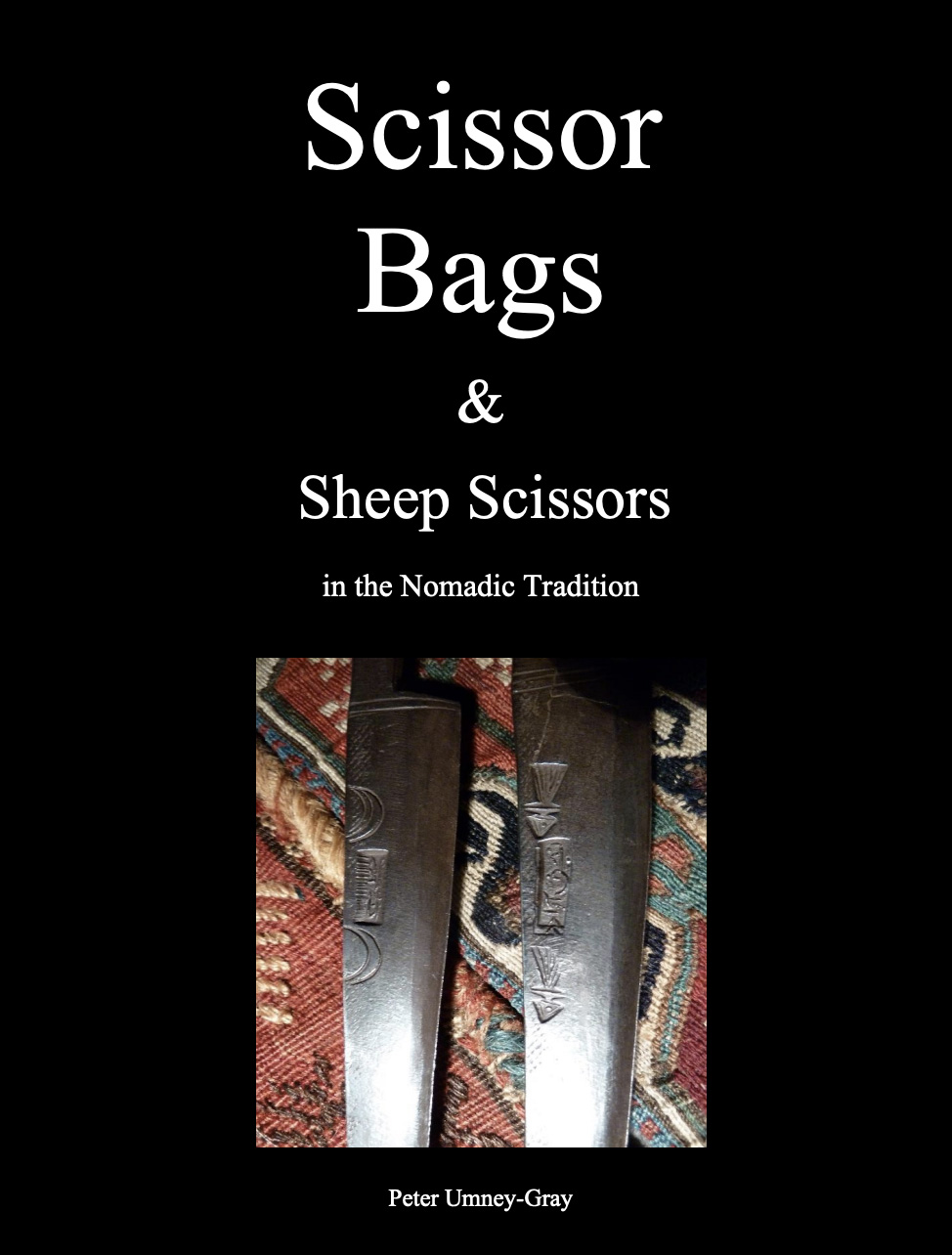
Peter, who is a fellow member of the Oxford Asian Textile Group, began researching the book in 2012. He quickly discovered that there is little in the literature about the bags and boxes made to contain such scissors, despite worldwide interest in textiles from Central Asia. Even less is known about ‘end-pivot scissors’ that nomads have used for generations to shear their animals. Unlike typical modern scissors, end-pivot scissors are not pinned in the middle of the two blades. Instead, they are held together by a wooden (usually) spar at one end. They are used with two hands, the right hand acting as a spring opening the scissors with the thumb on the top blade and the thumb and fingers of the left hand then squeezing the blades together. Occasionally the blades are marked or signed by the maker.

These scissors, which can be found from Bulgaria to China, came as a surprise to me. I have often seen the long scissors used for embroidery and textile making and usually associated with Bukhara, but these are completely different. Mostly they are made by local blacksmiths, but in Iran itinerant tradesmen follow the nomads during their migrations and supply them with scissors, as well as pots and pans and other equipment. The shearing technique can be glimpsed in the photo below, which shows a shearer holding the base of the scissors in his right hand while his left hand manipulates the blades. A shearer can process around 40 sheep a day.

Peter’s main interest – and the inspiration for his book – is the wonderful small bags (usually woven) that are used to hold the scissors when not in use. These vary enormously. In their most basic form a thin strip of leather is simply wound around the blades. In the Toros Mountains in Turkey containers are made of wood. In north-eastern Iran region of Turkmen Sahra the Yomud make their scissor bags from felt, with minimal decoration, but also bags in knotted pile as illustrated in the two examples. However, the Shahsavan nomads of north-western Iran weave beautiful oblong bags with vivid patterns.
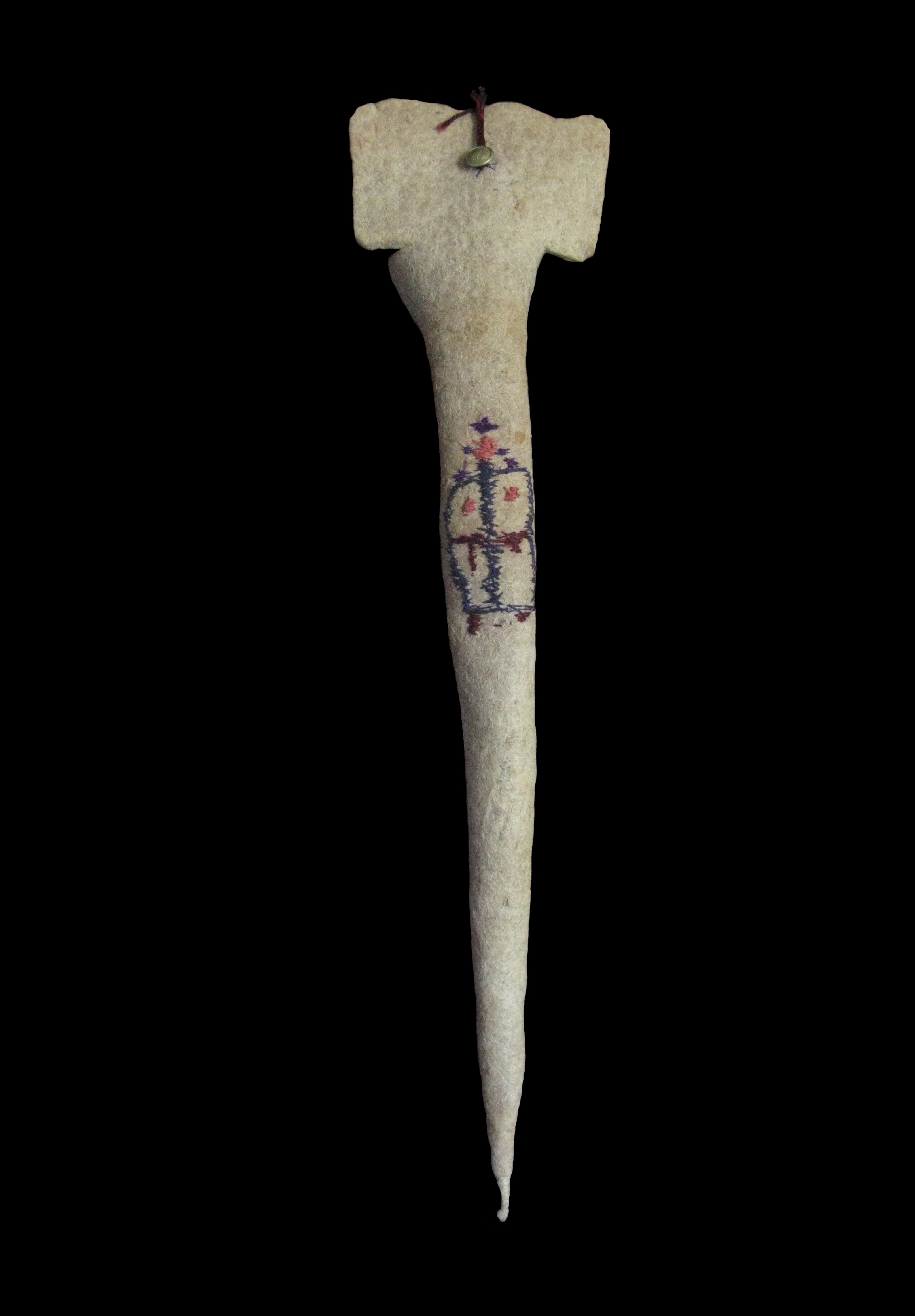
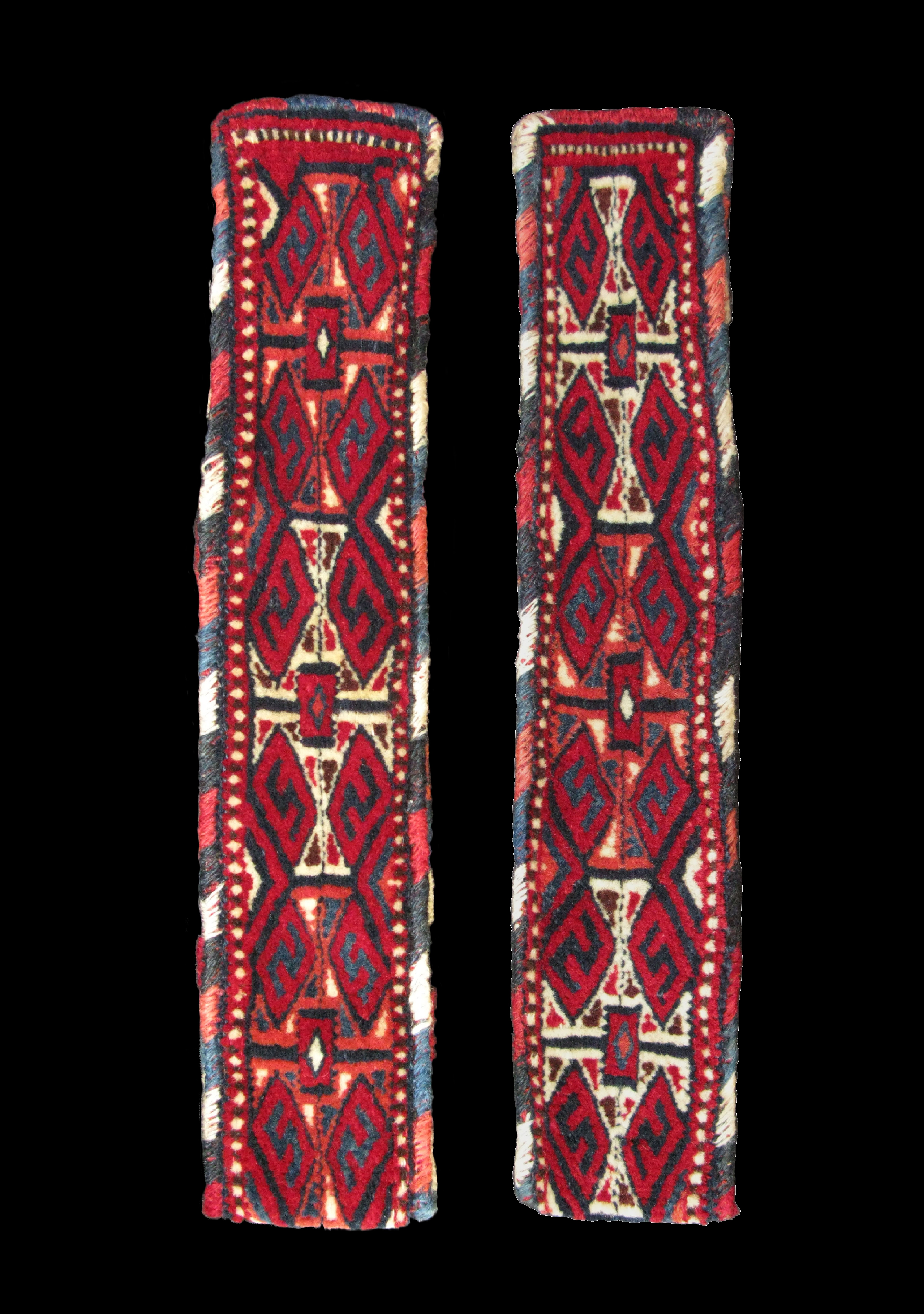

The Turkmen Goklen bag above, which is just over 42cm in length, was woven in one long strip before overcasting was woven on all four sides. It was then folded and sewn up. It is sturdy enough to hold the scissors for many years.
Only in the last two decades has the use of end-pivot scissors begun to disappear amongst the Sarikecili in the Toros Mountains, as cheap modern bowed scissors find their way into the market places. However, in northern Iran and in Central Asian countries, the end-pivot scissors continue to be used in many places.
At the same time, they are absent from most ethnographic museum collections. Where they are present, they are often misidentified as weapons, such as ring-pommel knives. Peter is very aware that there is a lack of scholarship on this subject and urges anyone who has further knowledge to contact him at argali@umneygray.plus.com.
His book is available at £55 plus postage via the same email address.
 Siberian Steppes