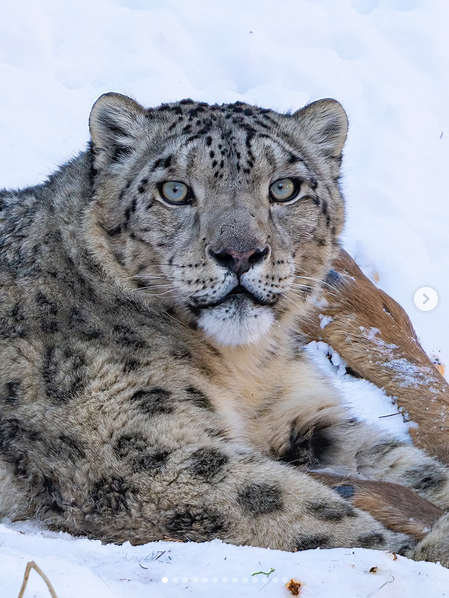
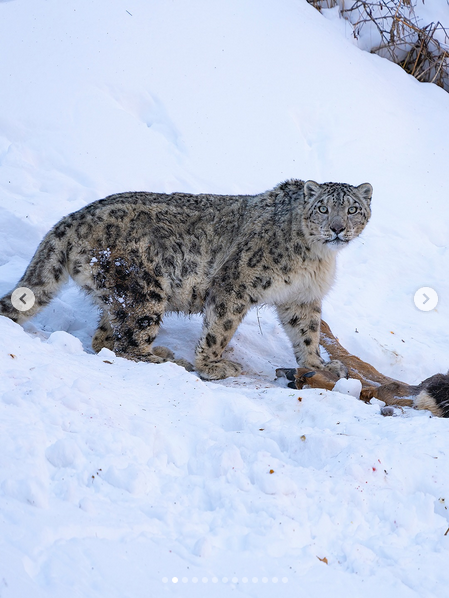
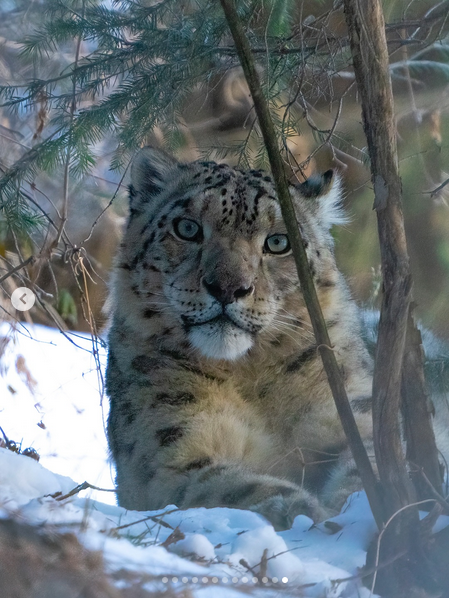
A snow leopard photographed in Almaty three days ago
A friend in Almaty recommended that I check out the Insta account of Dmitry Dotsenko (dots_foto). Three days ago he achieved a lifetime ambition when he spotted a snow leopard on the outskirts of Almaty, former capital of Kazakhstan. Let him tell you in his own words what he saw:
“I’m sharing with you a selection of photos of a snow leopard that I managed to take yesterday in the mountains near Almaty. Photographing a snow leopard has long been my dream. In fact, just seeing one with my own eyes in our mountains would be a once-in-a-lifetime event! I’ve been hiking in these mountains since childhood, and the thought that snow leopards live here seems completely natural to anyone from Almaty. We all know about them, we’ve heard about them since we were kids, but at the same time, the snow leopard remains a mystery—something almost mythical, hidden in dense spruce forests and rocky cliffs.
Very few people ever get to see one. Even those whose lives and professions are connected to the mountains often have never encountered this graceful predator. Most of the time, we have to settle for tracks in the snow or rare shots from camera traps.
But this time, something truly rare happened. The snow leopard had taken down a maral (a type of deer), throwing it off a cliff. And by a twist of fate, I happened to be in the right place at the right time. After almost an hour of waiting in ambush, the leopard appeared. The feeling was incredible—adrenaline was off the charts, and time seemed to compress into a single moment. It was hard to keep control of myself and the equipment, but in the end, I managed to get these rare and, without exaggeration, unique shots!
After the shoot, an interesting thought came to me: I’ve walked here hundreds of times, these mountains are like home to me. And now, here I am, photographing the true master of these mountains—the snow leopard. That’s the essence of this shoot. All the stories about leopards in our mountains suddenly stopped being just words—they became reality, right in front of me.
The photos were taken with a 600mm telephoto lens from a safe distance, so as not to disturb the animal—or, let’s say, not to end up as its lunch myself 🙂. This allowed me to get very close and detailed shots. Here it is—our Almaty snow leopard! Look, examine, enjoy every detail: the color, the shapes, that gaze! 😍
By the way, on my Telegram channel, I’ve made a series of covers featuring the Almaty snow leopard for your smartphones. Download them and enjoy. Let every resident of Almaty, every Kazakhstani, have a piece of our nature’s greatness on their phone. 🙌😍”
Snow leopards are now highly protected in Kazakhstan and the policy appears to be paying off. A little bit of good news…
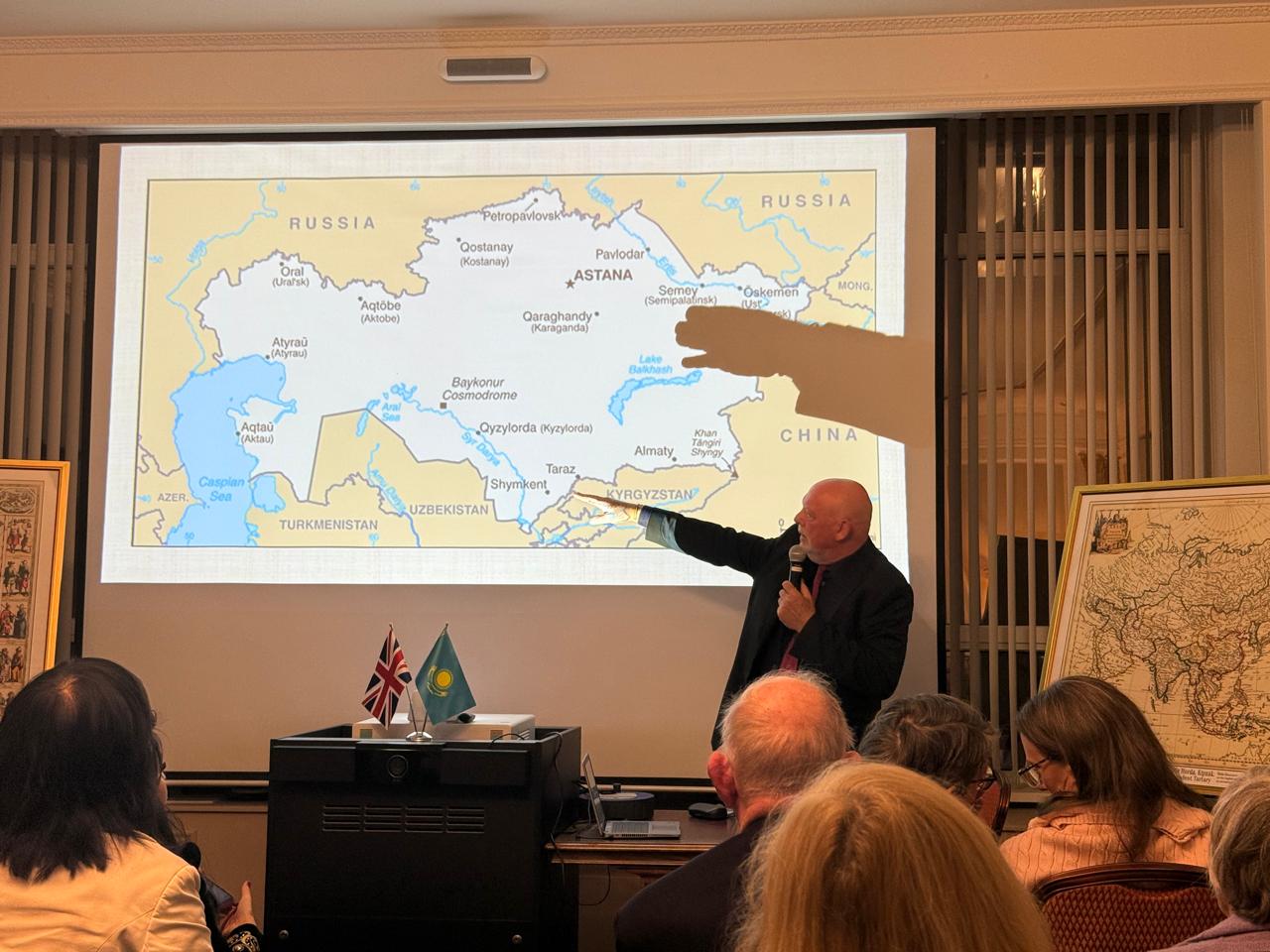
On Monday night I gave the Younghusband Lecture to the Adventure Circle of the Army and Navy Club in London. My subject was Kazakhstan: Exploring the Northern Silk Road, based largely on my trip earlier this year from Almaty to the remnants of the Aral Sea in the far west of the country.
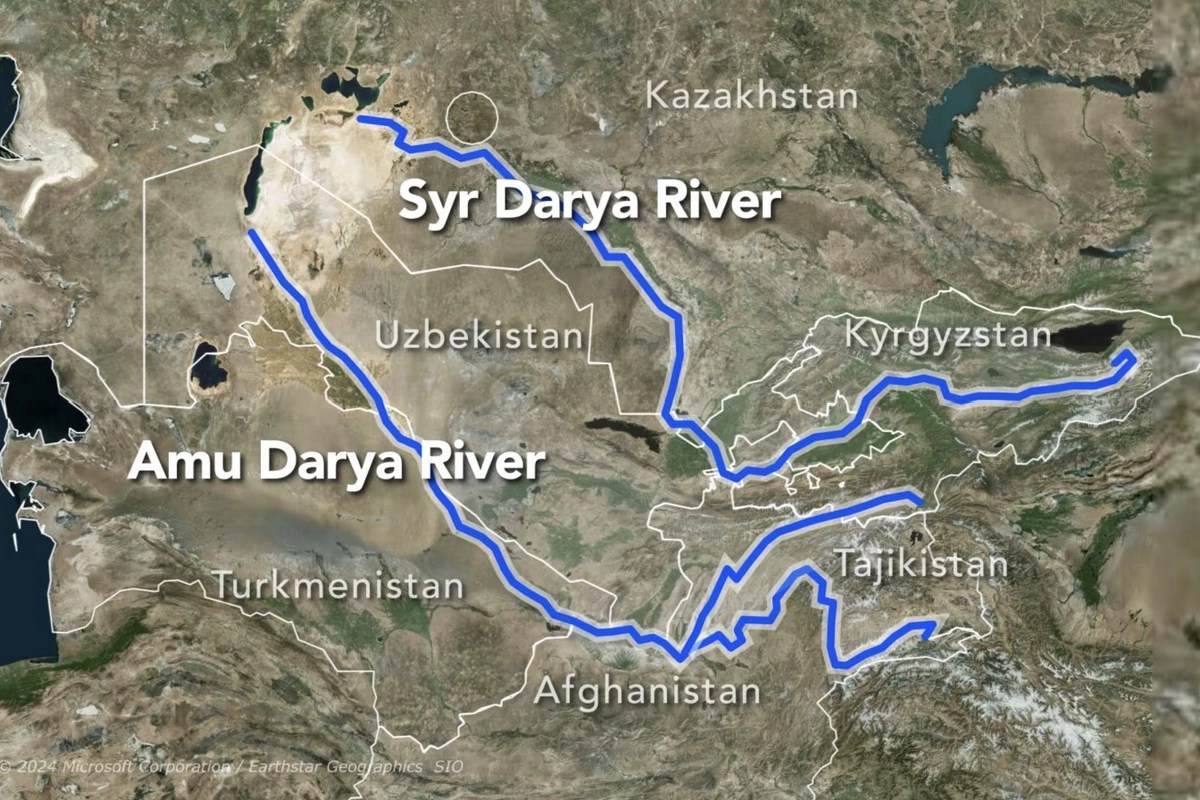
Having now spent 15 years or so exploring various parts of Kazakhstan, mostly in the east and south-east, I was finally struck by the importance of the route across the southern part of the country that is sometimes referred to as the Ferghana-Syr Darya Corridor. This east-west route follows the course of the great Syr Darya River as it meanders its way to the northern part of what remains of the Aral Sea. It is a route that has existed for thousands of years and once would have led caravans from the Pamir Mountains up past the Aral and on towards the Volga River and the former Golden Horde city of Kazan or further west, across the top of the Caspian Sea towards Krim (Crimea).
The Syr Darya is almost a mirror image of the more southerly Amu Darya River – known in antiquity as the Oxus – but is much less well known. When most people think of the Silk Road they tend to think of the cities of Samarkand, Bokhara and Khiva, all closely linked to the Amu Darya.
These two great Central Asian Rivers have always been important in the history of the region, providing water for agriculture and defining borders and spheres of influence. And yet while many people are familiar with the great cities associated with Timur and the Uzbek Khanate, very few know much about the northern route. It too has associations with Timur, particularly the city of Turkistan, but it also has its own rich history. Along this northern Silk Road can be found the remains of many great cities that flourished in the period before the discovery of the sea routes between China, India and Western Europe.
These cities include Otrar, Sauran, Kyshkala, Asanas, Syganak, Yassy and Zhankala, all now nominated by the Kazakhs for UNESCO World Heritage status. Along this route can also be found the magnificent ancient petroglyphs at Arpauzen and the cosmodrome at Baikonur.
The remains of SauranOtrarZhankalaMausoleum of Khoja Ahmed Yasawi in TurkistanAnother view of the Mausoleum.
There are still many discoveries to be made along the Northern Silk Road. Friends in Kazakhstan tell me that they have come across the remains of ‘lost’ cities in the Kara Kum Desert that are not mentioned on any maps or history books. Adventure beckons!
My recent trip to the Aral Sea was memorable for many reasons, not least the incredible scenery and the impression it made on me. But there were several incidents that stand out for entirely separate reasons and I would like to share some of these with you.
The first occurred on the day after we arrived at Kambash Lake, one of the relict lakes left behind following the disappearance of the Aral Sea. The lake itself is a beautiful location and full of fish and with a healthy wild bird population.
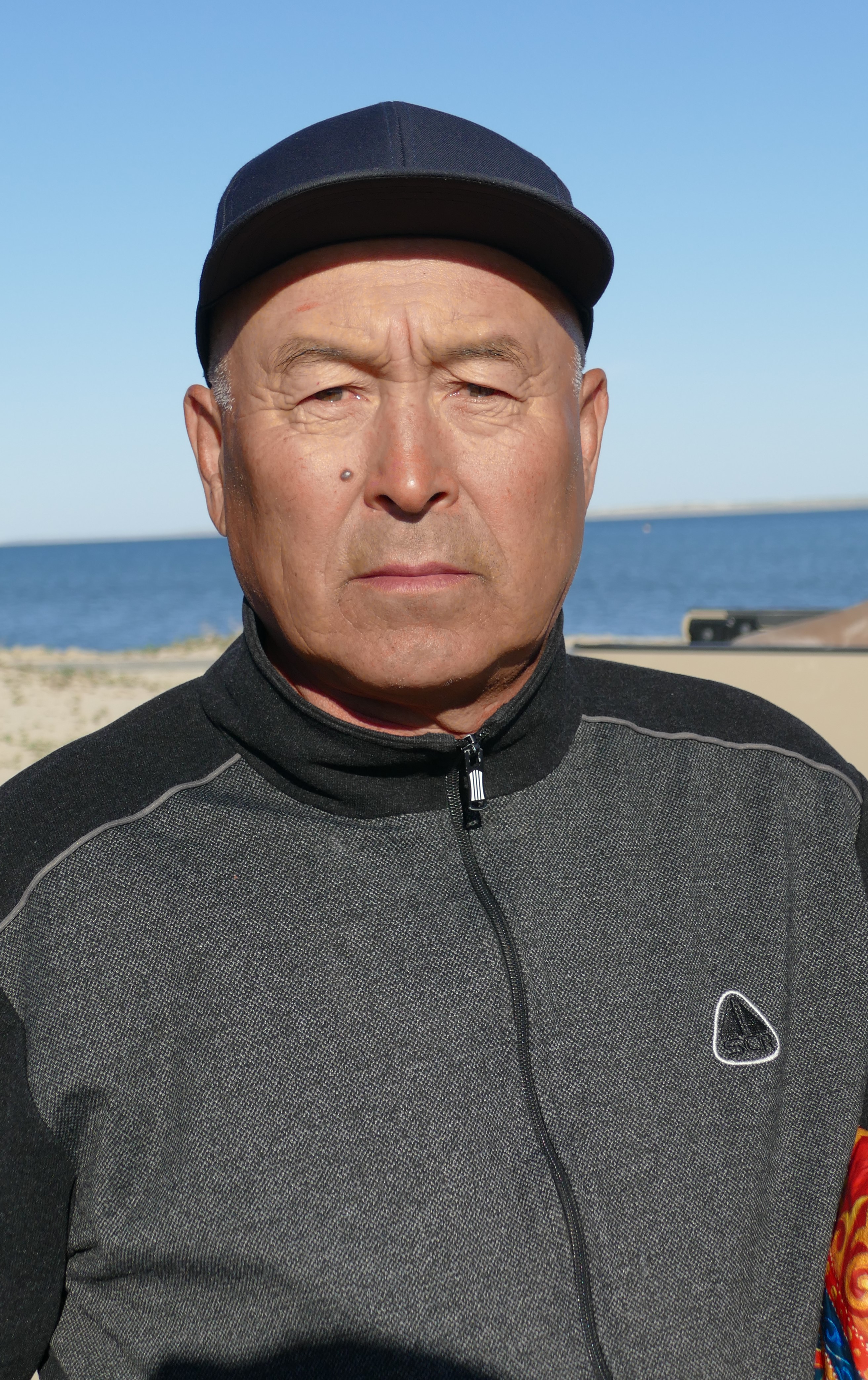
Zhomart Beketov
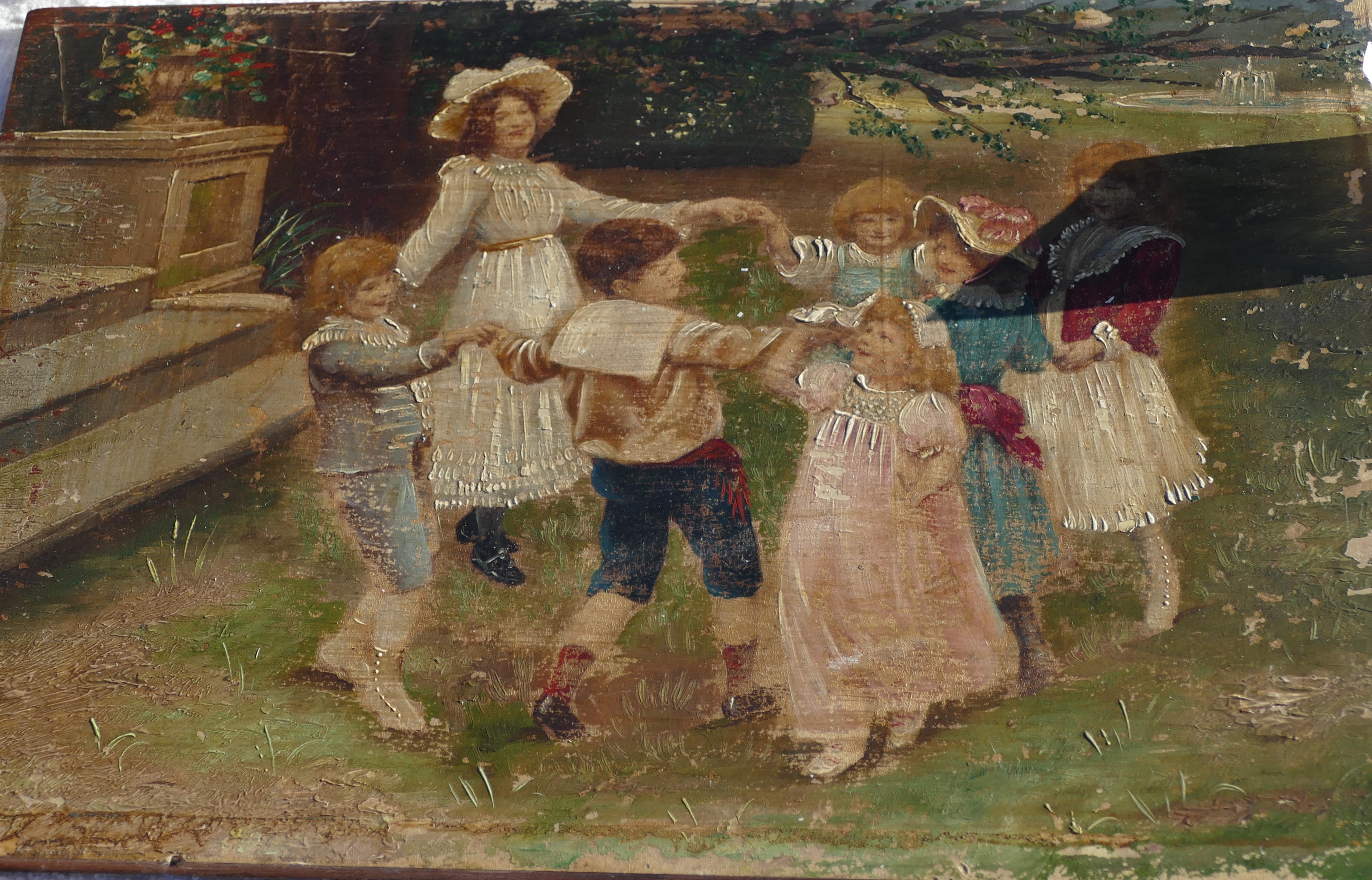
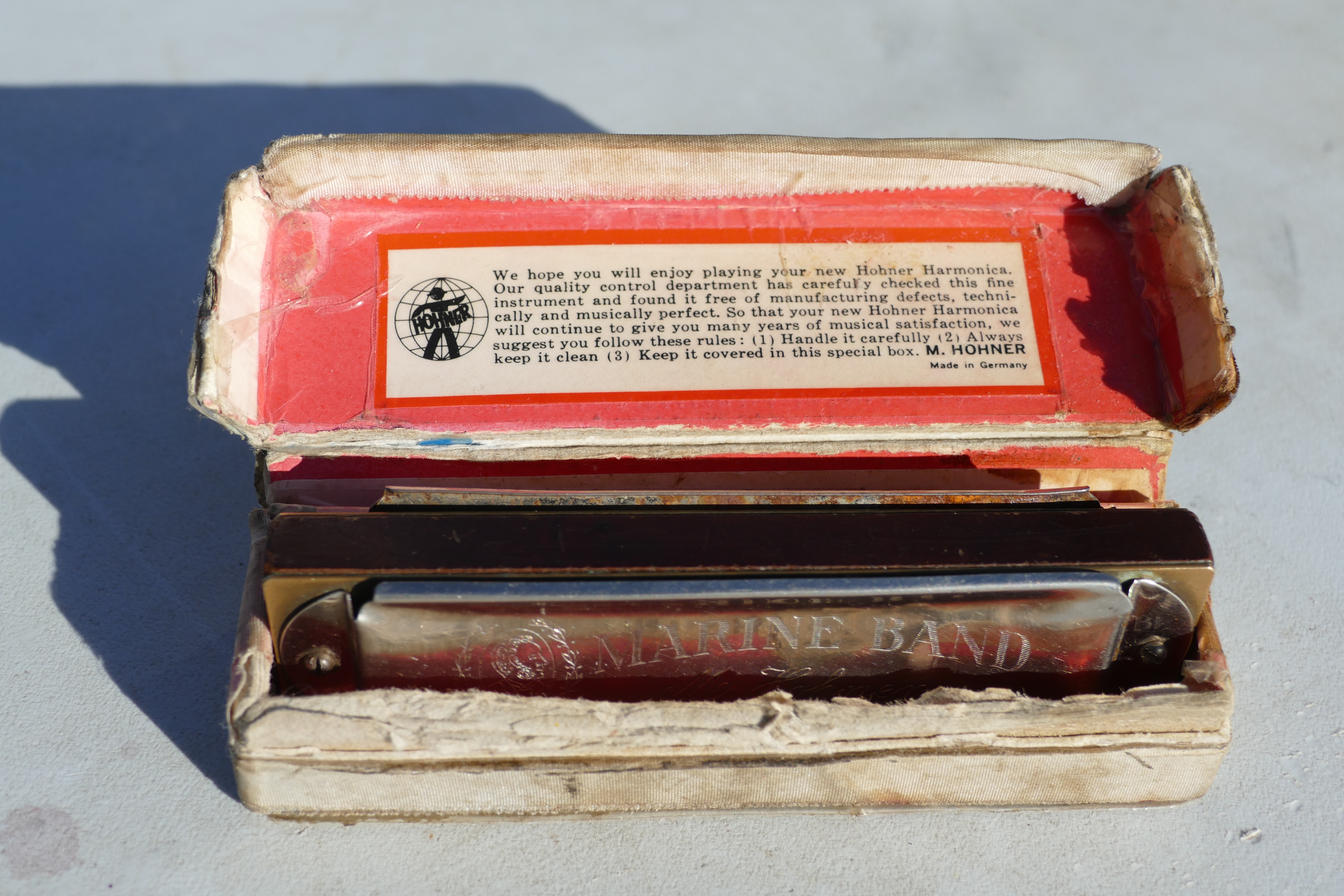
Soon after breakfast a man arrived in our camp, having heard there were strangers in the area. This was Zhomart Beketov, a 62-year-old local. He immediately brought out of his bag an old picture. It portrayed a woman and a group of children dancing in the garden of what looks like a European house and was clearly quite old – probably from the middle of the 19th century. He also had a small embroidered cloth and a boxed German harmonica.
The painting was not entirely an original. It was an early colour print, to which painted highlights had been added. It was intrinsically of little financial value. But this little group of objects held some secrets. Zhomart explained that these items had all belonged to Latvians who had been exiled to this remote spot on the north-east coast of the Aral Sea in the 1940s, after Russia had invaded the Baltic states. Zhomart did not know their names, but he told us that all of them had died – long before he was born – and that these items were all that was left to remind anyone that they had been there.
The Hohner harmonica that had come from Latvia
The items had eventually been passed on to Zhomart by his father, a teacher. But Zhomart had always thought that they should be repatriated to Latvia and he had been trying for some time to find a way to do this. He had found the name of the framemaker on the back of the picture and tried, without luck, to trace a living relative. There was also a name written in ink on the back, which he assumed could be the artist, so he had also tried to see if he could find any descendants.
He had even written to the prominent Latvia artist Andris Eglitis – who has the same name as the signature on the back of the picture – to ask for his help in tracking down someone connected with this painting. And now, as soon as he heard that there were strangers in the area, he had decided to show the items to them in the hope that someone might be able to help.
Without more information it is probably impossible to find out the original owners of the picture and other items. These were little comforting objects that probably helped the exiled Latvians to remember where they came from and which they had managed to bring all the way from north-west Europe to this remote place in the deserts surrounding the Aral Sea. I suggested that Zhomart should contact the Latvian embassy. They might be willing to take the objects, which could form part of a collection connected with the history of Latvian exiles from that period. There is also just a chance that by writing about them, someone might see a connection. If so, please get in touch and I will pass on the message.
The second incident I want to mentioned happened in the little sand-blown village of Kulandy, where we stayed the night in the house of Kurman Ali, a local camel breeder. With 12 guests in his house Kurman made sure that we were well looked after. Indeed, his wife and daughter-in-law prepared a substantial dinner for us of beshparmak, a Kazakh horsemeat delicacy.
Our hosts in Kulandy
In preparation for the meal the ladies took great pains to lay fresh linen on the long, low table. And as soon as they had done that they covered the entire table in old newspaper, to protect the linen from the food.
After we had been sitting there for a while waiting for dinner to be served, one of our group, Abzal, began to read the yellowing newspaper pages that were scattered across the table. First, he noted that the paper dated from September 2018 and we had a laugh about that. Then, he began to laugh aloud. Of course, we all wanted to know what was happening. Abzal explained that he had begun to read an article about an expedition made that year from the Caspian Sea to the Aral Sea and had suddenly realised that it was an interview with our friend Dauren Raptayev, the organiser of the present expedition, who was sitting opposite him! Dauren confirmed that he had indeed given an interview to a local paper back in 2018. Like us, he was amazed to find it now spread out on the table in front of us. What were the chances of that?
Dauren hold up a copy of the 8-year-old article from the paper that was lying on the table
There’s no point in trying to explain how this happened. Coincidence? How else could you explain it?
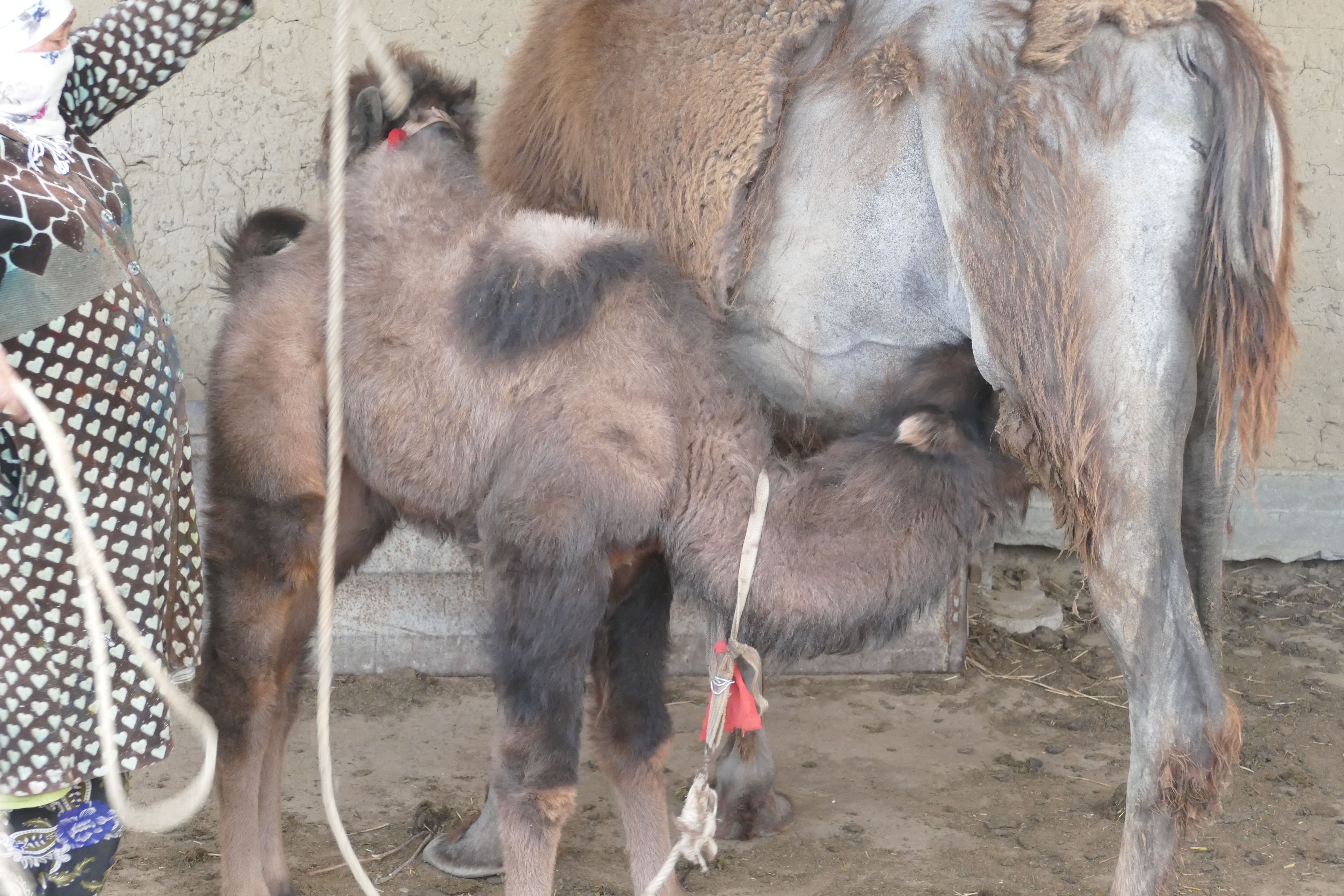
I never did find out that name of our host’s wife, although later she offered to show me how she milked the camels. We were taken to a little shed in which there was a solitary baby camel. As we were waiting there, the baby’s mother pushed her way into the yard. Mrs Ali (as I will call her) was well prepared for what was undoubtedly something of an ordeal. She had wrapped a scarf around her face, as the camel was more than likely to spit at her. Then she had to tie up the big camel, including tying its back legs together, to stop it kicking her. Even so, it was still trying to bite her. It would only give milk if the baby was suckling, so as soon as this began, Mrs Ali had to stand on one leg and balance a bucket on the other to collect the milk.
Warning: Do not try this at home
After 10 minutes or so she had about a litre of warm, fresh milk. That was taken back to the house to be pasteurised and transformed into sharbet, a delicious and wholesome drink.
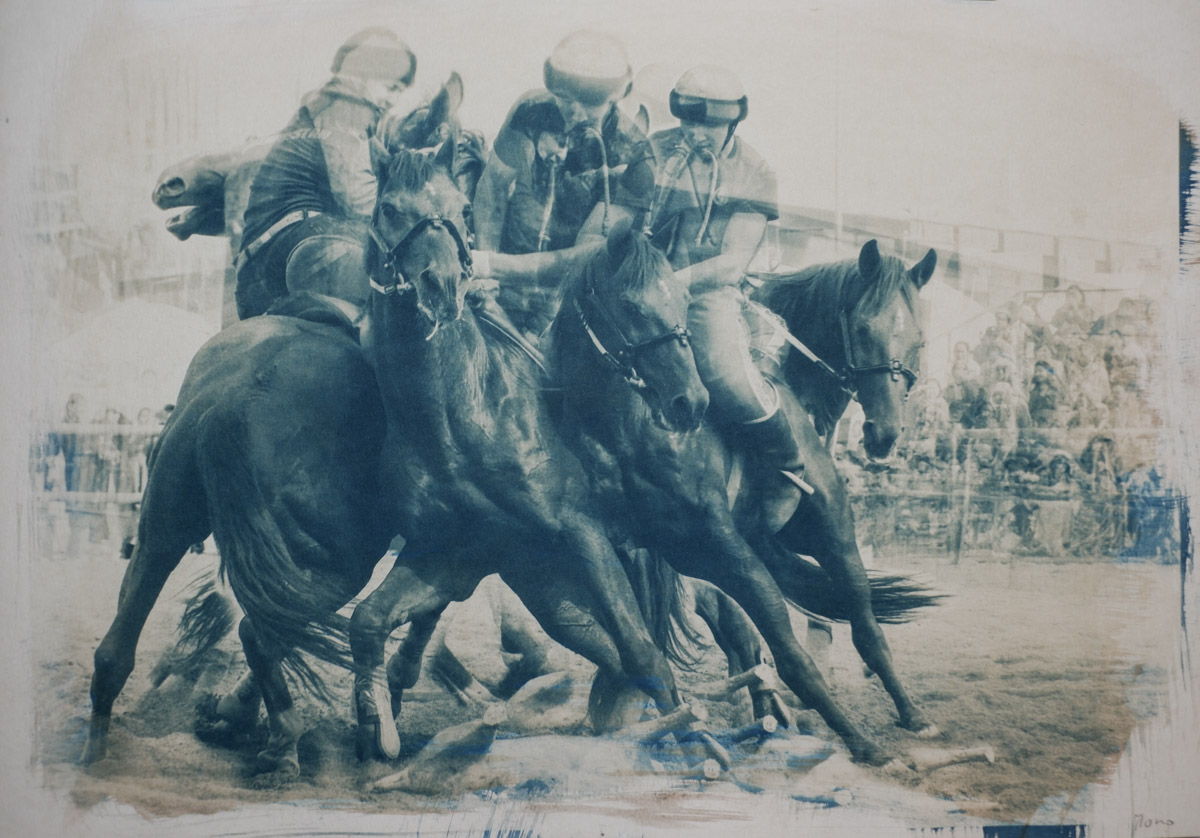
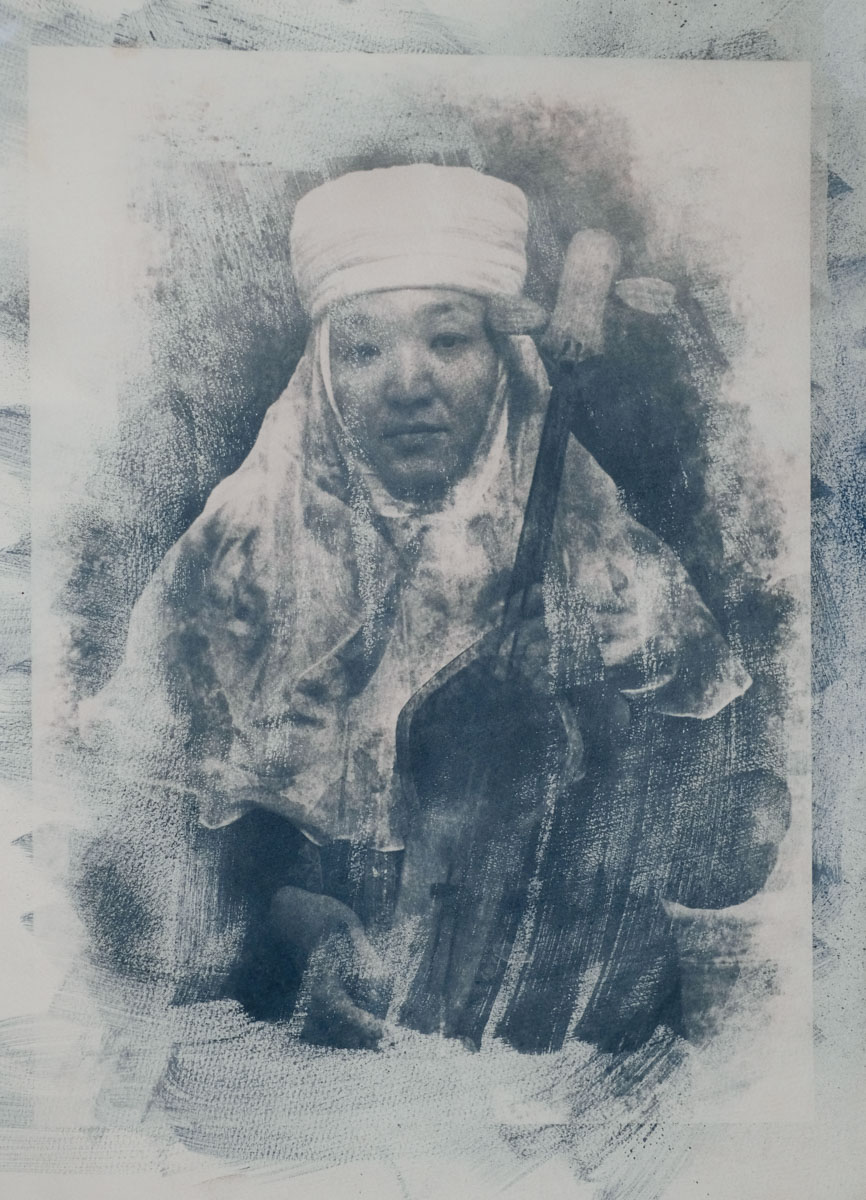
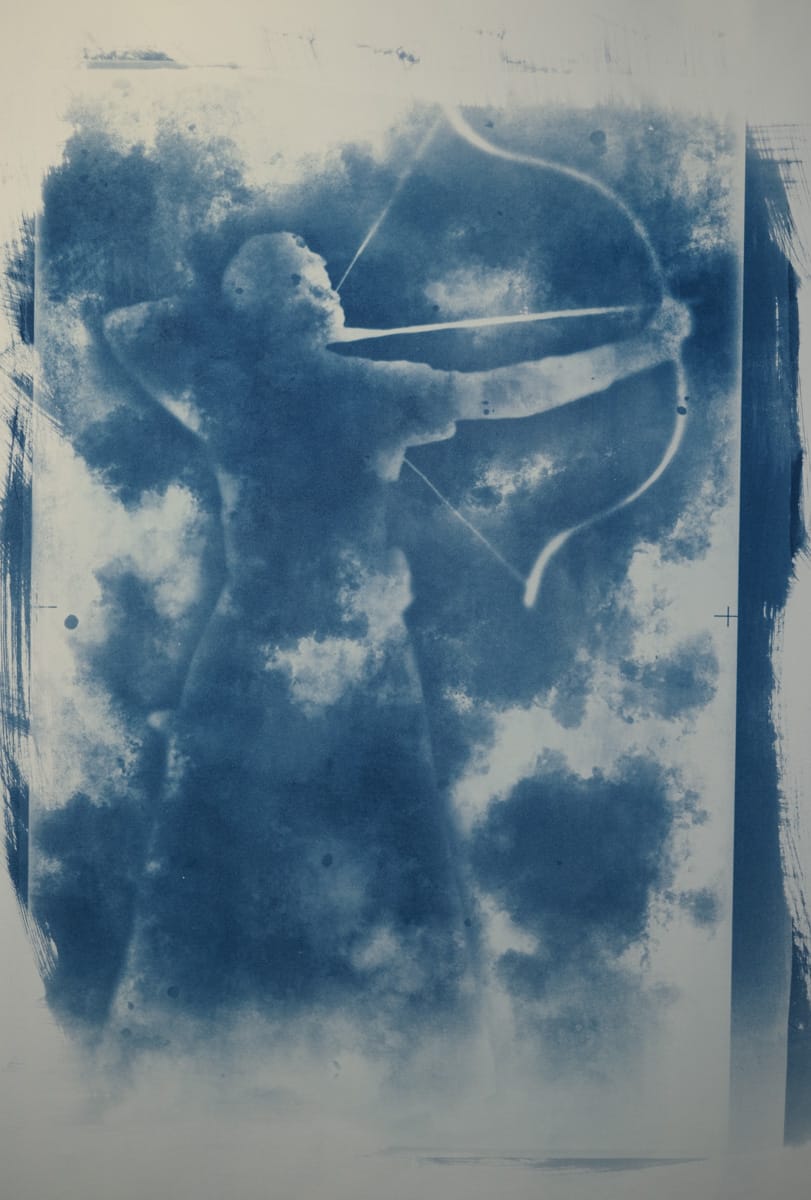
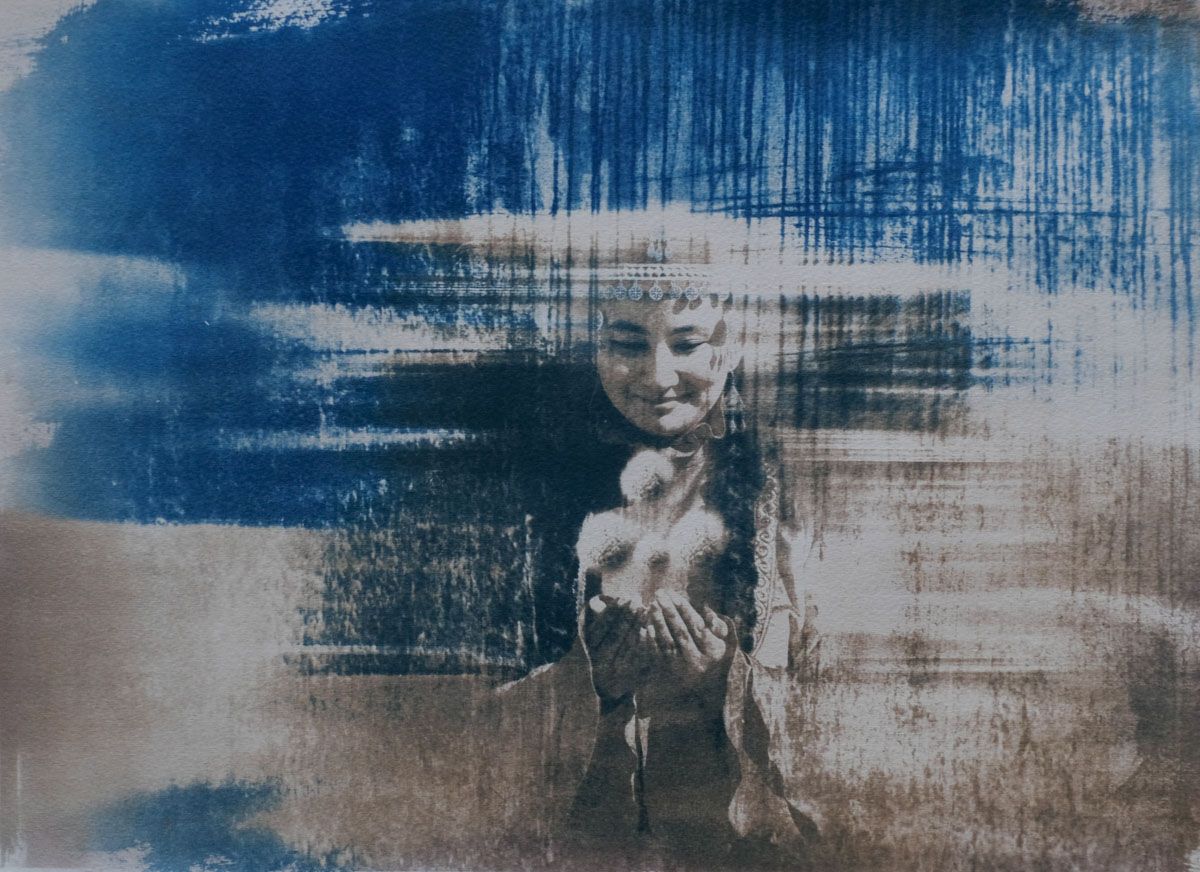
Dorota Bronikowska is a Polish artist who specialises in cyanotypes – the photographic process that produces a monochrome, blue-coloured print and is often used for art and reprography in the form of blueprints. I met her last September at the World Nomad Games in Astana, Kazakhstan, where she had travelled to take images that could later be processed into cyanotypes.
Dorota Bronikowska
I’m delighted to say that Dorota is now about to launch the results of her endeavours in a major new exhibition in Lublin, Poland. From the 7th – 21st June she will be exhibiting as part of the Second Eastern film Festival in the city. Her show of cyanotypes, entitled Kazakhstan –Tengri Kingdom, can be seen at the Dominican Monastery in the city*.
Explaining the show, Dorota says:
“Tengri is heaven. For centuries, Tengri has led its children and their herds across the sea of the steppe. So that they do not lose their way in space and time. Today’s Kazakhstan is an ethnic mosaic. In addition to Kazakhs, Uzbeks, Tatars, Chechens, Koreans, Germans, Poles live here. In total, over 130 nationalities are registered. Tengri lives in the Kazakh soul. Modern Kazakhs have one foot in modernity but still cultivate traditions from the times when Tengri was a god. The most striking example is the main axis of the capital of Kazakhstan – Astana. The main boulevard of this ultramodern city was led along a sacred road, and in the middle was erected a tower, referring to the shamanic tree of life. I have been to Kazakhstan twice. I made my first trip by bike. Then I visited holy places, met fascinating people. I saw how life is under the wings of Tengri. During my second trip, I watched ethnic sportsmen and women compete at the World Nomad Games. The different sports eloquently reflect the character and life of the ancient nomads on the Great Steppe.”
*Kazakhstan – Tengri Kingdom” will be on show at Lublin Monastery, entrance in Dominikanski Square, 20-112, Lublin from 7pm on 7 June – 21 June. Entrance Thurs-Sun, 1pm-5pm. Organised groups by appointment. Free admission. Created in cooperation with the Embassy of the Republic of Kazakhstan in the Republic of Poland, and Air Astana.
Here are a few more exmples of Dorota’s work. If you get a chance, visit the exhibition. More about the Festival here.
Some good news! Last week Nurzhan Nurzhigitov, Kazakhstan’s Minister of Water Resources and Irrigation, together with the World Bank, reaffirmed their commitment to joint efforts aimed at the restoration of the North Aral Sea.
At a meeting held at the Kokoral dam in Kyzylorda region – which I visited two weeks ago – Mr Nurzhigitov met with Sameh Wahba, Regional Director for Sustainable Development at the Europe and Central Asia region in the World Bank, to review the second phase of the North Aral Sea restoration project.
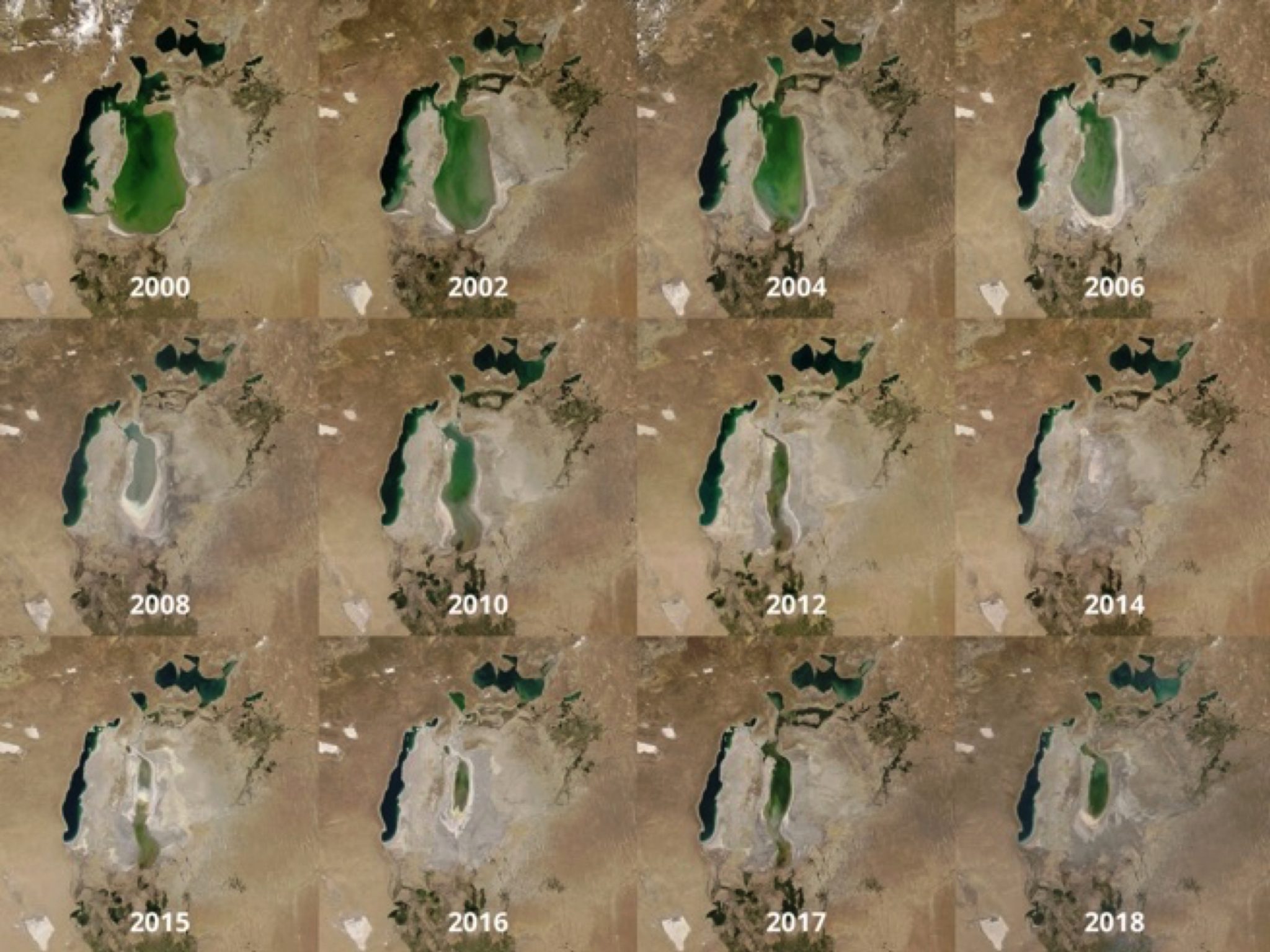
The North Aral Sea is the portion of the former Aral Sea that is fed by the Syr Darya River. After years of shrinkage, it split from the South Aral Sea in 1987–1988, with the introduction of inappropriate irrigation programmes for agricultural use.
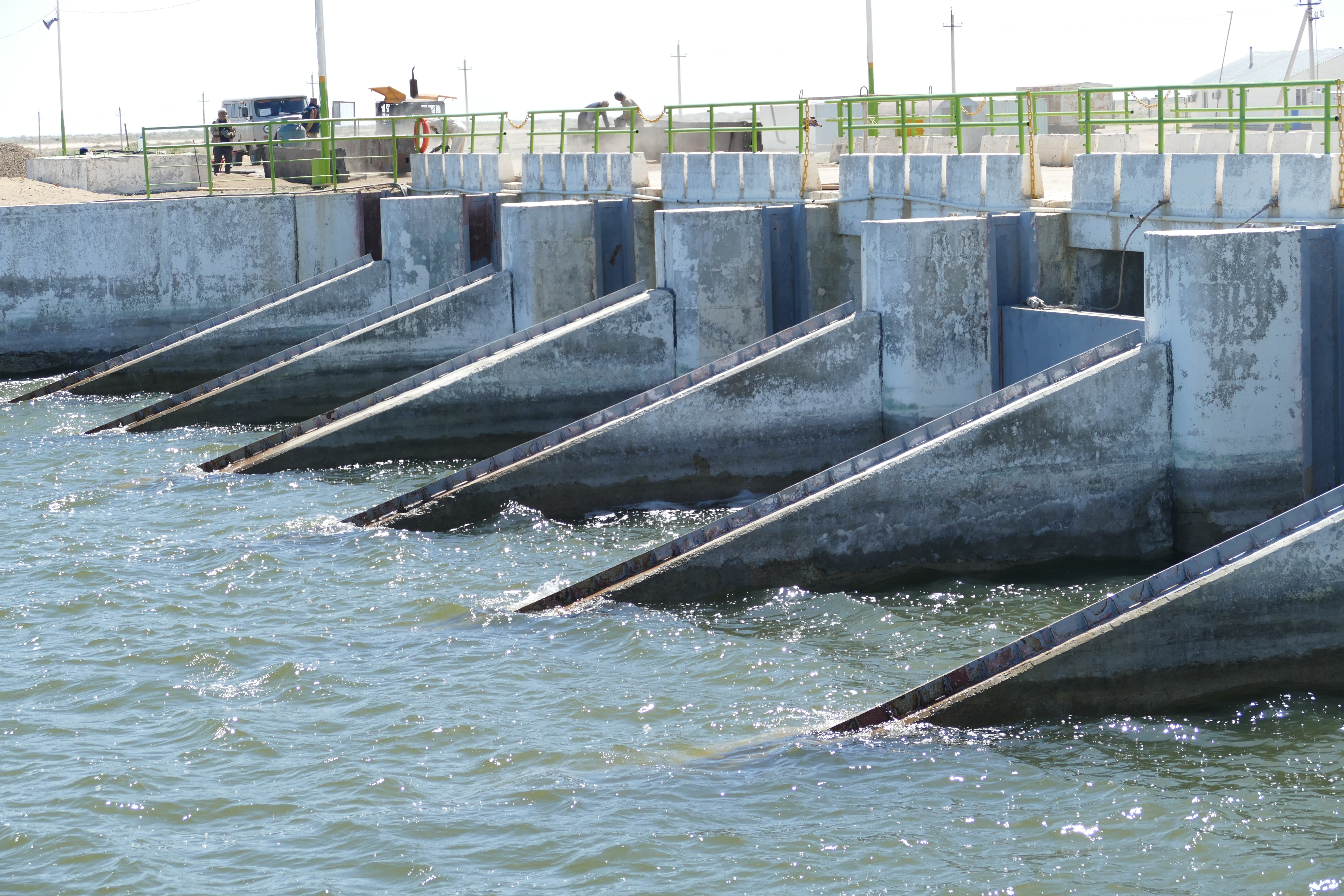
The 12-km long Kokaral dam, which splits off the North Aral Sea from its southern counterpart, was completed in 2005 to control the water levels and restore them to previous levels. As a result of the first phase of the restoration project, the volume of water in the North Aral has increased by 42% to 27 billion cubic metres, the salinity of the sea has decreased nearly fourfold, annual fish catches have risen to 8,000 tons, and 870 sq kms of the dried-up seabed have been covered with water, reducing the wind-driven removal of salt deposits.
The Kokaral Dam
Now the Ministry is completing a feasibility study for the second phase of the project, aimed at heightening the Kokaral dam and thus raising the North Aral Sea level to 44 metres. The plan will also allow for the construction of a hydroelectric complex near the village of Amanotkel to stabilize water resources in the Akshatau and Kamystybas lake systems in the Kyzylorda region.
The aim of this second phase is to increase the water surface area of the North Aral to 3,913 sq kms and its volume to 34 cubic kms within the next 4-5 years.
Sameh Wahba reconfirmed that the World Bank, which is financing the feasibility study, remains committed to further participation in preserving the North Aral Sea. Together with Minister Nurzhigitov he visited a local fish processing plant and saw how many jobs have been created in the region in such sectors as agriculture, livestock farming, and tourism. “The North Aral Sea conservation project is very important for us, as it shows the world an example of restoring an entire ecosystem,” he added.
This is what the Aral Sea looks like now in many places
Once the fourth largest lake in the world, much of the Aral Sea basin has turned into a dustbowl due to poorly thought-out irrigation strategies introduced by the Soviet Union in the 1960s-70s. The North Aral Sea conservation project aims to increase the volume and improve the quality of water in the sea, restore the Syr Darya River delta, reduce wind-driven removal of salt deposits from the bottom of the Aral Sea, develop the fishery in the Kyzylorda region, and improve the living conditions of local residents.
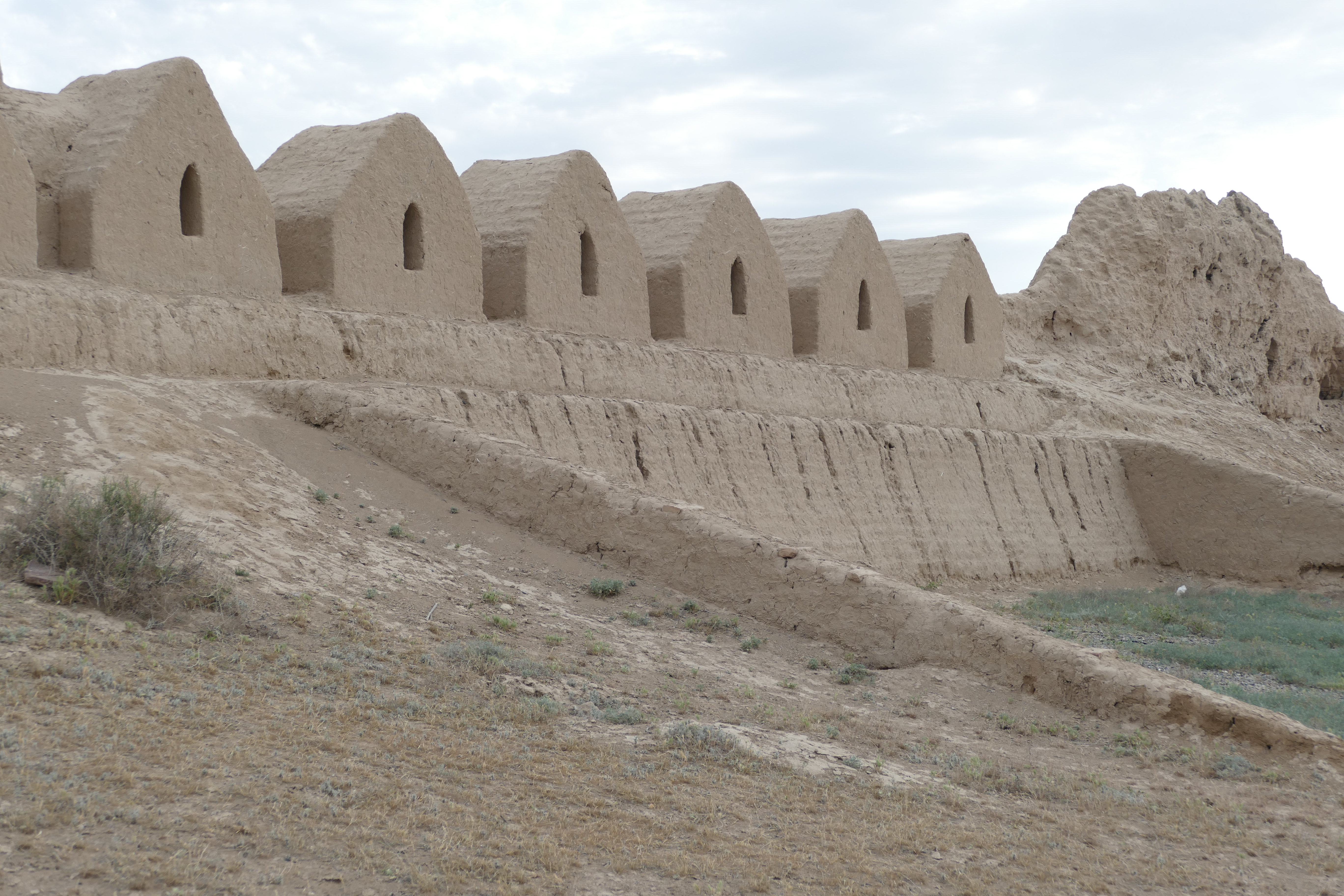
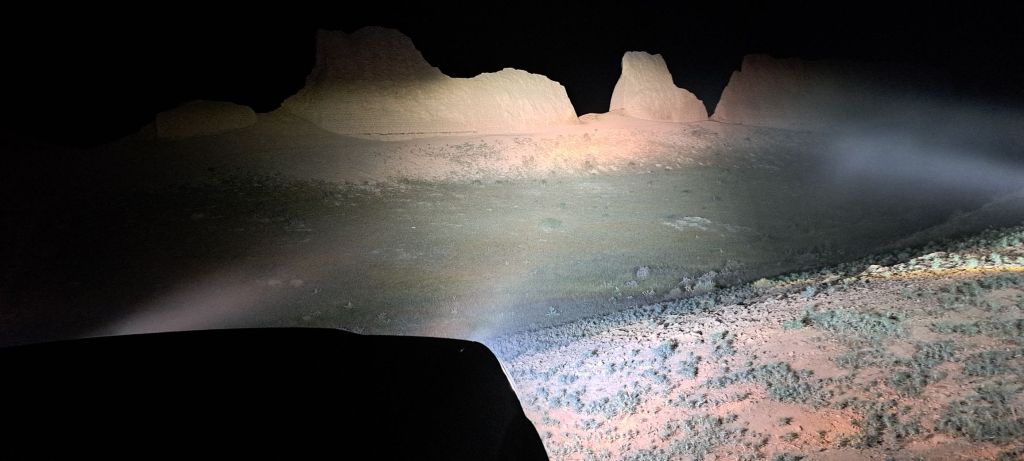
After a hard day’s driving from Almaty towards the Aral Sea, we arrived after dark at the walls of the abandoned city of Sauran, 70 kms north of Turkistan. This remarkable site was once the largest city on Kazakh territory, but now only majestic ruins remain. The city fell victim to the collapse of the Silk Road trade following the opening up of sea routes from Europe to the East in the seventeenth century.
Sauran survived the Mongol onslaught even though nearby Otrar was completely destroyed for failing to negotiate a deal with Genghis Khan.
The Sauran ruins stretch for several miles, but the main town walls are almost complete, together with a reconstructed main entrance.
Wandering across this massive site you come across countless fragments of fired blue tiles and shards of pottery. One excavated spot shows just how impressive it once was.
We camped beneath the walls and left early the next morning to continue our journey, past Kyzylorda towards the Aral.
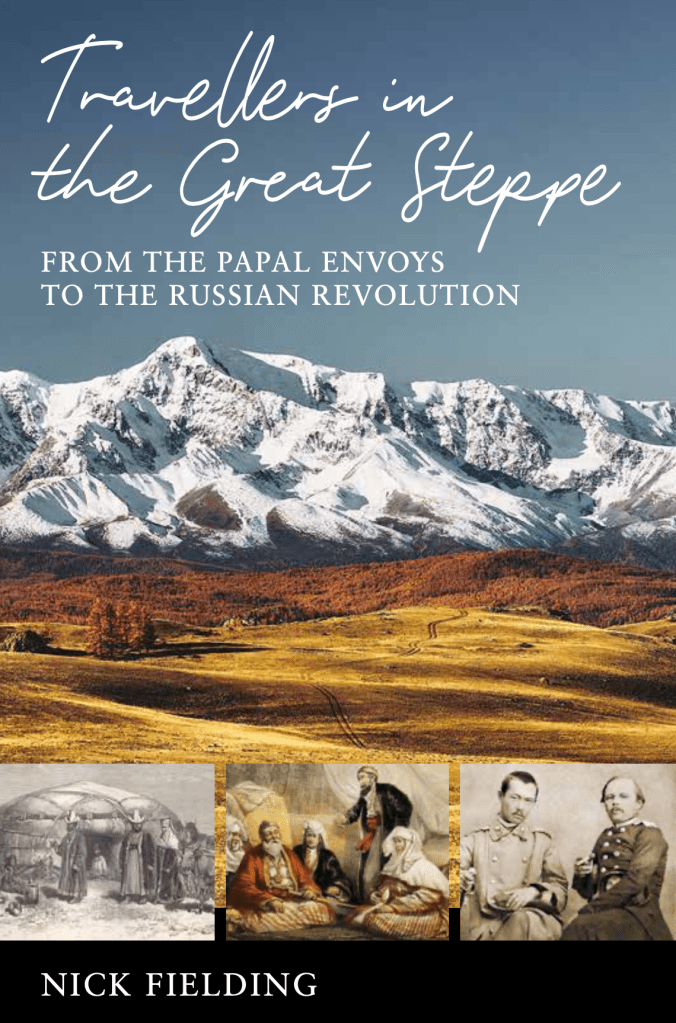
I can confirm that the official launch of my new book, Travellers in the Great Steppe: From the Papal Envoys to the Russian Revolution, will take place on Wednesday 23rd September at 14.30. It will be a hybrid event, meaning that the launch will be broadcast live from the Royal Geographical Society in London, but members of the public will not be able to attend in person, although they will have full access via the internet. If you would like to register for the launch please click this Zoom link. I will outline some of the fascinating stories contained in the book and there will also be words from H E Erlan Idrissov, Ambassador of Kazakhstan, Thomas Atkinson descendant Steve Brown and from a speaker from the RGS.








 Siberian Steppes