
Over the past few years I have come across dozens of novels that are set in Central Asia. Most date from the end of the 19th century until the 1930s and reflect that period when the last few unexplored places were gradually being discovered and mapped. Many of them are in the form of what are generally known as ‘Lost Race Novels’. These usually take the form of a group of modern travellers finding a ‘lost’ community living in an isolated valley away in the mountains. The original story of Shangri-La is the most well-known of these novels. Others feature lost tribes, lost Vikings, lost Greeks and Romans, even lost Crusaders. Many are characterised by their lurid cover art. So far I have found over 120 such novels based in Western Asia, in which I include the mountains of northern India and Tibet.
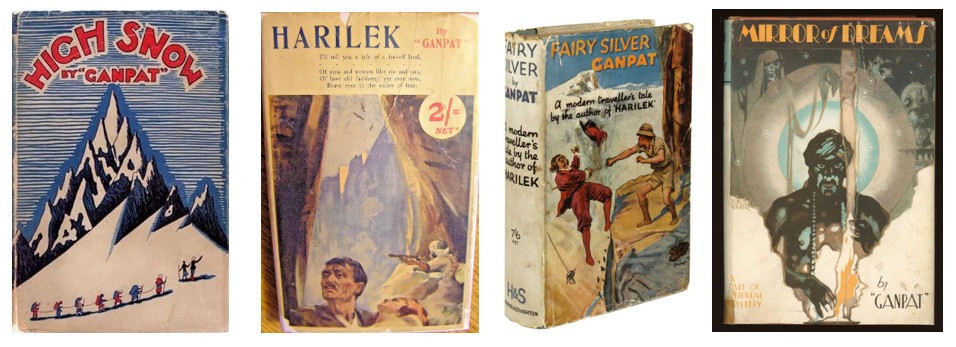
I have now written an article summarising what I have found so far and including as many of the covers as possible. You can find a link to my article here:
Please let me know of any others that you find.


Thank you, Nick, for publicising this centuries old fascination with the East. But is it only Europeans who have this way of looking at central Asian cultures? After all, all the modern day religions have their origins in Asia. Is this fiction story writing just another strand of getting away from reality – which is what all religions do?
Fiction – in the way of books, films, theatre, painting – is primarily a European thing. Admittedly we now have Bollywood, but that is specific to India ; and there are the Japanese Noh plays. Is it just a matter of different cultures producing or not producing fiction? Islam just about bans it.
In my travels, I have been seduced by foreign cultures; and find a thrill in the different, the strange.
I’ve read some of the books you mention, Kipling, Rider Haggard for example. The TV channel Talking Pictures TV shows old films, many with mystical eastern plots that involve the unreal, the
unworldly. The audience is still there. But there again, films written by Europeans, not the Asians
living in the places in which the films are set. What would a book written by a Nepalese set in Nepal about a strange tribe living in the foothills of the Himalayas read like?
Regrettably there is a holier-than-thou minority out to ban fiction written about inevitably non-European peoples by Europeans; on the grounds of wrongful depiction, insulting traditions, etc, etc.
You mention the supposed inability of writing about fictional Europeans being cleverer than the fictional tribes they find. So what? The modern world runs on European inventions and discoveries. More than ever we need escapism from reality. So write what you want, and get away from the “drab, weary lives” (Tom Lehrer) we lead.
Please keep on with your revelations of that place that’s east of Suez, where the best is like the worst, where there are no Ten Commandments, and a man can raise a thirst,
All the best,
Morena Thabo, as I was called in Africa.
LikeLike
Many thaqnks for your email and thanks also for reading my piece on Fictional Central Asia. You make some interesting points. Until the early 20th Century fiction in the form of novels was primarily a western phenomenon, although it has since spread to almost every part of the world. However, I have yet to see anything that would count as a lost race novel originating from Asia. Part of the reason for this could be differing ideas in east and west about what constitutes reality. That in turn in probably based on religious doctrine. If there are any SF novels or similar originating in Asia I would certainly like to read them. Of course, I am opposed to any attempt to censor fiction for ideological reasons and sincerely hope this never happens. What is surprising about many of the novels written by westerners is how often they attribute special powers or higher intelligence to the isolated societies they create in their writings.
LikeLike
Dear Nick, I hope you don’t mind, I shared your post about fictional Central Asian literature with a Facebook group I belong to. No doubt you can see it went onto The Gre
LikeLike
Thanks for this interesting list, it looks like you may have identified a new sub-genre of literature and these books will surely become more collectible now?
Allan Mallinson has a whole series of novels on colonial India, do these count? (I’m currently reading his “The Tigress of Mysore”). Also, “The Trials of Eldred Pottinger” by Nigel Hastilow. Am I still on the wrong tack?
On a recent trip to Tibet, my copy of Tin Tin in Tibet comic book was confiscated by Chinese customs!
LikeLike
Hi William,
Many thanks for your comments. I’m afraid the Mallinson and Hastilow novels don’t quite cut it, being set in south Asia, rather than Central Asia. But please keep the suggestions coming. As for your Tintin comic causing an upset in Tibet, that’s priceless!
LikeLike