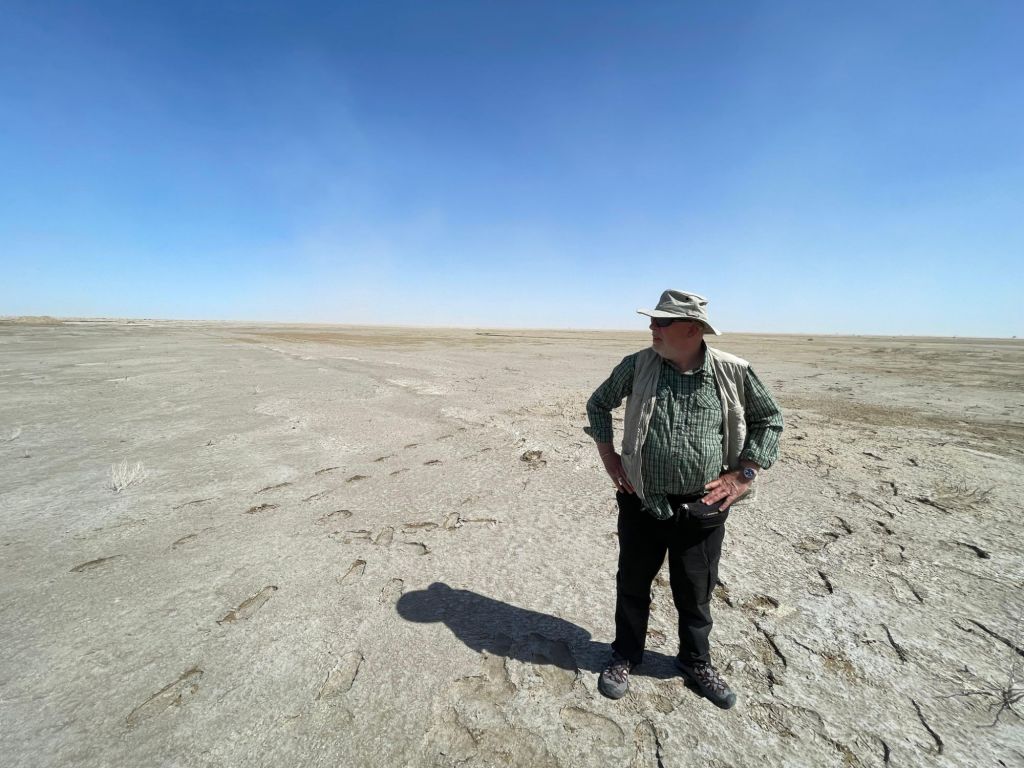
After travelling across the northern Aral Sea basin during the past week, I have seen both the devastating consequences of ill thought-out irrigation policies – and the beginnings of partial rejuvenation.
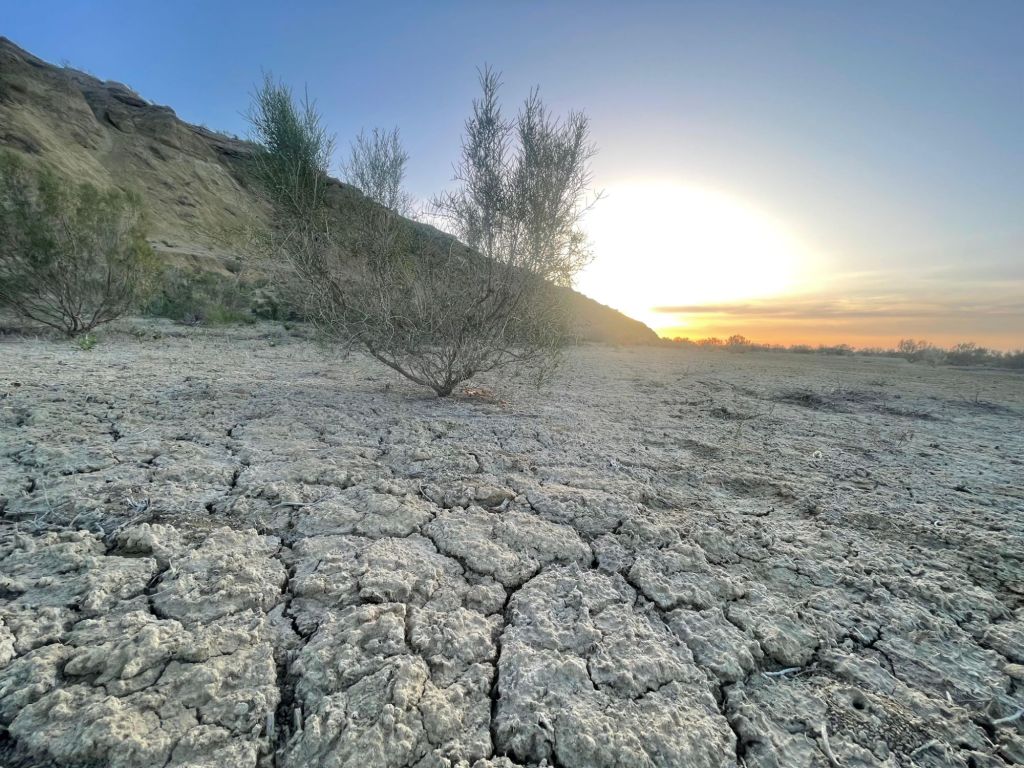
Vast areas that were once the seabed of a productive fishery now form a new desert, where saxaul is the principal vegetation and powder-fine sand blows into the air with every step. Huge salt pans dominate the landscape. Scientists say pesticide residues in the sand form a deadly cocktail that threatens the health of local people.
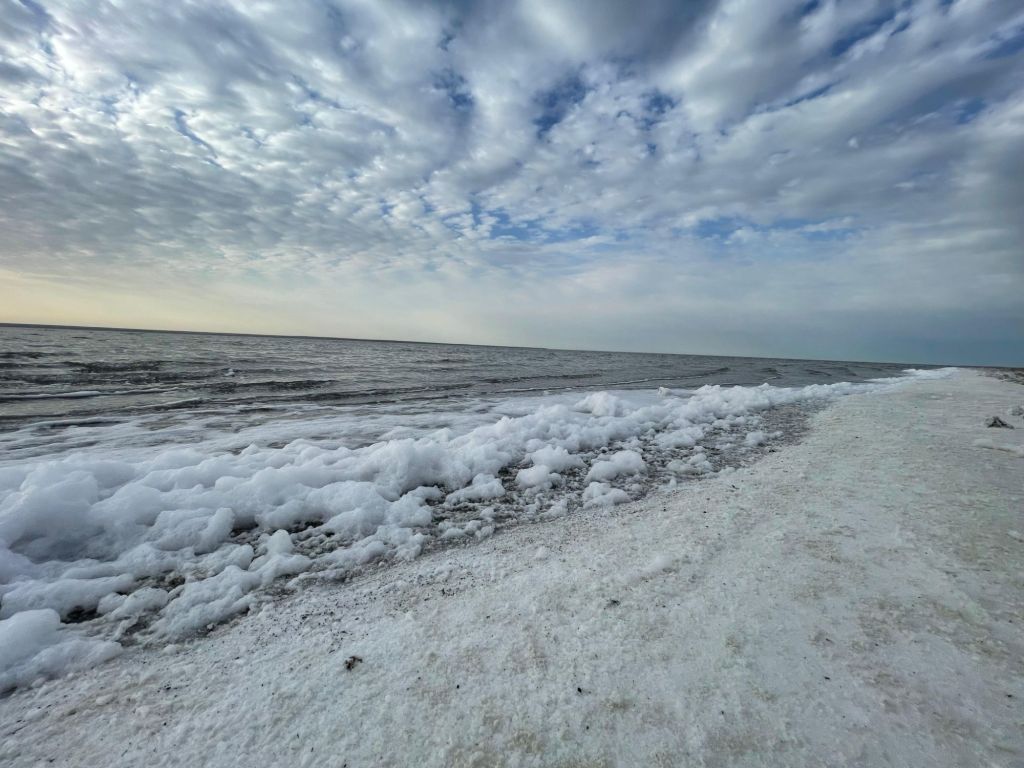
Having driven from Almaty, our journey into the Aral began at Lake Kambush, a relict lake of the Sea and a delightful spot that belied the vistas just over the horizon.

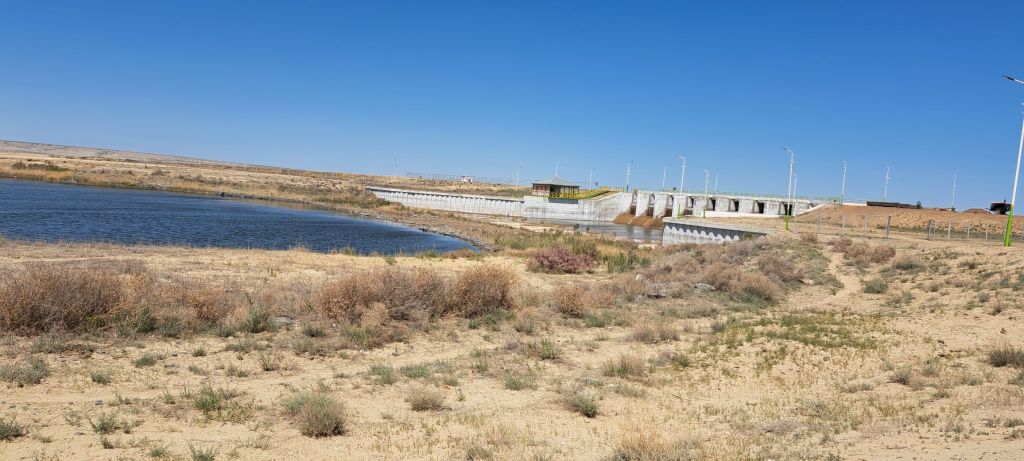
From there we headed south to the Kokaral dam, which offers some sense of hope. This last year alone has seen the amount of water retained in the northern Aral rise by 2 billion tonnes and cover more than 300 sq kms. The aim is to raise the height of the dam by another 9m and reflood the land all the way back to the town of Aralsk.
Our journey took us further south towards Barsa Kelmes island. The name itself means ‘If you go, you won’t come back’. On our way we came upon a shipwreck,one of the very few that have not been cut up for scrap, mainly due to its remoteness.

Barsa Kelmes is no longer an island, of course. The remains of a weather station are slowly falling to pieces and we found notes from the 1950s monitoring the local saiga antelope population.


Our next destination was the so-called Big Aral – which is now three rapidly diminishing lakes – in one of which we swam. The water was so salty it was impossible to sink.

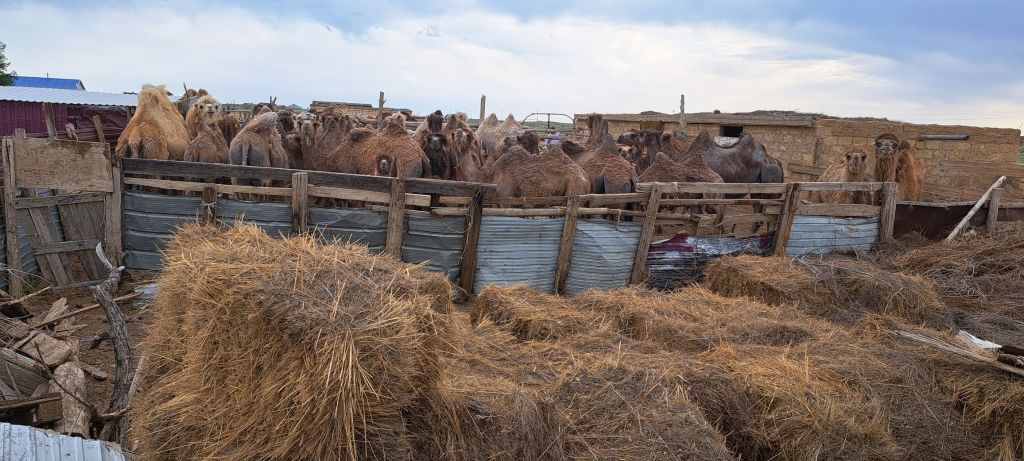
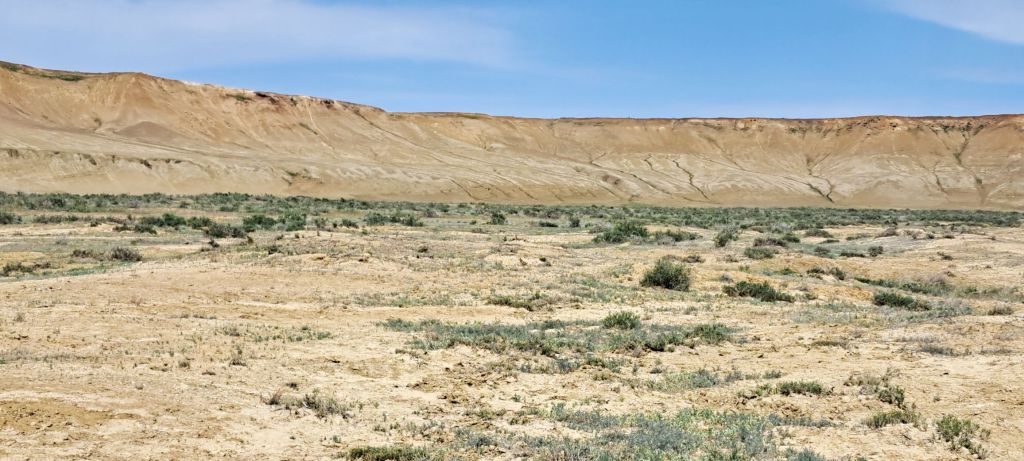
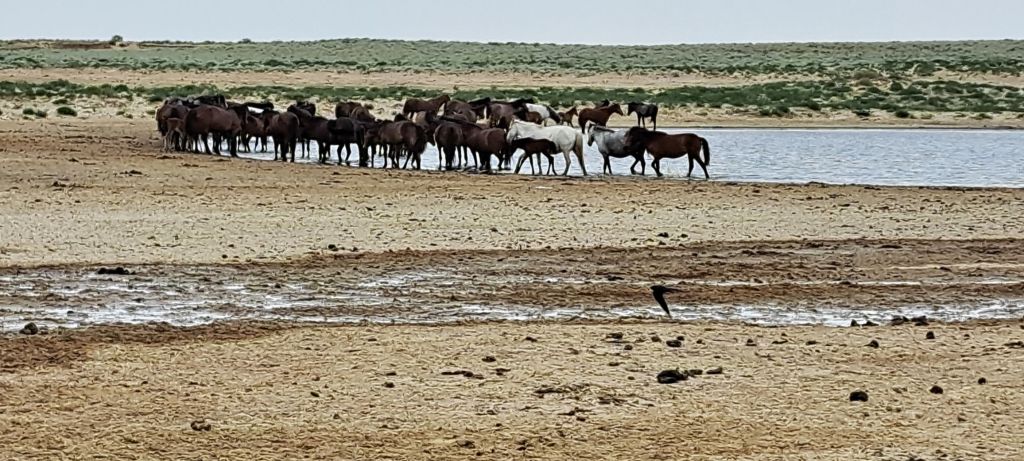
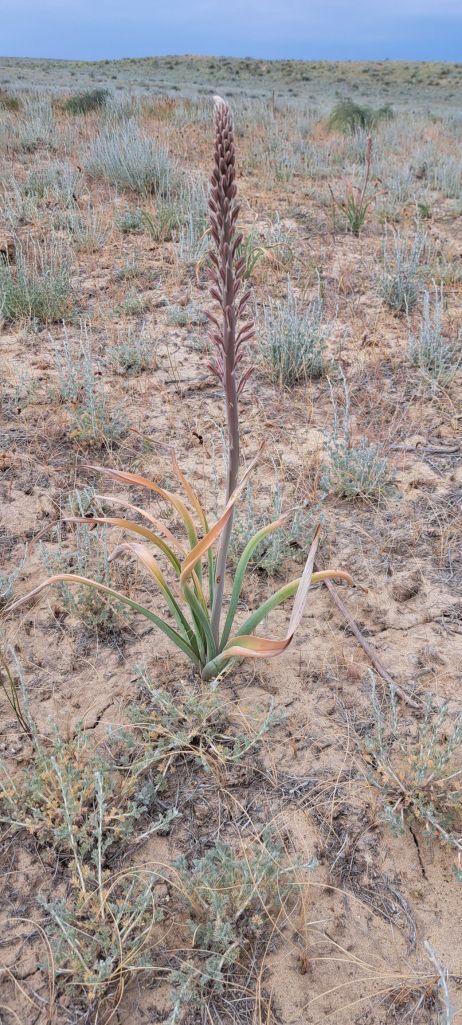
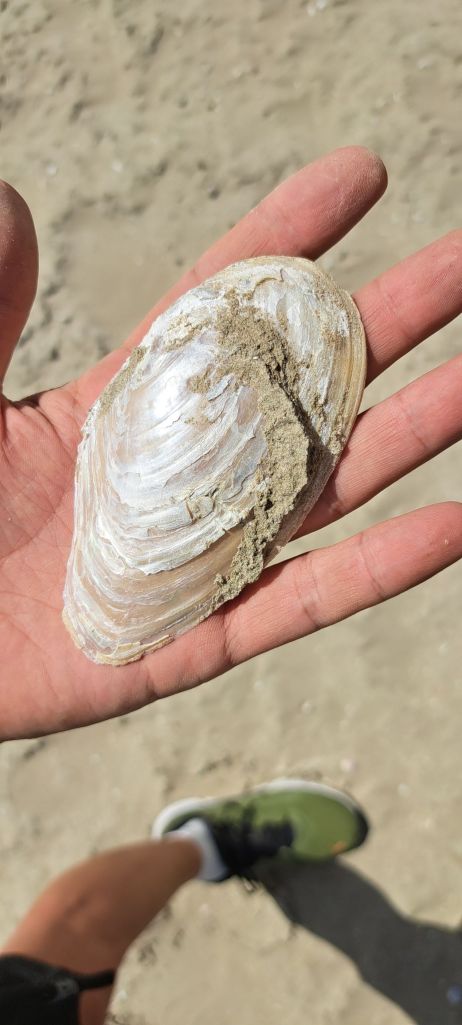
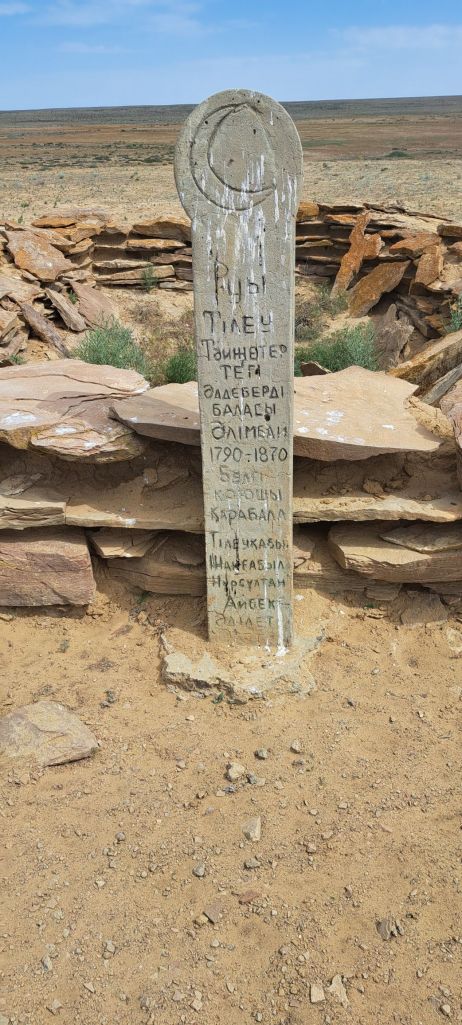
Here are a few more pics that illustrate the environment around the northern Aral region.







 Siberian Steppes
Really fascinating!
LikeLike