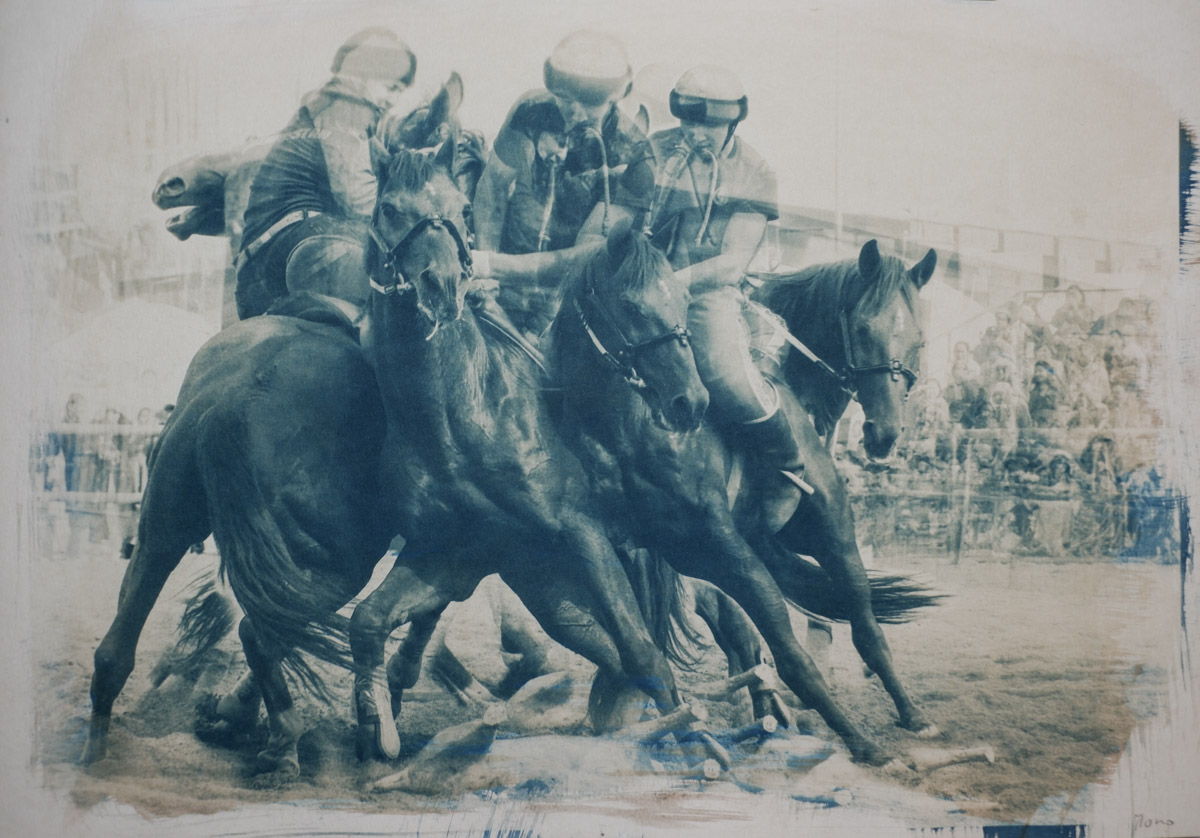
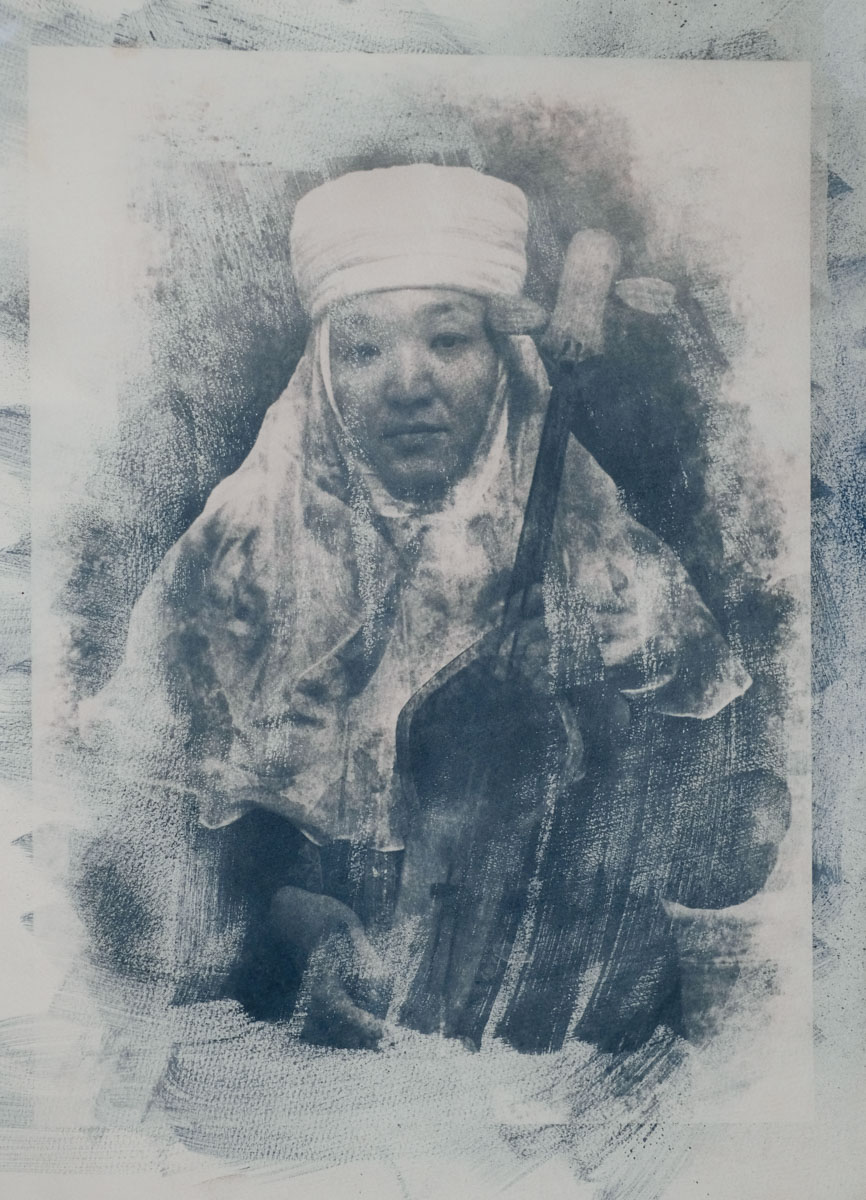
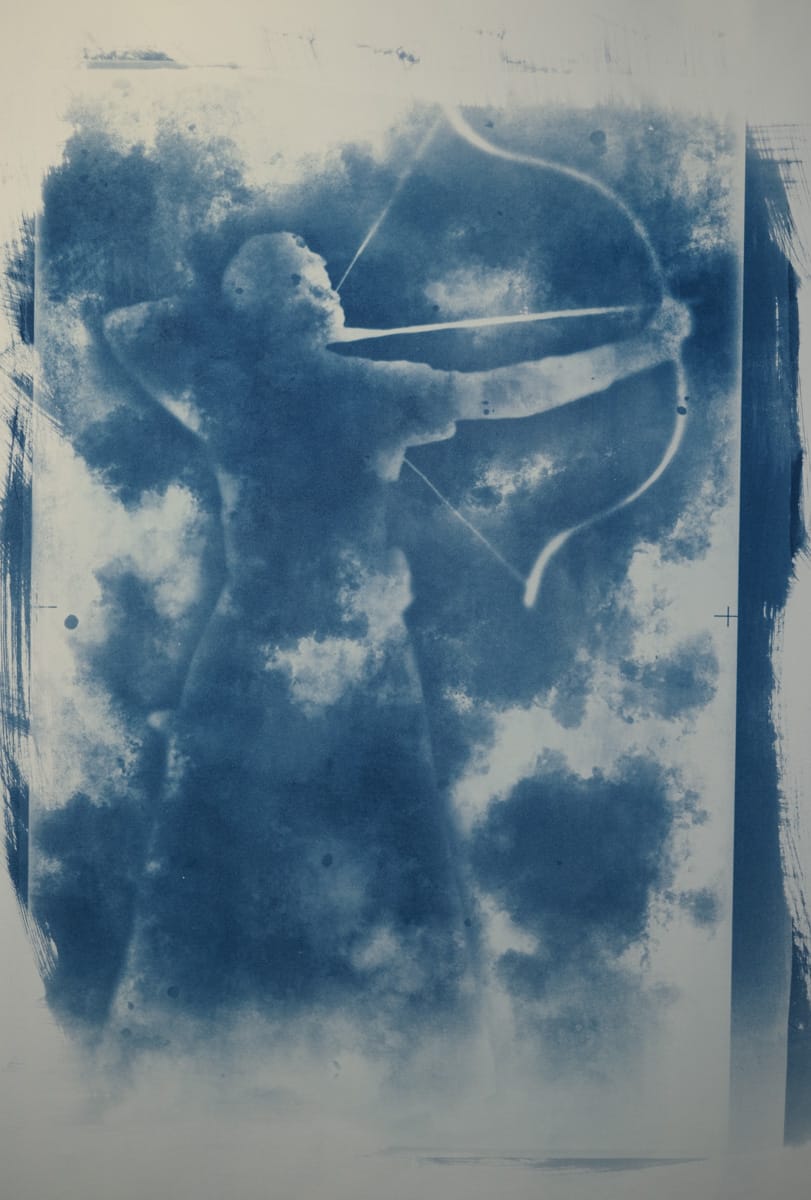
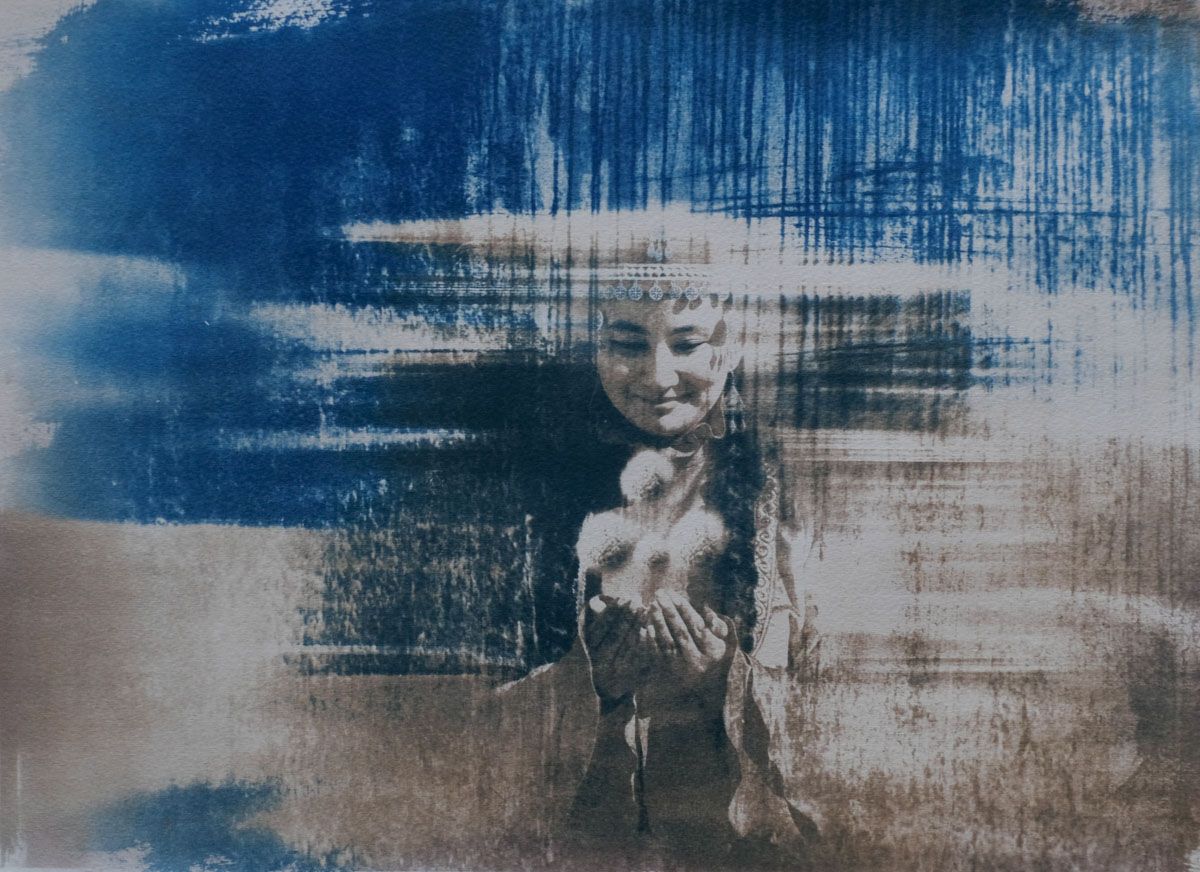
Dorota Bronikowska is a Polish artist who specialises in cyanotypes – the photographic process that produces a monochrome, blue-coloured print and is often used for art and reprography in the form of blueprints. I met her last September at the World Nomad Games in Astana, Kazakhstan, where she had travelled to take images that could later be processed into cyanotypes.
Dorota Bronikowska
I’m delighted to say that Dorota is now about to launch the results of her endeavours in a major new exhibition in Lublin, Poland. From the 7th – 21st June she will be exhibiting as part of the Second Eastern film Festival in the city. Her show of cyanotypes, entitled Kazakhstan –Tengri Kingdom, can be seen at the Dominican Monastery in the city*.
Explaining the show, Dorota says:
“Tengri is heaven. For centuries, Tengri has led its children and their herds across the sea of the steppe. So that they do not lose their way in space and time. Today’s Kazakhstan is an ethnic mosaic. In addition to Kazakhs, Uzbeks, Tatars, Chechens, Koreans, Germans, Poles live here. In total, over 130 nationalities are registered. Tengri lives in the Kazakh soul. Modern Kazakhs have one foot in modernity but still cultivate traditions from the times when Tengri was a god. The most striking example is the main axis of the capital of Kazakhstan – Astana. The main boulevard of this ultramodern city was led along a sacred road, and in the middle was erected a tower, referring to the shamanic tree of life. I have been to Kazakhstan twice. I made my first trip by bike. Then I visited holy places, met fascinating people. I saw how life is under the wings of Tengri. During my second trip, I watched ethnic sportsmen and women compete at the World Nomad Games. The different sports eloquently reflect the character and life of the ancient nomads on the Great Steppe.”
*Kazakhstan – Tengri Kingdom” will be on show at Lublin Monastery, entrance in Dominikanski Square, 20-112, Lublin from 7pm on 7 June – 21 June. Entrance Thurs-Sun, 1pm-5pm. Organised groups by appointment. Free admission. Created in cooperation with the Embassy of the Republic of Kazakhstan in the Republic of Poland, and Air Astana.
Here are a few more exmples of Dorota’s work. If you get a chance, visit the exhibition. More about the Festival here.
Some good news! Last week Nurzhan Nurzhigitov, Kazakhstan’s Minister of Water Resources and Irrigation, together with the World Bank, reaffirmed their commitment to joint efforts aimed at the restoration of the North Aral Sea.
At a meeting held at the Kokoral dam in Kyzylorda region – which I visited two weeks ago – Mr Nurzhigitov met with Sameh Wahba, Regional Director for Sustainable Development at the Europe and Central Asia region in the World Bank, to review the second phase of the North Aral Sea restoration project.
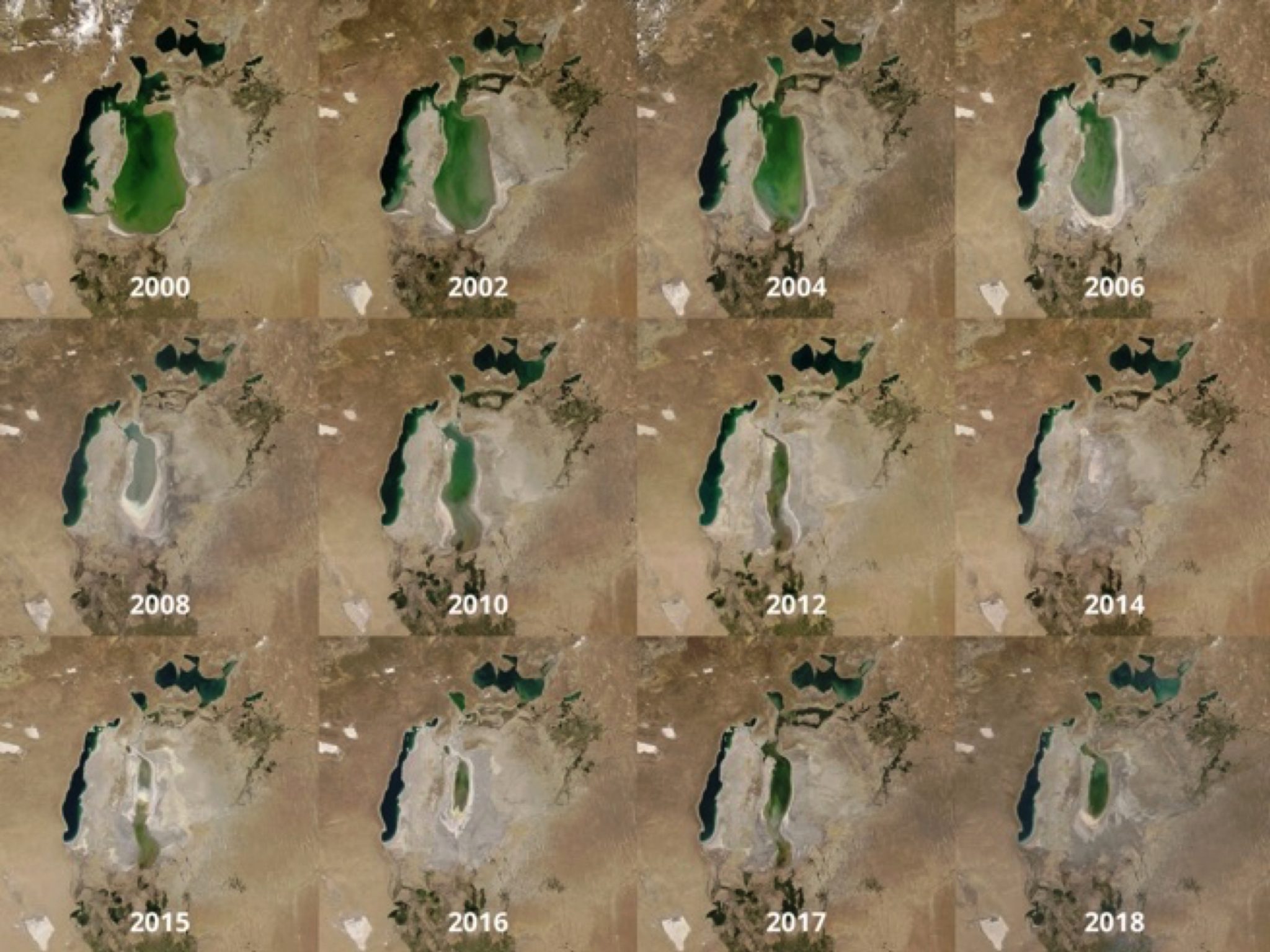
The North Aral Sea is the portion of the former Aral Sea that is fed by the Syr Darya River. After years of shrinkage, it split from the South Aral Sea in 1987–1988, with the introduction of inappropriate irrigation programmes for agricultural use.
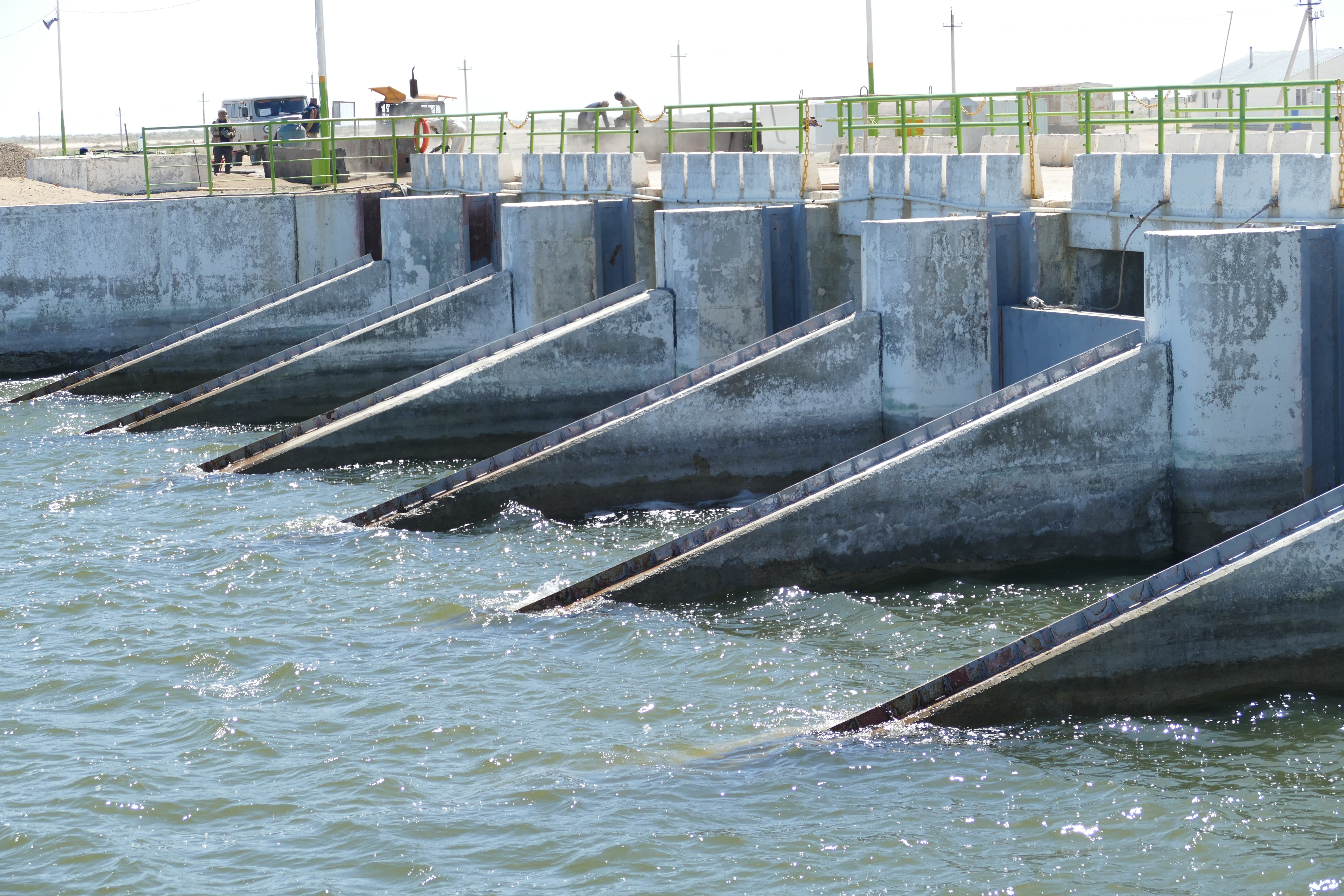
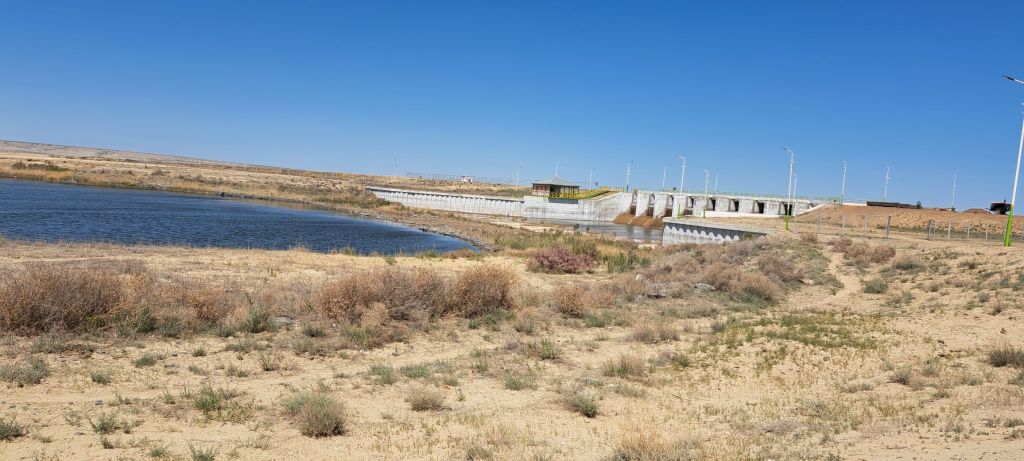
The 12-km long Kokaral dam, which splits off the North Aral Sea from its southern counterpart, was completed in 2005 to control the water levels and restore them to previous levels. As a result of the first phase of the restoration project, the volume of water in the North Aral has increased by 42% to 27 billion cubic metres, the salinity of the sea has decreased nearly fourfold, annual fish catches have risen to 8,000 tons, and 870 sq kms of the dried-up seabed have been covered with water, reducing the wind-driven removal of salt deposits.
The Kokaral Dam
Now the Ministry is completing a feasibility study for the second phase of the project, aimed at heightening the Kokaral dam and thus raising the North Aral Sea level to 44 metres. The plan will also allow for the construction of a hydroelectric complex near the village of Amanotkel to stabilize water resources in the Akshatau and Kamystybas lake systems in the Kyzylorda region.
The aim of this second phase is to increase the water surface area of the North Aral to 3,913 sq kms and its volume to 34 cubic kms within the next 4-5 years.
Sameh Wahba reconfirmed that the World Bank, which is financing the feasibility study, remains committed to further participation in preserving the North Aral Sea. Together with Minister Nurzhigitov he visited a local fish processing plant and saw how many jobs have been created in the region in such sectors as agriculture, livestock farming, and tourism. “The North Aral Sea conservation project is very important for us, as it shows the world an example of restoring an entire ecosystem,” he added.
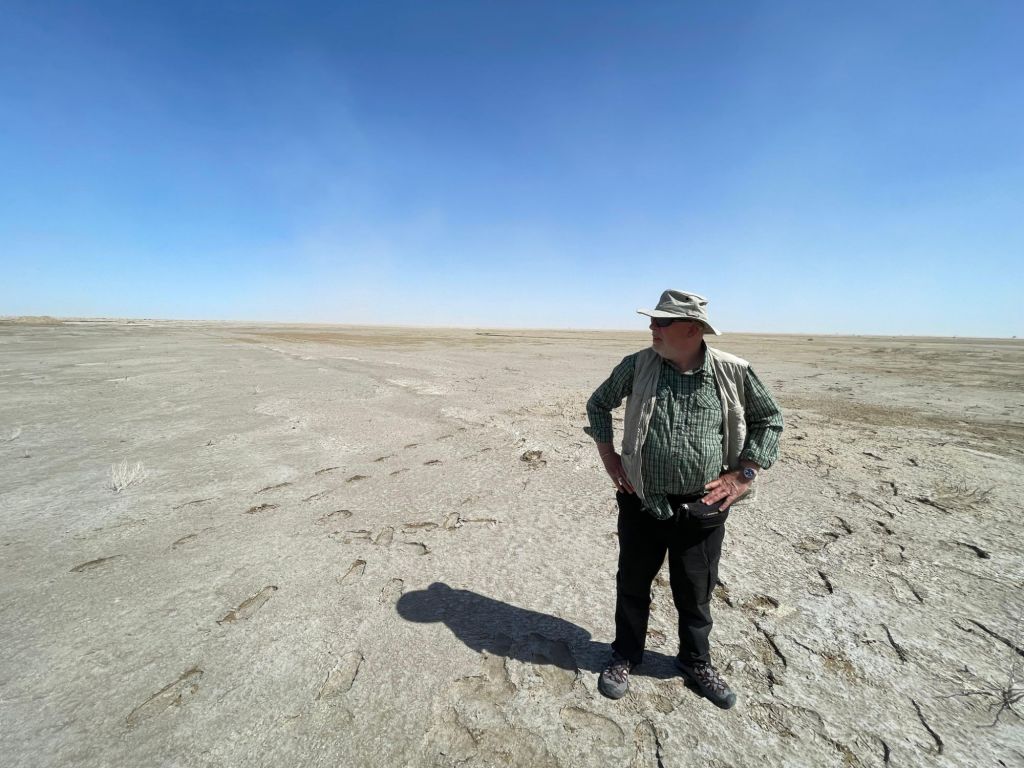
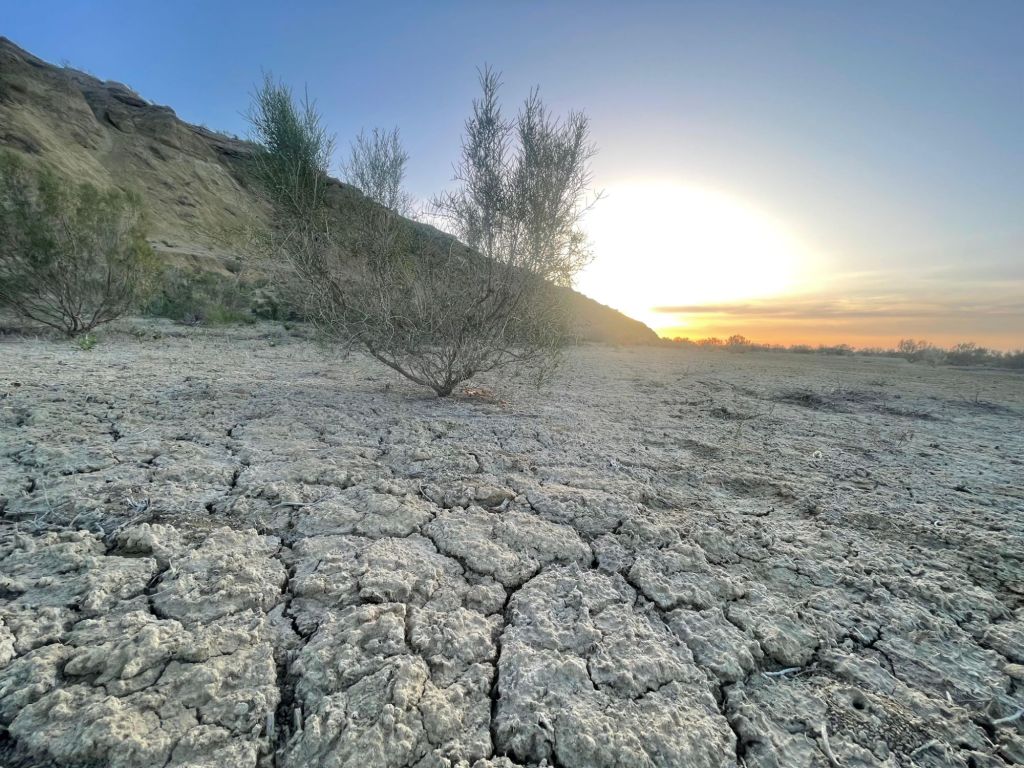
This is what the Aral Sea looks like now in many places
Once the fourth largest lake in the world, much of the Aral Sea basin has turned into a dustbowl due to poorly thought-out irrigation strategies introduced by the Soviet Union in the 1960s-70s. The North Aral Sea conservation project aims to increase the volume and improve the quality of water in the sea, restore the Syr Darya River delta, reduce wind-driven removal of salt deposits from the bottom of the Aral Sea, develop the fishery in the Kyzylorda region, and improve the living conditions of local residents.
After travelling across the northern Aral Sea basin during the past week, I have seen both the devastating consequences of ill thought-out irrigation policies – and the beginnings of partial rejuvenation.
Vast areas that were once the seabed of a productive fishery now form a new desert, where saxaul is the principal vegetation and powder-fine sand blows into the air with every step. Huge salt pans dominate the landscape. Scientists say pesticide residues in the sand form a deadly cocktail that threatens the health of local people.
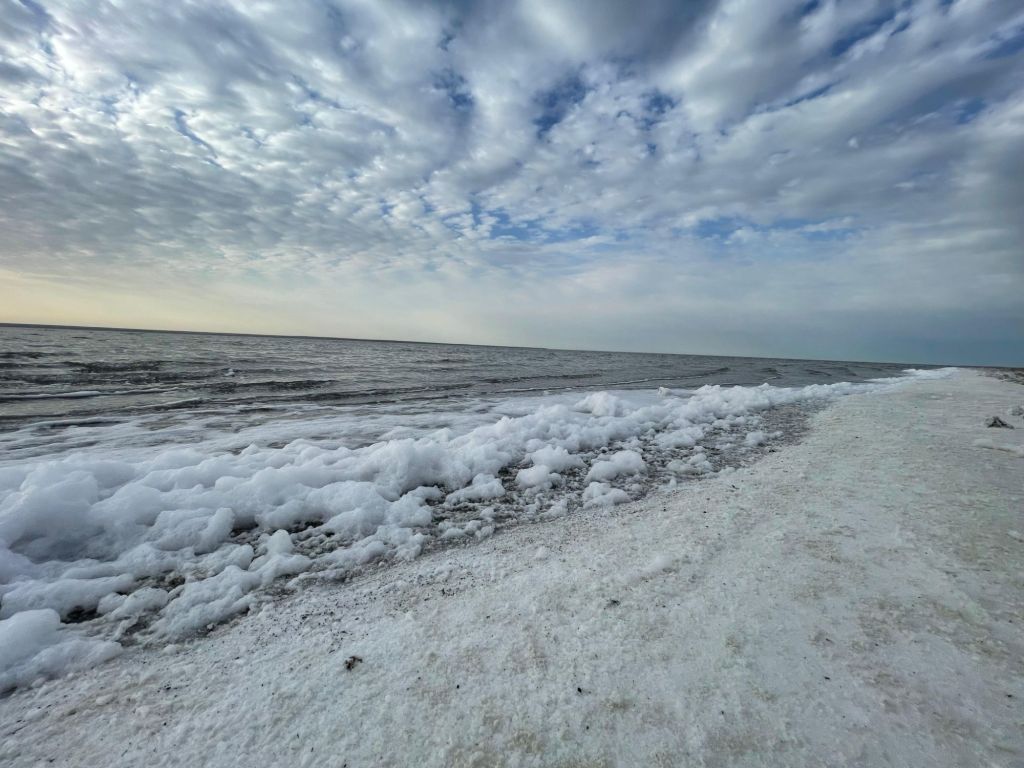
The shore of one of the lakes that are all that is left of the Aral Sea.
Having driven from Almaty, our journey into the Aral began at Lake Kambush, a relict lake of the Sea and a delightful spot that belied the vistas just over the horizon.
Lake Kambush
From there we headed south to the Kokaral dam, which offers some sense of hope. This last year alone has seen the amount of water retained in the northern Aral rise by 2 billion tonnes and cover more than 300 sq kms. The aim is to raise the height of the dam by another 9m and reflood the land all the way back to the town of Aralsk.
The Kokaral dam
Our journey took us further south towards Barsa Kelmes island. The name itself means ‘If you go, you won’t come back’. On our way we came upon a shipwreck,one of the very few that have not been cut up for scrap, mainly due to its remoteness.
Barsa Kelmes is no longer an island, of course. The remains of a weather station are slowly falling to pieces and we found notes from the 1950s monitoring the local saiga antelope population.
A map of the former island of Barsa Kelmes on the wall of a decaying weather station
Our next destination was the so-called Big Aral – which is now three rapidly diminishing lakes – in one of which we swam. The water was so salty it was impossible to sink.
Floating in the Big Aral. Nothing survives in it’s briny water.
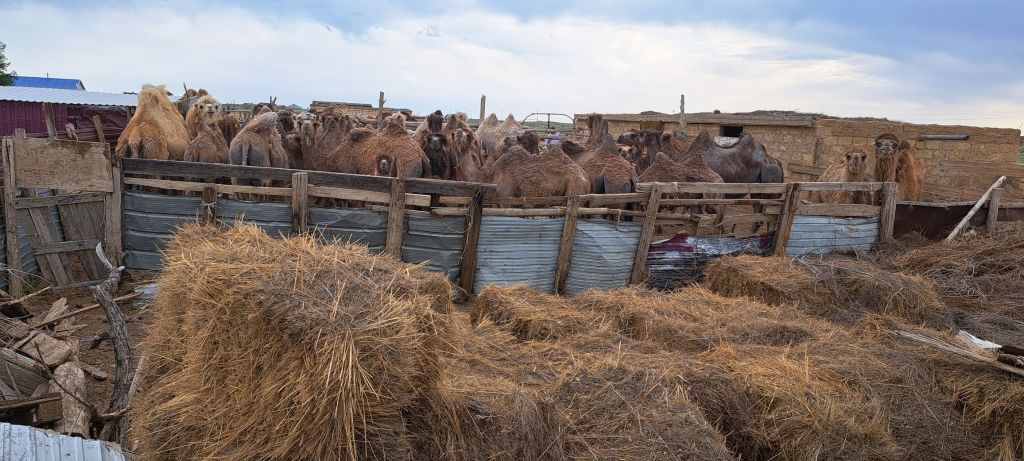
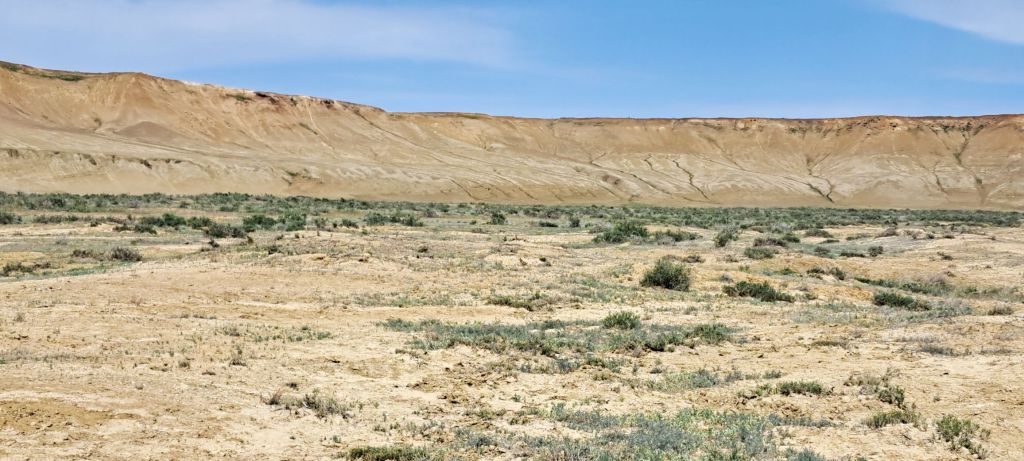
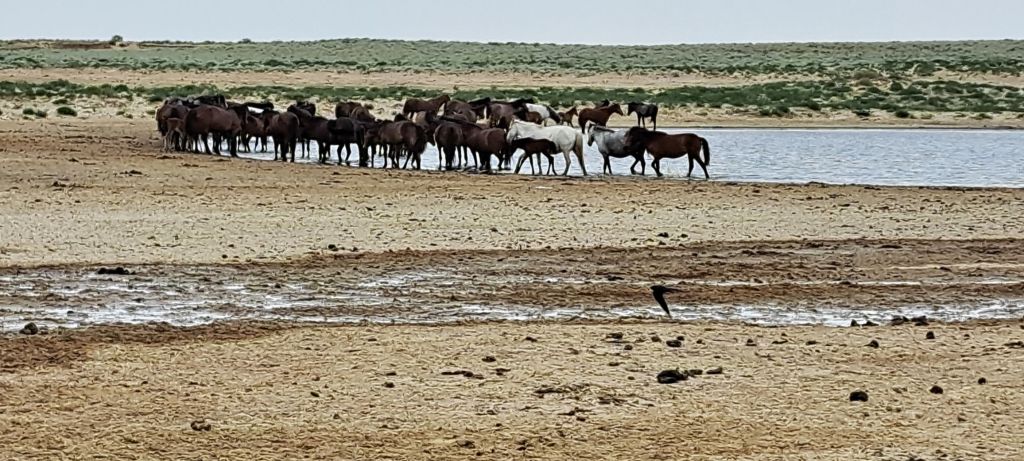
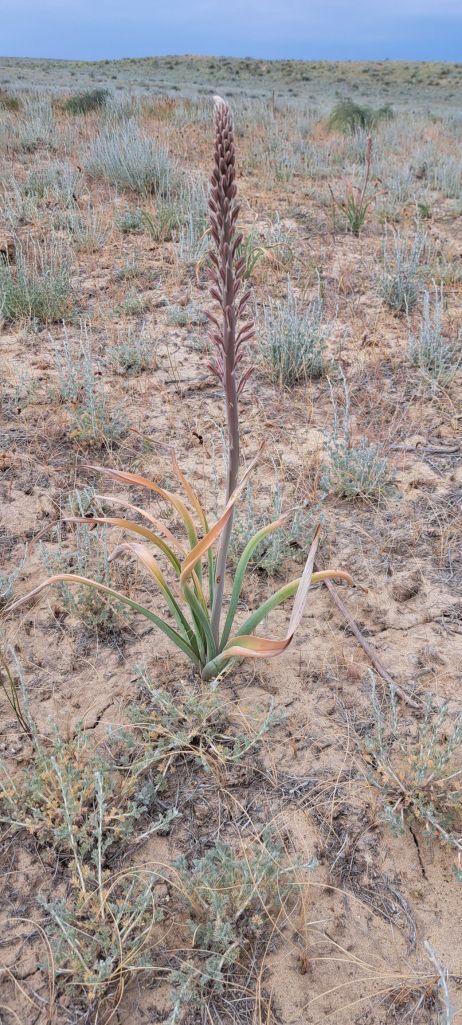
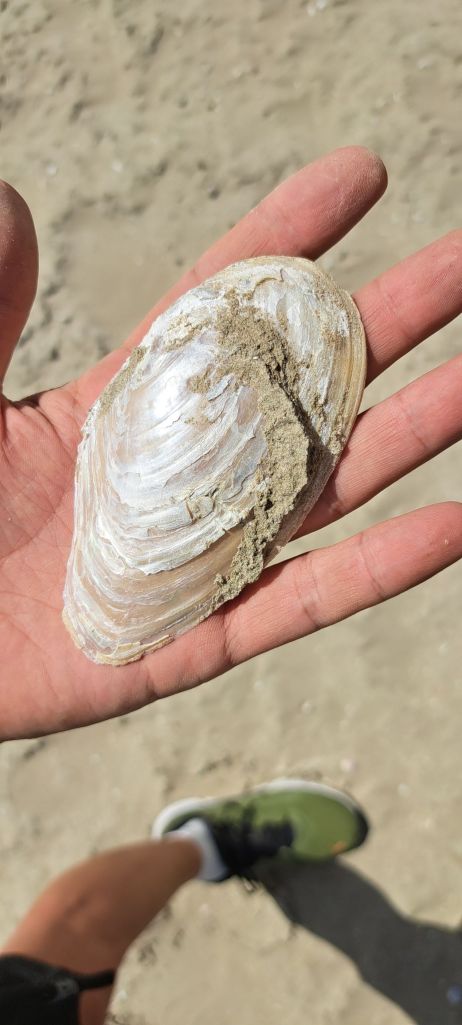
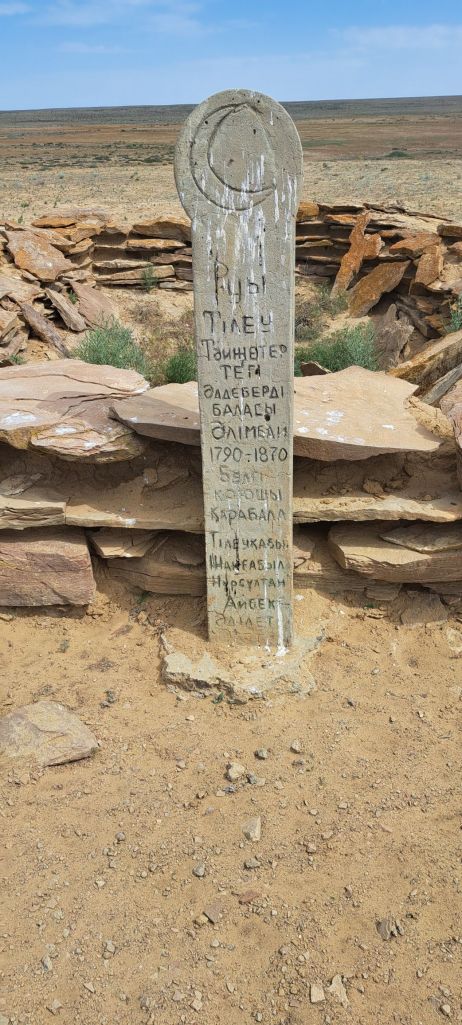
Here are a few more pics that illustrate the environment around the northern Aral region.
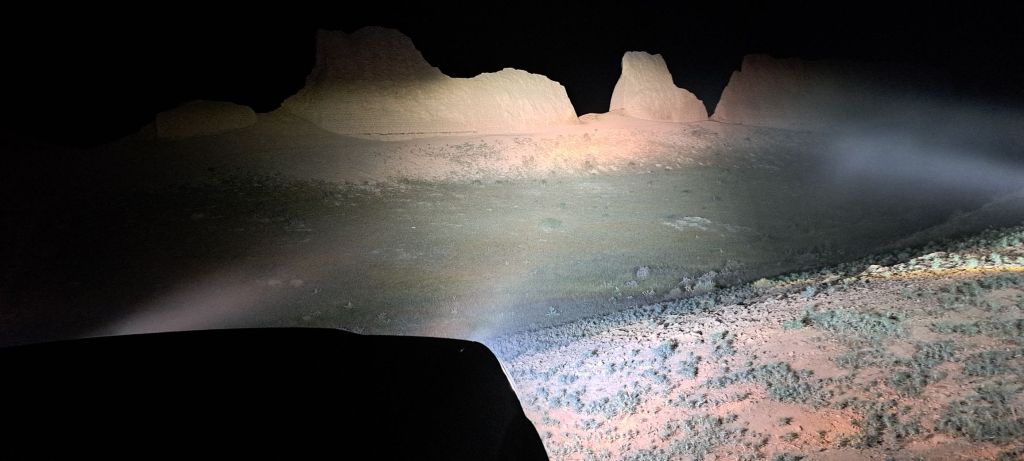
After a hard day’s driving from Almaty towards the Aral Sea, we arrived after dark at the walls of the abandoned city of Sauran, 70 kms north of Turkistan. This remarkable site was once the largest city on Kazakh territory, but now only majestic ruins remain. The city fell victim to the collapse of the Silk Road trade following the opening up of sea routes from Europe to the East in the seventeenth century.
Sauran survived the Mongol onslaught even though nearby Otrar was completely destroyed for failing to negotiate a deal with Genghis Khan.
The Sauran ruins stretch for several miles, but the main town walls are almost complete, together with a reconstructed main entrance.
Wandering across this massive site you come across countless fragments of fired blue tiles and shards of pottery. One excavated spot shows just how impressive it once was.
We camped beneath the walls and left early the next morning to continue our journey, past Kyzylorda towards the Aral.
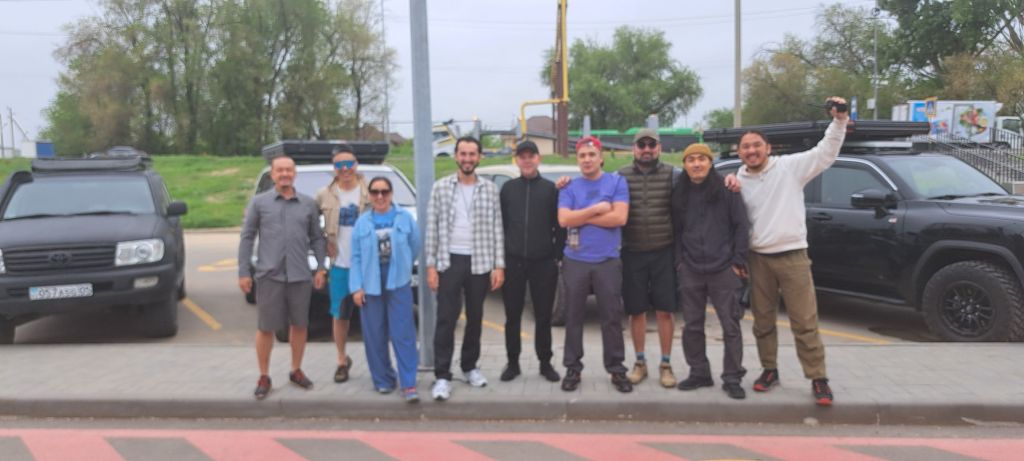
Today we left Almaty en route to the northern part of the Aral Sea, more than 1000kms to the north-west. Our expedition is being led by Dauren Raptayev, one of the most experienced travellers and explorers in Kazakhstan.
Travelling in four SUVs, we will spend about 8 days exploring the lake and surrounding areas. More info soon.
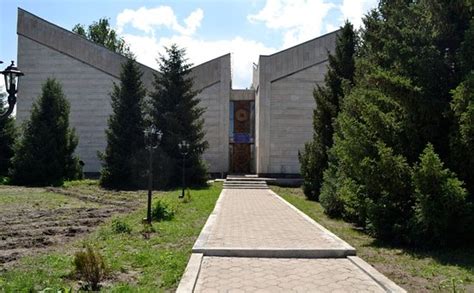
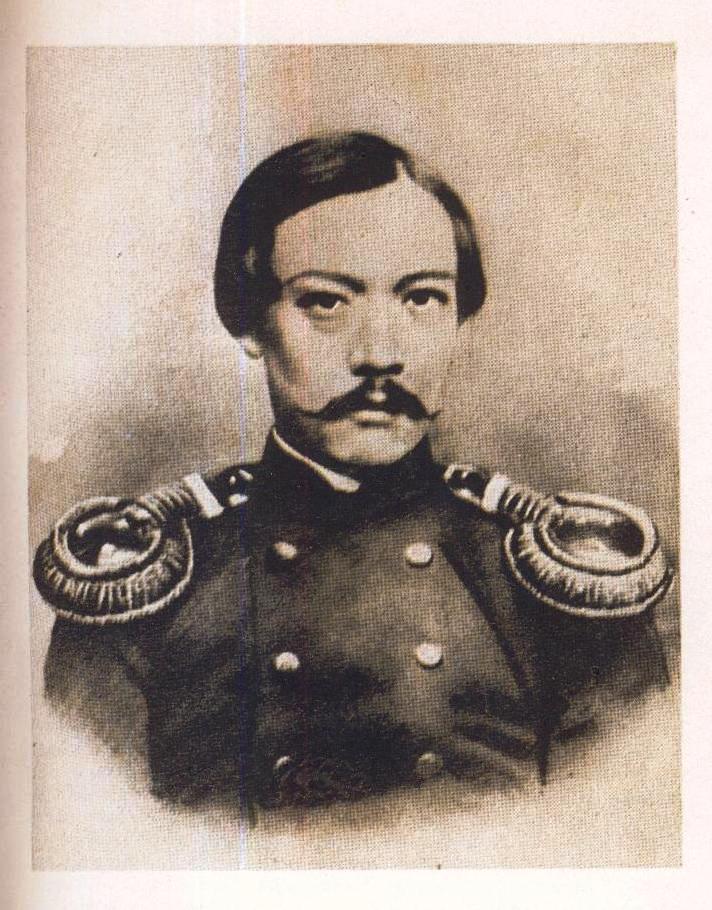
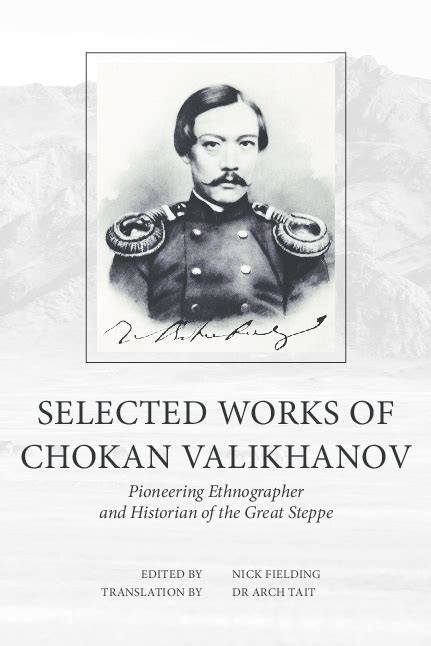
As the editor of the English language Selected Works of Chokan Valikhanov, it has long been my wish to visit the Altyn Emel Memorial Museum dedicated to this great 19th century Kazakh in the village of Shokan in the Altyn Emel region of south-east Kazakhstan .
The museum is about 2 hours outside Almaty, close to the Altyn Emel national park, and about 5kms from the actual burial place of Valikhanov, who died there in 1865.
Valikhanov’s writings in English
The museum building itself is unique and was designed by architects A. Seydalin, B. Ibraev and S. Rustambekov. All corners of the unusual building are of different sizes, with beams that descend into the centre, passing into a “knot of happiness”, woven from colored cords.
Internally, the visitor walks into a main hall, all the time ascending in a spiral until a top gallery is reached. The hall is dominated by a huge woven carpet illustrating elements of Valikhanov’s life. Mangyshlak limestone is used in the decoration of the facade of the building – a soft, pliable pink stone.
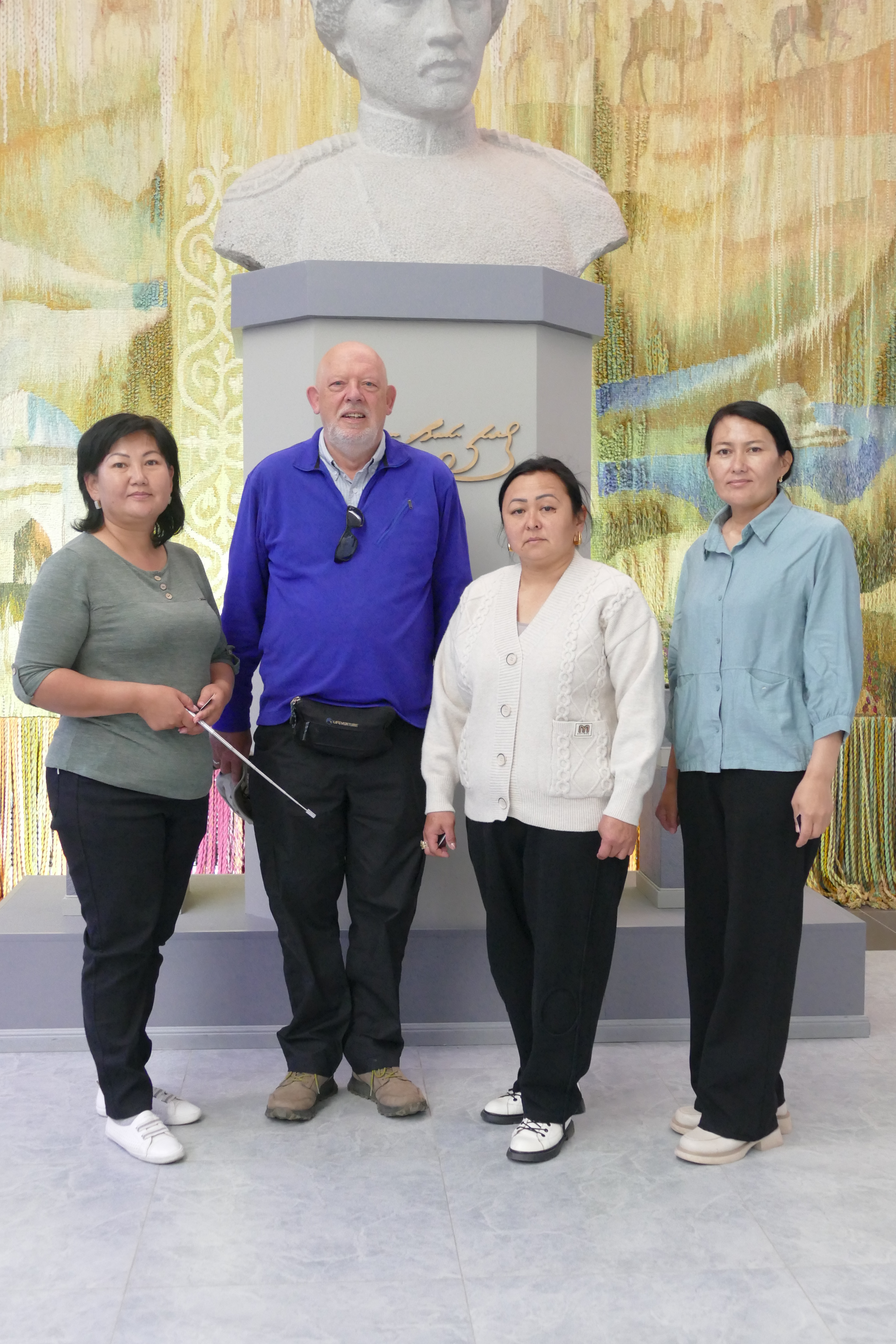
I was introduced to the director, Maral Rahatova, who kindly asked me to sign the visitors’ book and pose for a photograph with the staff. The museum itself contains a number of items that once belonged to Valikhanov, including his tiny pistol, gilded in gold, his tea bowl and various items of his clothing.
Valikhanov’s pistol
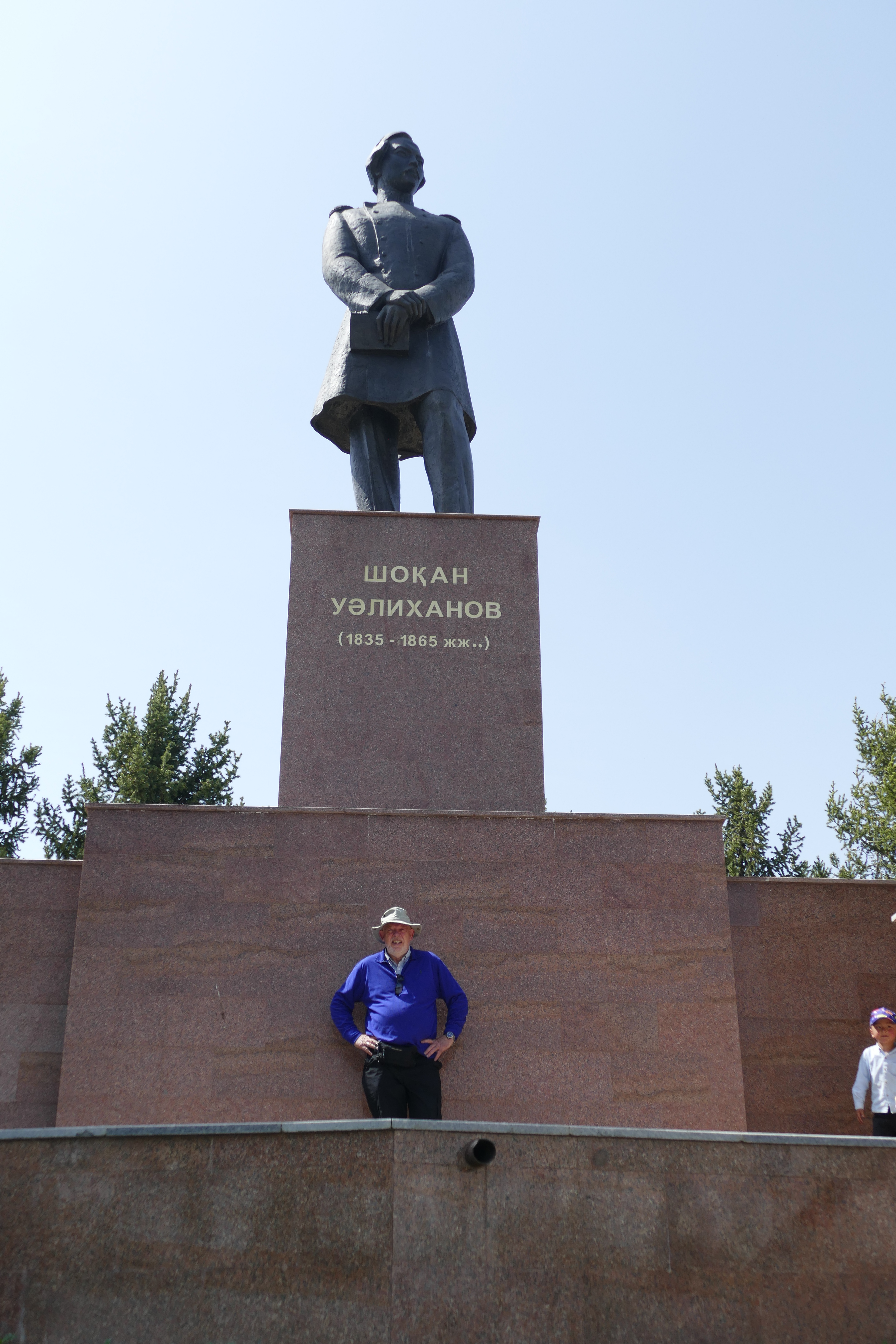
Outside the museum is a large bronze statue of Valikhanov that dominates the area. And a few kilometres away is his actual burial place, where he died – probably of TB – aged only 29, in 1865.
Statue of Valikhanov outside the Museum
The burial place of Valikhanov
All-in-all, this was a wonderful visit. Although it is a bit remote, anyone visiting will find it well worth the journey. If you want to know more about this great thinker and historian, track down a copy of my book, or you can read it online here.
My article on the story of Aru Sultan, the young Kazakh woman brought back to England from Central Asia by the Elizabethan merchant adventurer Anthony Jenkinson in 1560 has now been published by Qalam magazine. You can find a copy here.
Qalam is a multi-media project founded by Timur Turlov, a successful Kazakh entrepreneur and financial expert and founder and owner of the publicly traded company Freedom Holding Corp. Timur Turlov invests in IT startups in Kazakhstan, actively supports a number of charitable and social projects in the humanitarian, public and sports spheres. Since January 2023, he has been head of the Kazakhstan Chess Federation.
Literature about the southern Siberian territory of Tuva, just to the north of Mongolia, is not easy to come by. The Austrian Otto Mänchen-Helfen, an expert on the Huns, is one of the very few authors who have written with authority on the culture of the Tuvans. He was the first non-Russian to visit the region – whilst he was teaching at the Marx-Engels Institute in Moscow in the late 1920s. His book Journey to Tuva,[i] first translated in 1992, remains a classic.
A horseman carrying a sheep in the Western Sayan mountains of Tuva (author’s photo).
The English traveller and author Douglas Carruthers, who travelled through north-western Mongolia, Djungaria and Tuva in the years before the First World War, and who wrote the impressive two-volume Unknown Mongolia,[ii] was another of this rare breed. Otherwise, there is little. Ralph Leighton’s Tuva or Bust! Richard Feynman’s last Journey, for example, is about the famous mathematician’s desire to visit Tuva (never accomplished), rather than the country itself.
Thus it was a pleasure to come across a 2023 essay in English about the Khakassian scholar and Turkologist Nikolaj Fedorovich Katanov (1862-1922), who was the first person to study the language and culture of the Tuvans.[iii] The Russian researchers who have uncovered his story have had to search through archives in Kazan, Moscow, St Petersburg and various non-Russian institutions to gather material.[iv]
Katanov was a professor at Kazan University where his research into the languages of southern Siberia was ground-breaking. His expedition to the region in 1889-1892 to study languages and ethnography was financed by the Russian Geographical Society, the St Petersburg Academy of Sciences and the Ministry of Public Education. It resulted in his A Study of the Uriankhai Language. Sadly, a comprehensive report on the expedition was never published, although a selection of the hundreds of folk tales he collected was published in 1907.
Without a detailed final report, the best source of the author’s work is his diaries. The first of these, which covers the first stage of the journey to Tuva, was only published in (in Russian) 2011. Another diary that describes Katanov’s stay in Khakassia and his first trip to Semirechiye and Tarbagatai (now both in Kazakhstan) and Xinjiang in 1890 was only published in 2017. Other diaries, so far unresearched, lie in the state archives of the Republic of Tatarstan. The diaries for his winter expedition to Hami and Turfan in Xinjiang have not survived. There is also a question about the location of the photo archive taken by the photographers Vasiliev and Tolshin during the expeditions, which does not seem to have been found to date.
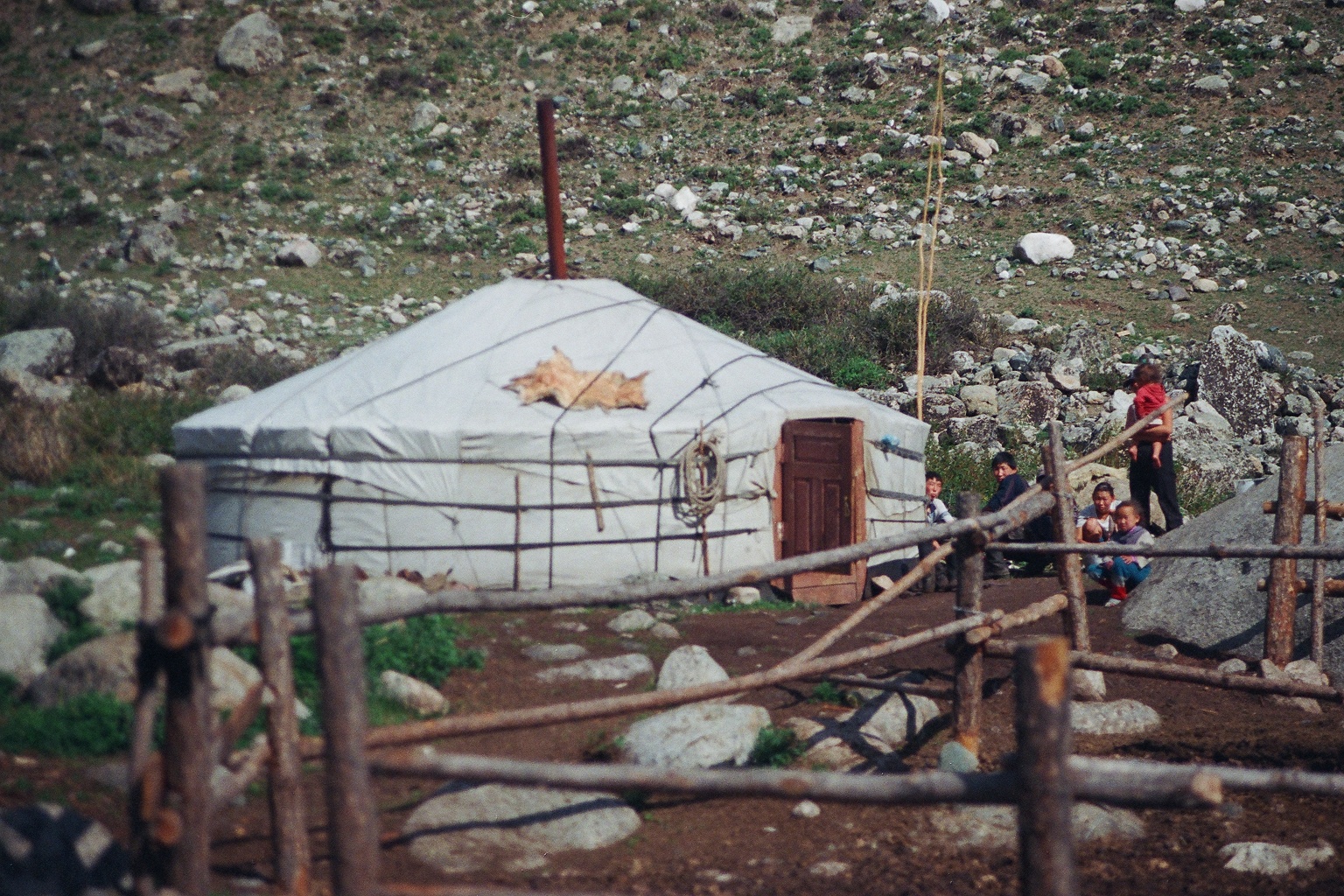
Typical yurt in the Western Sayan Mountains of Tuva (author’s photo)
In the St Petersburg archives of the Russian Geographic Society there is a “A Letter with a Brief Overview of the Trip to the Semirechensk Region in 1891-1893’ and several other documents.[v] Other documents were published later in Germany and America, including Folk Texts of East Turkestan from the Legacy of N F Katanov, published in East Germany in 1973.
Many of Katanov’s letters did survive and these now provide more details of his life and work, although they have not yet been collected and published, with a few exceptions, including those to the Russian Academician V V Radlov, who was deeply impressed by their content. The authors of this paper say that in the coming years all Katanov’s letters to St Petersburg Orientalists will be published as part of a project to publish the lifetime work of this pioneering author, who has been largely forgotten because of the policies brought in by the Soviets that resulted in the widespread destruction of Turkic culture during the Stalin years.
[i] Mänchen-Helfen, Otto, Journey to Tuva, Ethnographics Press, Los Angeles, 1992.
[ii] Carruthers, Douglas, Unknown Mongolia: A Record of Travel and Exploration in North-West Mongolia and Dzungaria (2 vols), Hutchinson & Co, London, 1913.
[iii] Valeev, Ramil M et al, ‘The Heritage of NF Katanov and the Prospects of its Study: Diaries and materials of his Travel to Siberia and Xinjiang (1889-1892),’ Written Monuments of the Orient, Vol 9, No 1 (17), 2023, pp36-49. DOI: 10.55512/wmo465708
[iv] The only work in English that touches on some of the same areas is Gold Khan, (trans. By Norman Cohn, Secker and Warburg, London, 1946). This is a series of heroic legends from the Koibal, Katchin and Sagai tribes of Khakassia (to the north of Tuva) collected in the mid-19th century by a group of philologists travelling in the Minusinsk District.
[v]Archive of the Russian Geographical Society, Category 87, Op 1, No 15, 2l.
The two tigers that arrived in the Ile-Balkash Reserve last September have begun to mate, as can be seen in the film clip above. Nine-year-old Kuma and 12-year-old Bohdana appear none the worse after surviving their first winter in Kazakhstan. As can be seen in the video, there is still snow on the ground in their compound.
These two tigers arrived from a zoo in Holland and neither of them have ever spent time in the wild. It is unlikely that they will ever be released, as they lack the hunting skills needed to survive. However, any cubs they produce will be kept away from humans and released into the Reserve to fend for themselves when they are about two years old. Tigers give birth after about 20 weeks, so any cubs should be born in July.
During the cubs’ first two years, whilst they are still in captivity prey species such as deer and wild boar will be introduced into their compounds so that they can learn to hunt. This will equip them for life in the Reserve once they are released.
Up to five further tigers from Russia should be arriving in the 415,000-hectare Ile-Balkash Reserve this year. After a short period in compounds they will be released directly into the Reserve and it is hoped they will become the nucleus of a breeding population that could eventually reach more than 100 animals.
Tigers were once common in Central Asia, where they were known as Turanian tigers or Caspian tigers. They are genetically indistinguishable from the Siberian or Amur tigers that inhabit the far east of Siberia. All the tigers being taken to Kazakhstan are from this subspecies, which is adapted to withstand the harsh winters that can see temperatures fall as low as -40 degrees C. Numbers declined due to hunting and poaching and the the last ones were killed in the mid-1950s.
In the most recent issue of Asian Affairs, the journal of the Royal Society for Asian Affairs, editor Bill Hayton notes that it is unusual to receive three unsolicited book reviews for the same book. He was referring to David Chaffetz’s brilliant new book Raiders, Rulers and Traders: The Horse and the Rise of Empires[1], which fully deserves the attention it is now receiving.
Chaffetz argues, very convincingly, that to understand the vast interconnected system of trade routes that once constituted the ‘Silk Road’ we need to understand the fundamental role played by the trade in horses in particular. “No animal has had as profound an impact on human history as the horse,” he says. Domestication provided a source of both meat and nutritious milk, as well as transport. Horses regularly needed fresh pastures and this in turn provided the basis for pastoralism as a system that came to dominate the steppe regions.
Thus it was horses, rather than silk that dominated the Silk Roads. Chaffetz shows how the demand for horses bred on the Eurasian steppes came initially from the Chinese and then later from the Mughals and other dynasties in India. Chinese traders travelled as far as Iran, Afghanistan and the Ferghana Valley in present-day Uzbekistan in search of good horses that would give the northern Chinese huge advantages in their military campaigns against their neighbours to the south. As the Chinese Han General Ma Yuan remarked in the 1stC CE, “Horses are the foundation of military power, the great resources of the state…If the power of the horse is allowed to falter, the state will totter to a fall.” With the horses came men from the steppe to develop cavalry brigades and these men too eventually became powerful in their newly adopted homelands.
Mobile horsebreeders helped to connect the world in these early days, bringing sedentary agricultural societies in contact with one another: “Arts, religious beliefs, sports and fashion spread from one end of the old world to the other in the saddlebags of the steppe horsemen,” says Chaffetz. “The horse itself became both a vehicle and a symbol: gods manifested themselves upon them, kings were buried with them, princesses rode them in polo matches and poets praised them in verses that local schoolchildren still recite.”
Although settled peoples quickly began to breed their own horses, the steppe dwellers always held an advantage in the vast open spaces they inhabited. It was hardly surprising that at a certain point a steppe-based empire was able to take on the rest of the world – and win. Genghis Khan’s Mongol empire was the high watermark for the horsebreeders, until gunpowder put an end to their advantages, but not before both the Mughals and the Manchus had also built substantial empires on the back of horse power.
The impact of horses in Western Europe was far less significant. Horses were also used in battle, but usually only by the elites of mediaeval society and later by fancy cavalry regiments. If the peasants could afford a horse, its main use was in agriculture for ploughing – something no self-respecting steppe dweller would ever consider. The typical agricultural labourer could seldom afford to keep a horse. Without the open steppe and its limitless pastures, Western Europe could not sustain large number of animals reliant on grazing.
On the steppe in contrast, everyone rode, women included. And a huge mobile army could be raised in days using the ‘arrow’ system developed by the Mongols. Each rider provided his own horses and learned from childhood how to manoeuvre and perform complex cavalry attacks.
Chaffetz remarks that until now the importance of horses in the development of society has been either overlooked or underestimated by historians. That began to change with the break-up of the Soviet Union, which allowed Ukrainians, Kazakhs, Mongols and other horse-orientated societies to reexamine their histories and to make use of advances in carbon dating and DNA analysis to provide new insights.
The Silk Roads exhibition now showing at the British Museum in London, whilst illustrating the extent of trading links in the ancient world, makes little reference to the importance of horses. It is a pity that its organisers were unable to make use of Chaffetz’s superb research. Those of you who are members of the RSAA may well already have booked a seat for his talk (in person) on 22 January in London. Either way, this book is a must.
[1] David Chaffetz, Raiders, Rulers and Traders: The Horse and the Rise of Empires, WW Norton, New York, 2024, ISBN 978 1 3245 05146 6.