Silk Roads at the British Museum

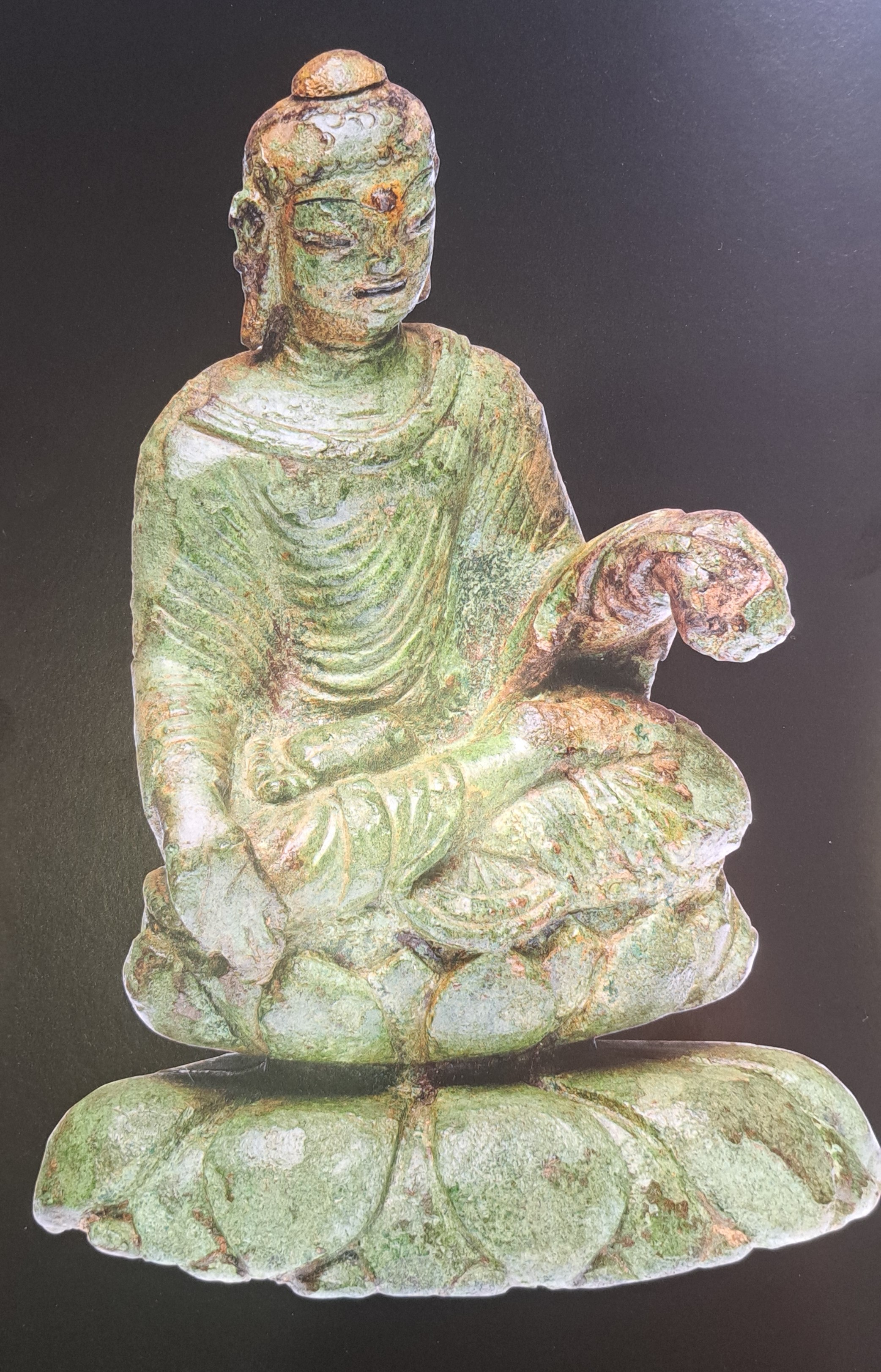
A buddha from Swat Valley found in Sweden

As you walk into the British Museum’s new Silk Roads exhibition the first thing that confronts you in in the otherwise empty entrance hall is a tiny copper alloy buddha only three inches high. The buddha dates from the 6th or 7th centuries CE and was probably made in the Swat Valley in what is now northern Pakistan. But what is remarkable about it is the fact that it was found on the small lake island of Helgö in Sweden from archaeological levels that date to around 800CE.

There in a nutshell is the intellectual proposition that lies beneath the exhibition – that the ‘Silk Roads’ were not simply about camel trains laden with precious consumer goods making their way westwards across the deserts and mountains between China and Europe. No, this is about the extraordinary level of connectedness that existed in ancient history and that trade goods travelled by both land and sea along transport links that spanned most of the known world.

Ever since the German geographer Ferdinand von Richtofen invented the term Seidenstrasse in 1877 the term has had a specific meaning – in part connected to the accounts left behind by travellers such as Marco Polo – of a number of trade routes that start in Western China and progress through the Taklamakan Desert in Xinjiang, across the Pamirs and Hindu Kush towards Iran and then on from there to the Mediterranean coast.

The late 19th– early 20th century discovery of huge numbers of remarkable artefacts at ancient buddhist sites in Xinjiang by such luminaries as Sir Aurel Stein and Albert von Le Coq only added to the attraction of this idea as a way of explaining the importance of international commerce in world history. But as Warwick Ball has pointed out, doubts over the use of this concept have been around since at least the 1940s, when Owen Lattimore refuted the idea that Xinjiang was deliberately opened up by the Chinese to export silk.[1] Hugh Pope called the idea “a Romantic Deception”, while Susan Whitfield, currently Professor of Silk Road Studies at the University of East Anglia, opened her 2020 book Silk Roads with the words “There was no ‘Silk Road’”.[2]

So anyone arriving at the exhibition and looking for vistas of Samarkand and Bokhara or pictures of caravanserai and shaggy Bactrian camels is in for some disappointment. And please note, almost everything on show dates from between the 5th and 10th centuries CE, a period in history about which very few people have a good grasp. Who was ruling China, Central Asia and the Middle East during these turbulent years? And even though the garnets in jewels recovered from Anglo-Saxon burials such as Sutton Hoo likely came from mines that were thousands of miles to the east, little is known about the nitty-gritty that underlay the trade in these kinds of luxury goods.

However, that being said, the curators of this exhibition have been able to give an indication of the extent of international trade during this period of history. They show that trade was not simply east-west, but that north-south interactions were equally important, as was Central Asia’s connection to India. Nor was it simply trade goods such as silk and jewels that were exchanged. War tactics, social customs, diplomacy, pilgrimage, literature and other cultural artefacts were also exchanged over vast distances. Maritime routes, such as those in the Baltic, the Red Sea and Indian Ocean were also central to this interchange of goods and ideas.

Great social transformations, including the expansion of Islam from the 7th Century, the growth of the Tang Dynasty in China, the end of the Roman Empire and the growth of Byzantium and the expansion in the Holy Roman Empire under Charlemagne were also important factors in determining trade routes and exchange objects. This was a time when Christianity, Islam and Buddhism were all expanding.

Small glass cup from Alexandria

So it is hardly surprising that visitors to the exhibition will hear about places never before mentioned in relation to the Silk Road. Heijo-kyo in Japan, Silla in Korea and Chang’an in north-central China are placenames that are unlikely to be on the tip of one’s tongue. And yet the objects found in each of these places tell remarkable tales. Take the small blue glass cup found at Cheonmachong Tomb at Gyeongju in Korea. It dates from the early sixth century and has a honeycomb-patterned decoration produced using a mould-blowing technique. Such glasses can be found across Roman territory, but it was probably made at Alexandria in Egypt.

Items recovered from shipwrecks in the Indian Ocean also provide an insight into ancient trade. During the period in question ships sailed from northern China via the Indonesian islands to India, Persia, Arabia and the east coast of Africa. In 1998 the wreck of the Tang Dynasty ship now known as the Belitung was found near Sumatra, comprising more than 60,000 pieces of Tang ceramics and other objects that date to the 9th Century CE. It was probably on its way back to the Persian Gulf when it sank. Its cargo provides a great cross-section of commercial goods from the period.

The Miraculous Image of Liangzhou

The discovery in 1900 of the Dunhuang caves in the Tarim Basin of Xinjiang provides another great source of trade goods. In Cave 17 Aurel Stein found (and bought) 70,000 manuscripts, paintings and other objects, several wonderful examples of which are in the exhibition. These objects transformed the way in which the culture and history of this region was understood. The Miraculous Image of Liangzhou, more than 2.5 metres in height and embroidered with silk thread on silk and hemp, is one such item.

The exhibition never ceases to amaze the visitor as it demonstrates the extent to which our ancestors traded with one another. Khazars, Vikings, Alans, Eritreans, Sogdians and many other societies knew of each other and sent trade goods huge distances.

So at the end of the exhibition what can we say? The Silk Road is a misnomer? Yes! It was never a single road? Yes! Trade was in both directions, not to mention north and south and often by sea? Yes! In other words, we are talking about international trade and exchange of ideas. It was a phenomenon not restricted to one part of the globe – if we exclude South America – or one culture. But are we throwing the baby out with the bathwater? There is a danger that in generalising our understanding of the Silk Road to include just about all international trade we lose the very specificity that made it a powerful idea in the first place. More than likely that is what is happening. Scholarship on the Silk Road has now outgrown the original subject and awaits a new definition and focus. But for now, go along and see the incredible exhibits. It is crowded and you cannot easily move from one glass case to another, but it’s almost worth the entry just to see that tiny little buddha.


[1] Warwick Ball, The Eurasian Steppe: People, Movement, Ideas, Edinburgh University Press, Edinburgh, 2021.

[2] Susan Whitfield (ed.), Silk Roads: Peoples, Cultures, Landscapes, Thames & Hudson, London, 2021.

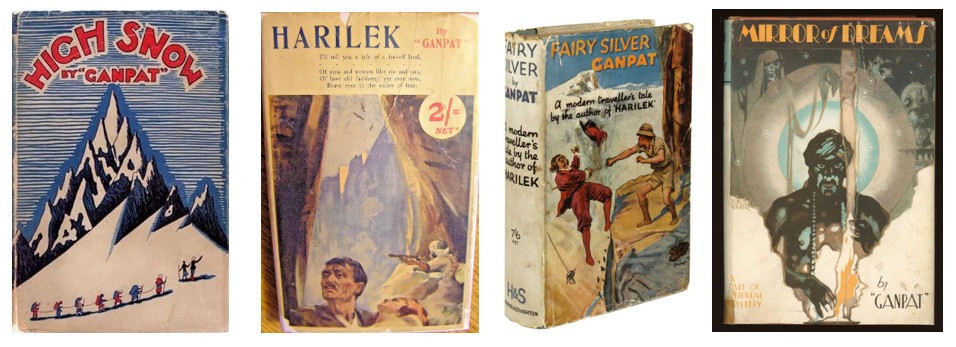
Fictional Central Asia

Over the past few years I have come across dozens of novels that are set in Central Asia. Most date from the end of the 19th century until the 1930s and reflect that period when the last few unexplored places were gradually being discovered and mapped. Many of them are in the form of what are generally known as ‘Lost Race Novels’. These usually take the form of a group of modern travellers finding a ‘lost’ community living in an isolated valley away in the mountains. The original story of Shangri-La is the most well-known of these novels. Others feature lost tribes, lost Vikings, lost Greeks and Romans, even lost Crusaders. Many are characterised by their lurid cover art. So far I have found over 120 such novels based in Western Asia, in which I include the mountains of northern India and Tibet.

I have now written an article summarising what I have found so far and including as many of the covers as possible. You can find a link to my article here:

Please let me know of any others that you find.

Jenkinson’s Wench and Jenkinson’s Map: the mystery of Aru Sultan

Today I am publishing an essay (4,000 words) about Anthony Jenkinson, an Elizabethan merchant who was the first Englishman to sail on the Caspian Sea and the first to visit the city of Bukhara. Jenkinson is famous for his superb map of Western Asia. Less well known is the story of Aru Sultan, the woman he brought back from Central Asia and who became a lady-in-waiting to Queen Elizabeth I and an innovator in fashion. Some historians argue she was an emissary from the Kazakh khanate to England, charged with opening up a trade route that would see the Silk Road traffic diverted away from the Mediterranean to England. You can read it below:

Saukele: the tall hats of Central Asia

Asian Textiles, the magazine of the Oxford Asian Textile Group, has just published my article on saukele, the tall hats worn by several different ethnic groups in Central Asia, including the Kazakhs, Kyrgyz and Qaraqalpaqs. The article goes into the background history of this fascinating item of clothing, and shows that it has a long tradition stretching back thousands of years. The tall hats worn in Western Europe during the Middle Ages in all likelihood were derived from a version of the tall hats worn by Kipchak/Mamluk women in the Middle East. You can read a copy of the article here.

The Man who loved Siberia

My review of The Man who Loved Siberia has just been published by the journal Sibirica. It tells the remarkable story of Fritz Dorries, a German adventurer and natural history collector, who spent over 20 years in the wildest parts of the Amur basin in Eastern Siberia from 1877 to 1899 collecting and sending flora and fauna specimens to European museums.

The book was compiled from notes written by Dorries for his daughters when he reached the age of 90 in 1942. Accounts by travellers of this isolated and trackless wilderness are hard to come by, so the stories told by Dorries are worth reading. He first set out east in 1877 when he was just 25, inspired by the picture of a rare butterfly that his father had shown him when he was just 4 years old.

Over the course of the next 22 years he eventually collected 61,500 butterflies from 996 species, of which 275 were new to science and several of which were named after him. In addition, there were 14,500 beetle specimens (1,490 species) and 4,500 flies, bees, wasps, and other hymenopterans (195 species), added to which were hundreds of plants, predators (including tigers), birds, and bird nests. On behalf of museums across Europe, Dörries also collected large numbers of ethnographic objects from the tribes living along the Amur, as well as items from other peoples from Eastern Siberia.

You can read the full review here.

The Great Restorer

During my recent trip to Kazakhstan I had the great pleasure of interviewing Krym Altynbekov, a remarkable restorer of archaeological artefacts. Krym is responsible recreating the costumes and equipment found in ancient burials. In particular, he has specialised in the clothing of some of the Scythian/Saka burials found across the country. My article on Krym has now been published in the Astana Times and you can read it here.

More on Kazakhstan’s tiger programme

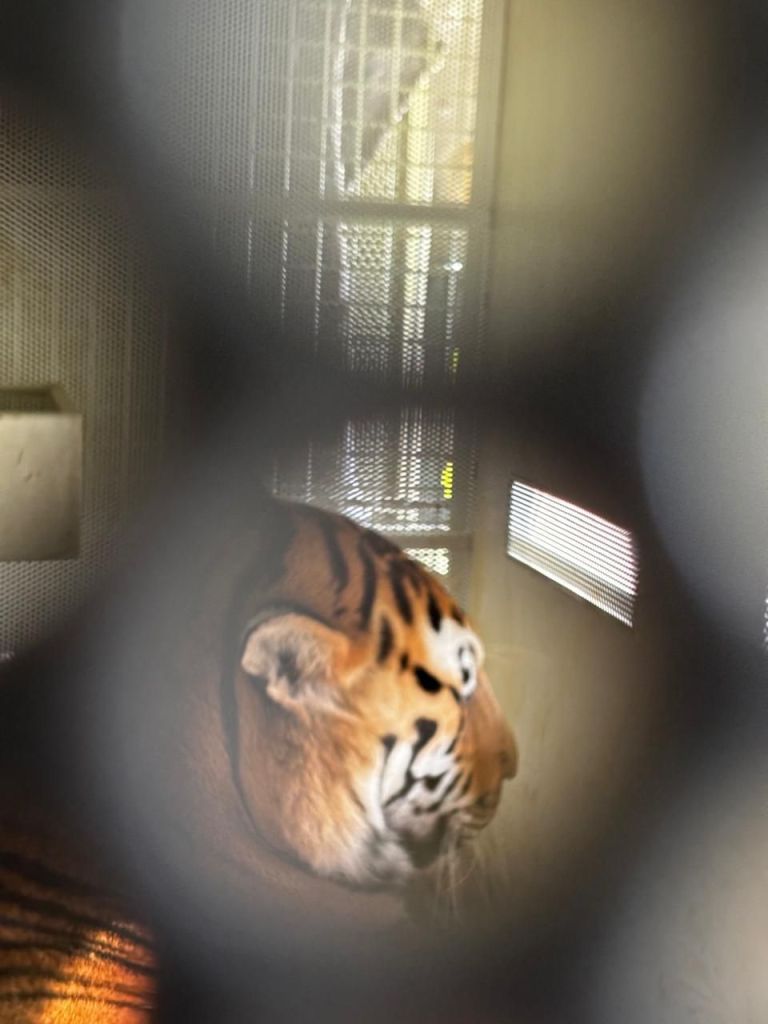
One of the tigers that arrived in Kazakhstan this week

The arrival of two tigers from Holland in Kazakhstan in the last few days is the latest development in a programme that has been in place for several years. In June this year the Forestry and Wildlife committee of the Kazakh Ministry of Ecology and Natural Resources signed a cooperation agreement with the Stichting Leeuw Special Centre for Feline Predators at Landgoed Hoenderdaell Zoo in Holland. The zoo agreed to provided a male and a female Amur tiger, to be relocated to the 415,000-hectare Ile-Balkhash State Nature Reserve in the south-east of the country. Now they have arrived it is likely that these first two tigers will not be released into the wild immediately, but that their offspring will be freed to wander throughout the Reserve.

These tigers are genetically identical to the Turanian tiger that once inhabited large parts of Central Asia including Kazakhstan, the last one of which was seen in the country in 1948. Their ability to withstand the freezing winter conditions of Kazakhstan was the main reason they were chosen.

Stichting Leeuw has the largest shelter for big cats in Europe, including the only hunting simulator in the world, which is used to teach rescued big cats the skills they need to return to the wild.

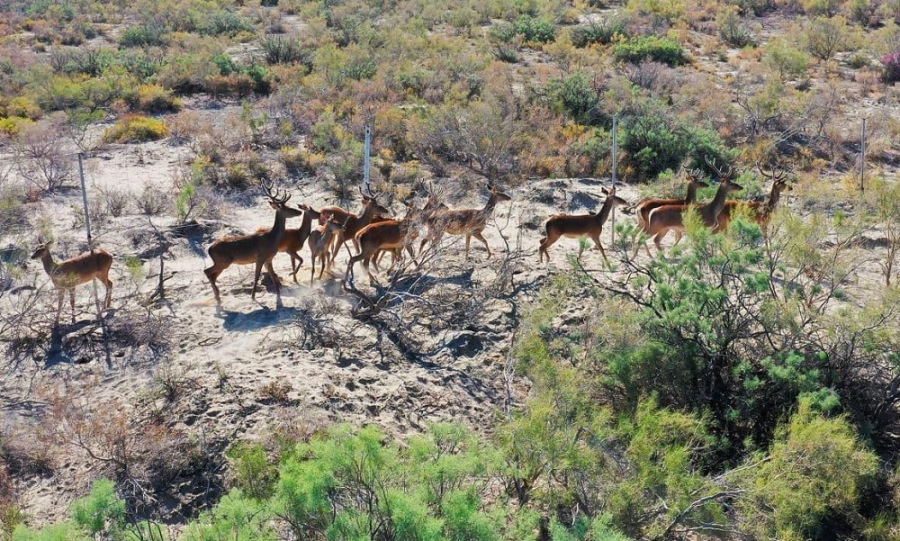
Bukhara deer, over 60 of which were released three years ago into the Ile-Balkhash reserve

In July Kazakhstan’s Ecology Ministry signed a further memorandum of cooperation with the World Wide Fund for Nature. As long ago as July 2021 the Kazakhs introduced 61 endangered Bukhara deer into the area where the tigers will be released. This species had been extinct in the region for the last 100 years. Nine of the deer were fitted with satellite collars to allow the reintroduction team to monitor their movements and warn if they strayed too far from the release site. There were once less than 400 of these deer, but they have been brought back from the brink of extinction and are now thought to number more than 1,400 at sites in Tajikistan and Uzbekistan.

Habitat preparation was also started to provide cover for the big cats. WWF has been consulting with local communities to ensure minimal human-tiger conflict and a compensation scheme for loss of livestock.

Tigers in Kazakhstan: Update

I can exclusively reveal the first photos of tigers arriving in Kazakhstan. The two tigers – a male and a female, both from a Dutch zoo – arrived by helicopter at a secret location near Lake Balkhash.

The chopper in which the two tigers arrived
One of the Amur tigers

After a period of aclimatisation, the two animals will be released into a specially prepared area where there are already plenty of prey animals for them. More will arrive next year. Watch this space for further updates.

Tiger reintroduction programme gathers pace in Kazakhstan

Two Amur tigers are due to arrive in Kazakhstan by the end of this month in the first stage of a programme that will eventually see up to 40 of the highly endangered animals released into the wild.

Four more will arrive next year from Russia, with the rest coming by the end of 2026. This species, which is found along the Amur River in Eastern Siberia, is able to withstand the harsh Central Asian winters. It once flourished as far west as Iran and Turkey, but the last one in Kazakhstan was seen in 1948.

Tigers were a common motif on the clothes of Scythian warriors 2,500 years ago and are the subject of many Kazakh folk stories. The aim is to reintroduce them to the forests and reedbeds where the River Ili flows into Lake Balkash in the south-eastern Zhetysu region.

A Kazakh tiger skin from a photo taken in approx 1900

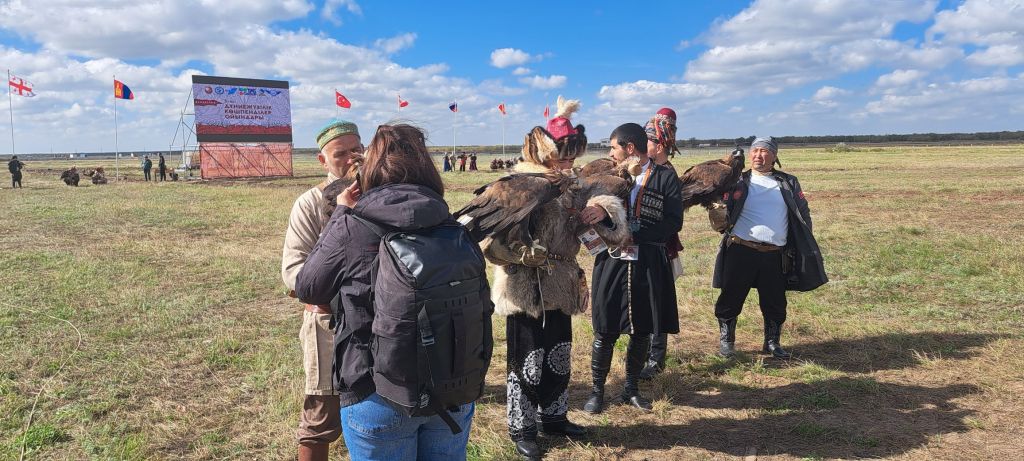
A few more pics from the World Nomad Games

The World Nomad Games in Astana  have now come to an end. The riders and wrestlers, tuggers and throwers, hunters and gamers have left and will meet again in Kyrgyzstan in two years’ time. It was a fantastic showcase for both the competitors and the Kazakhs who hosted it. Here are a few more pics of the eagle and hawk hunters to show you what you missed.