The doors of the Khoja Ahmed Yassawi Mausoleum in Turkestan

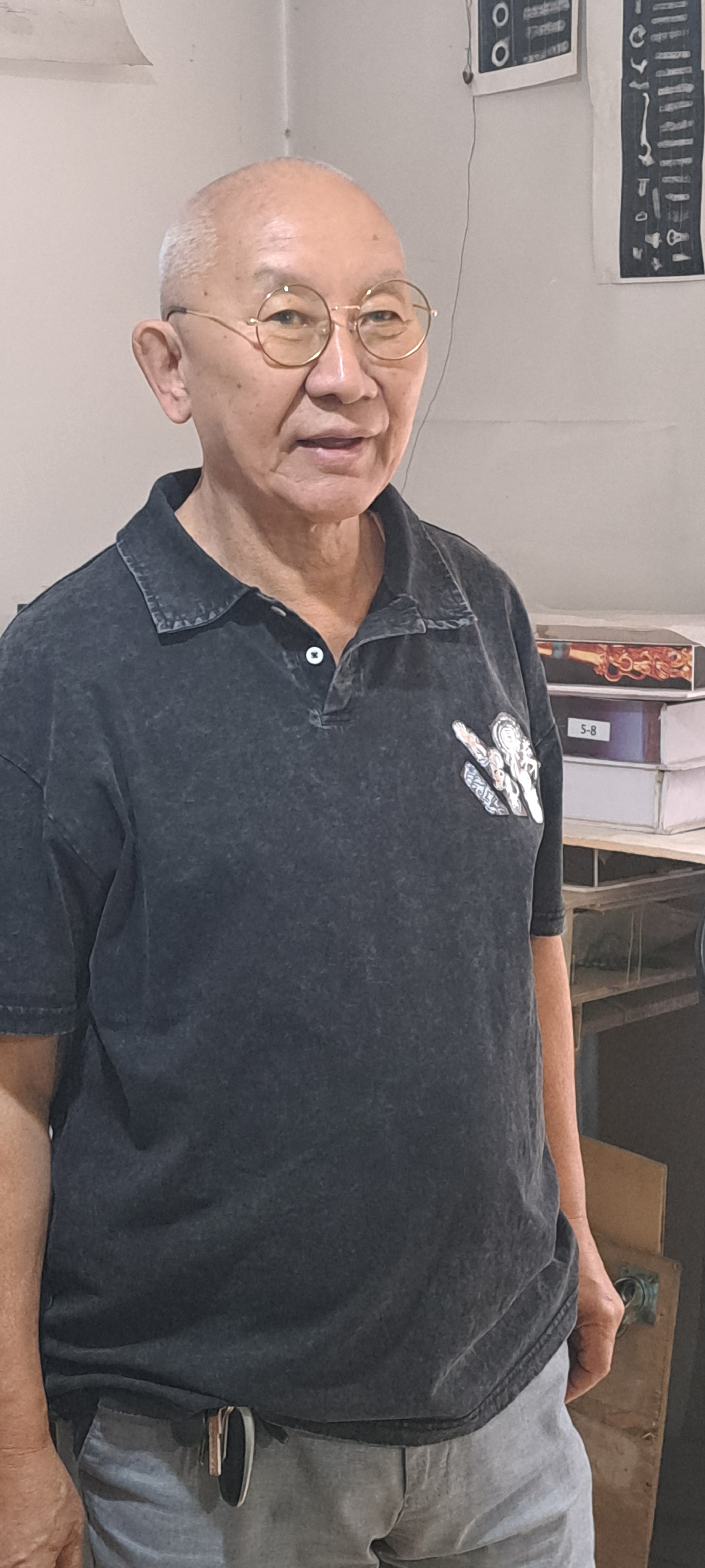
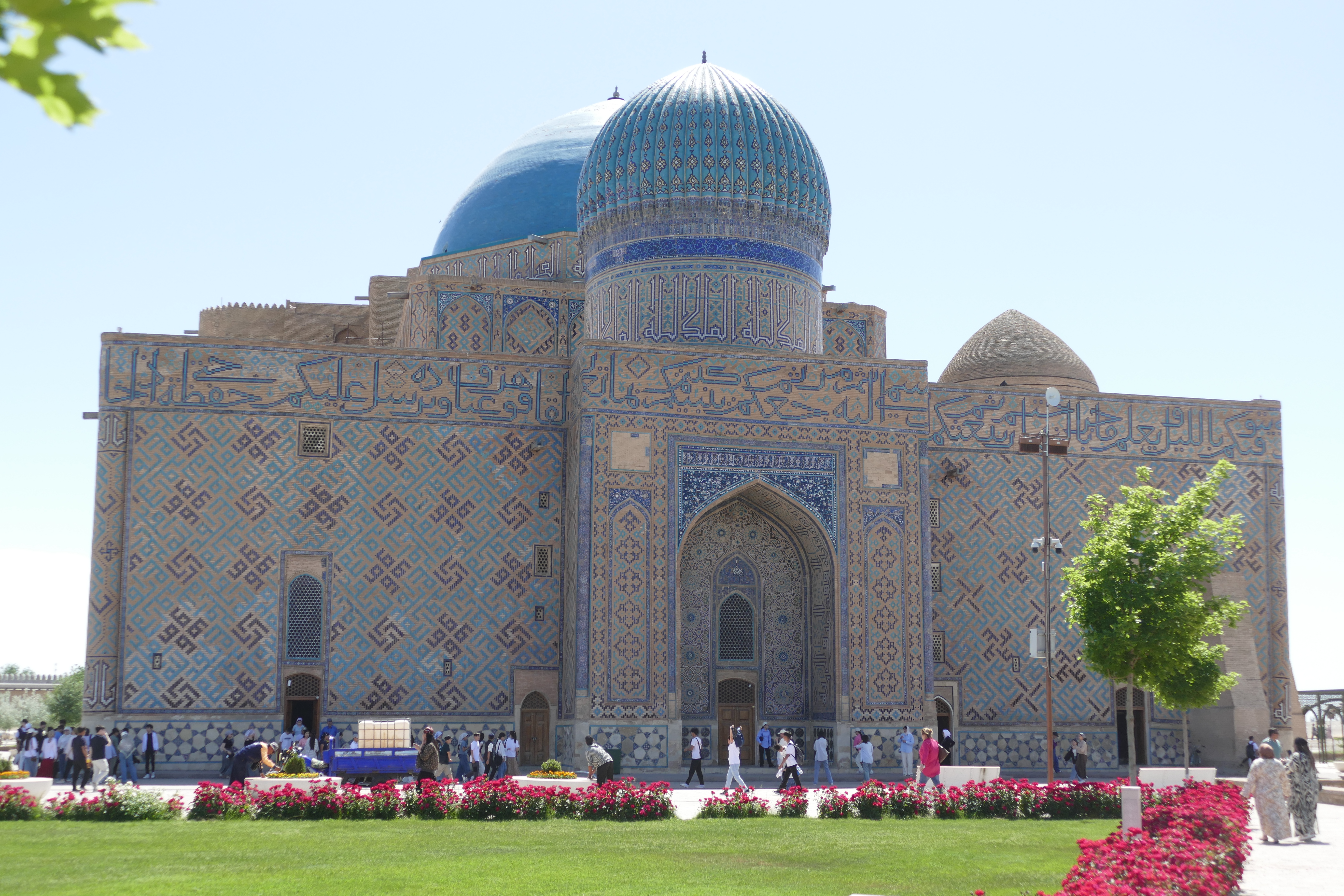
For several years Krim Altinbekov, perhaps Kazakhstan’s best known archaeological restorer, has been working to repair the 600-year-old doors to the Khoja Ahmed Yassawi Mausoleum in the city of Turkestan. The Mausoleum itself was built on the orders of Emir Timur – better known in the West as Tamerlane – at the end of the 14thC. It is rightly acknowledged to be one of the greatest historic buildings in Central Asia.
Having completed his restoration of the Mausoleum’s inner doors, he is now working on the main doors to this remarkable building. Made of walnut and each weighing half-a-tonne, the doors were probably made by Persian artisans in situ. Instead of hinges, the outer edges of the doors were slightly lengthened so that they could sit in a shallow hole and thus rotate open and closed. In May I visited Krim Altinbekov’s workshop in Almaty, where the two outer doors are presently undergoing the restoration work.
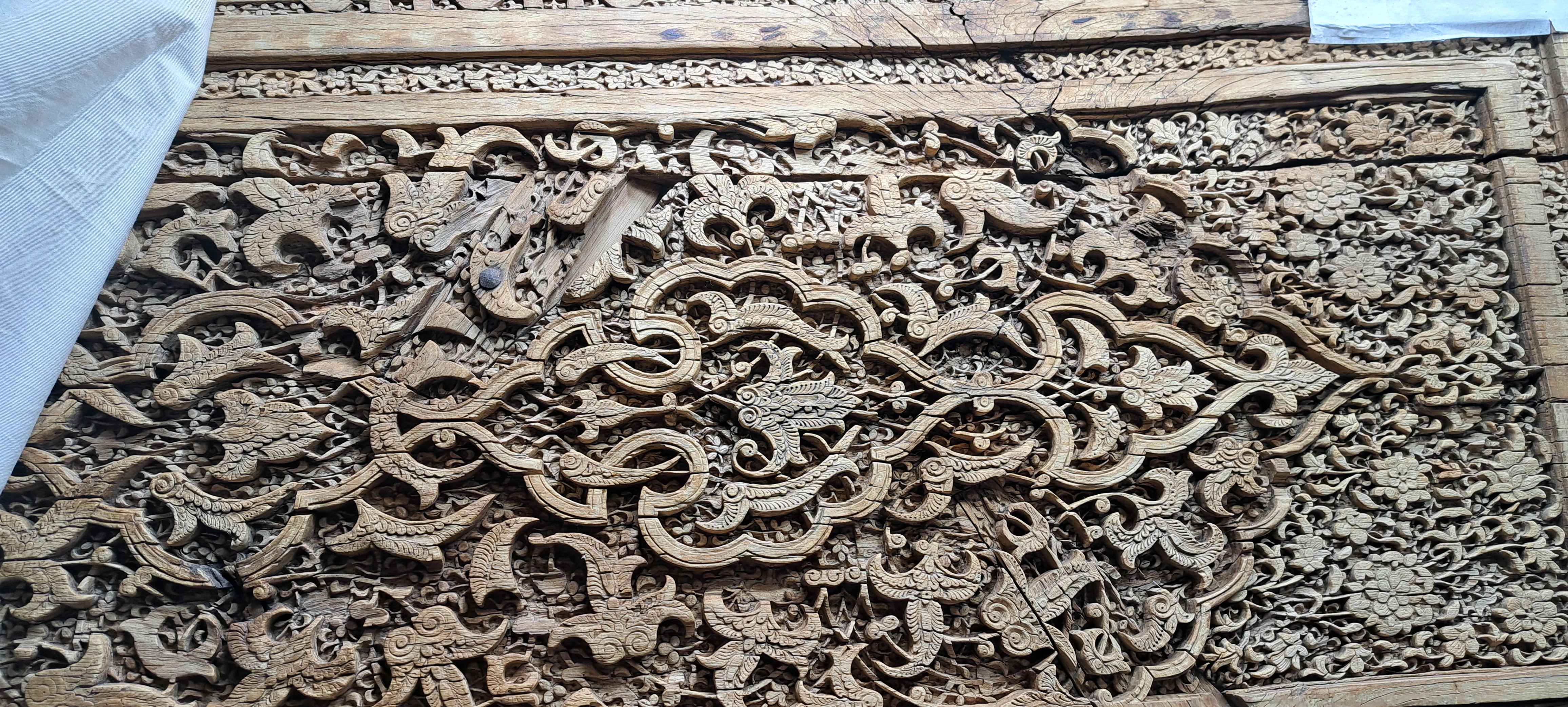
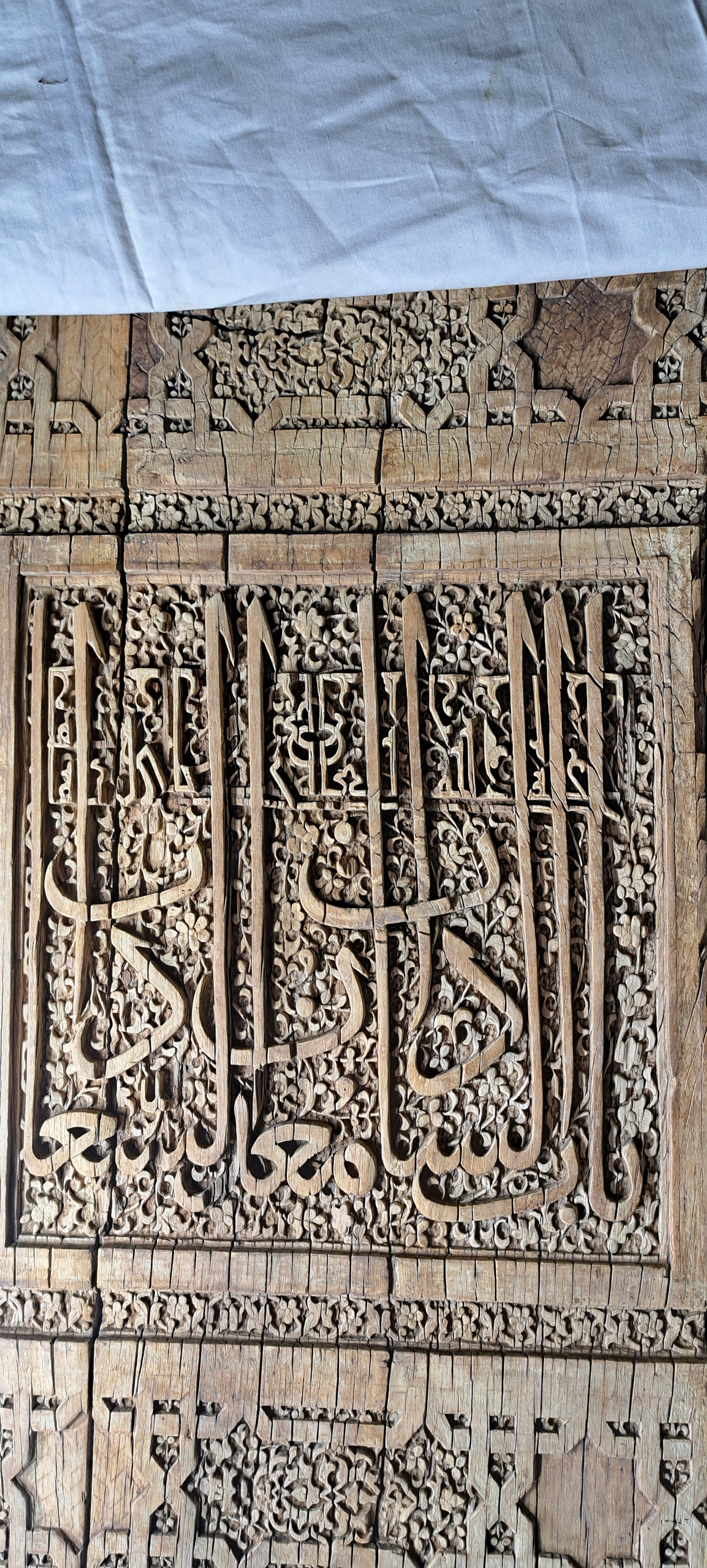
Carved panel from one of the two exterior doors to the Khoja Ahmed Yassawi Mausoleum in Turkestan.

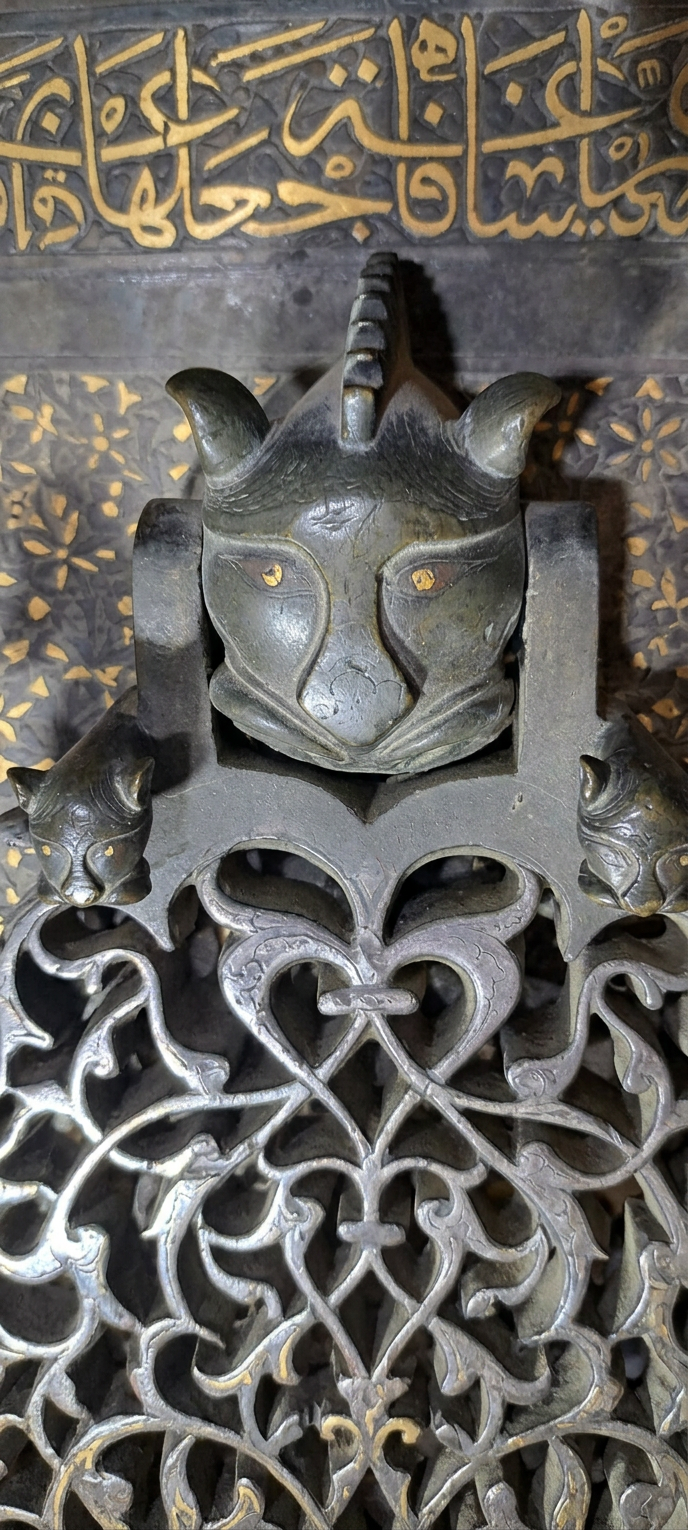
The work to restore the doors will likely take several years. Krim told me that one issue that had perplexed his team was the exact patterning that had been inlaid into the doors. Most of it had disappeared over the years. However, when he removed the two huge gilded bronze door knockers, he found that the original inlay pattern had survived beneath them – see pics below. The first shows the brass door knocker in the form of a leopard. Below that is the door as revealed beneath the knocker. You can clearly see the inlays, made up of various woods and other materials.
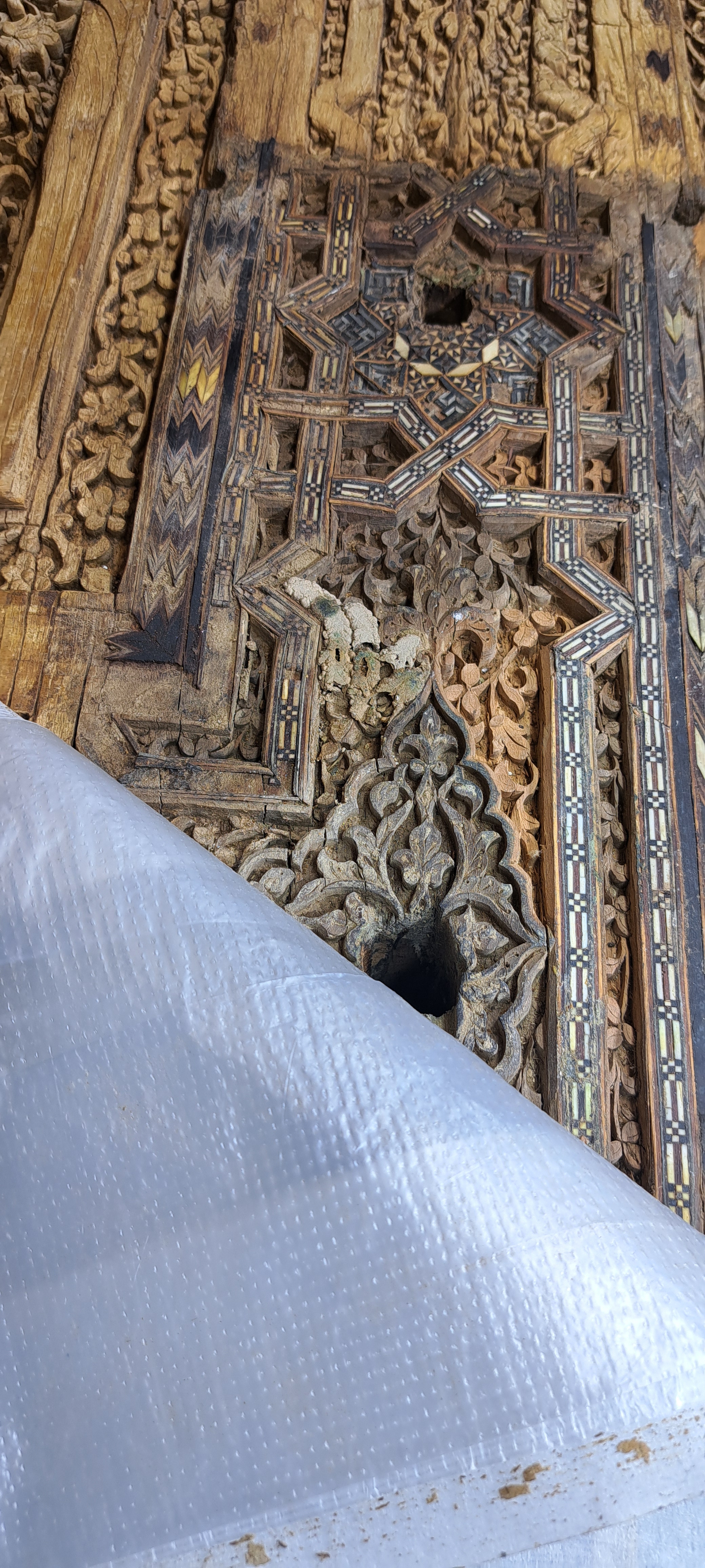
Krim says that the black wood is ebony from Africa, whereas the brown inlays are rosewood that originated in Madagascar. The white inlays are bone. There are also thin tin wires set into the wood. All show the enormous lengths to which the skilled artisans went to obtain the finest materials.

When finished the doors will be returned to Turkestan, but will not go back to the Mausoleum. Instead they will join the original inner doors in a special museum close to the Mausoleum where their superb workmanship can be examined in detail.

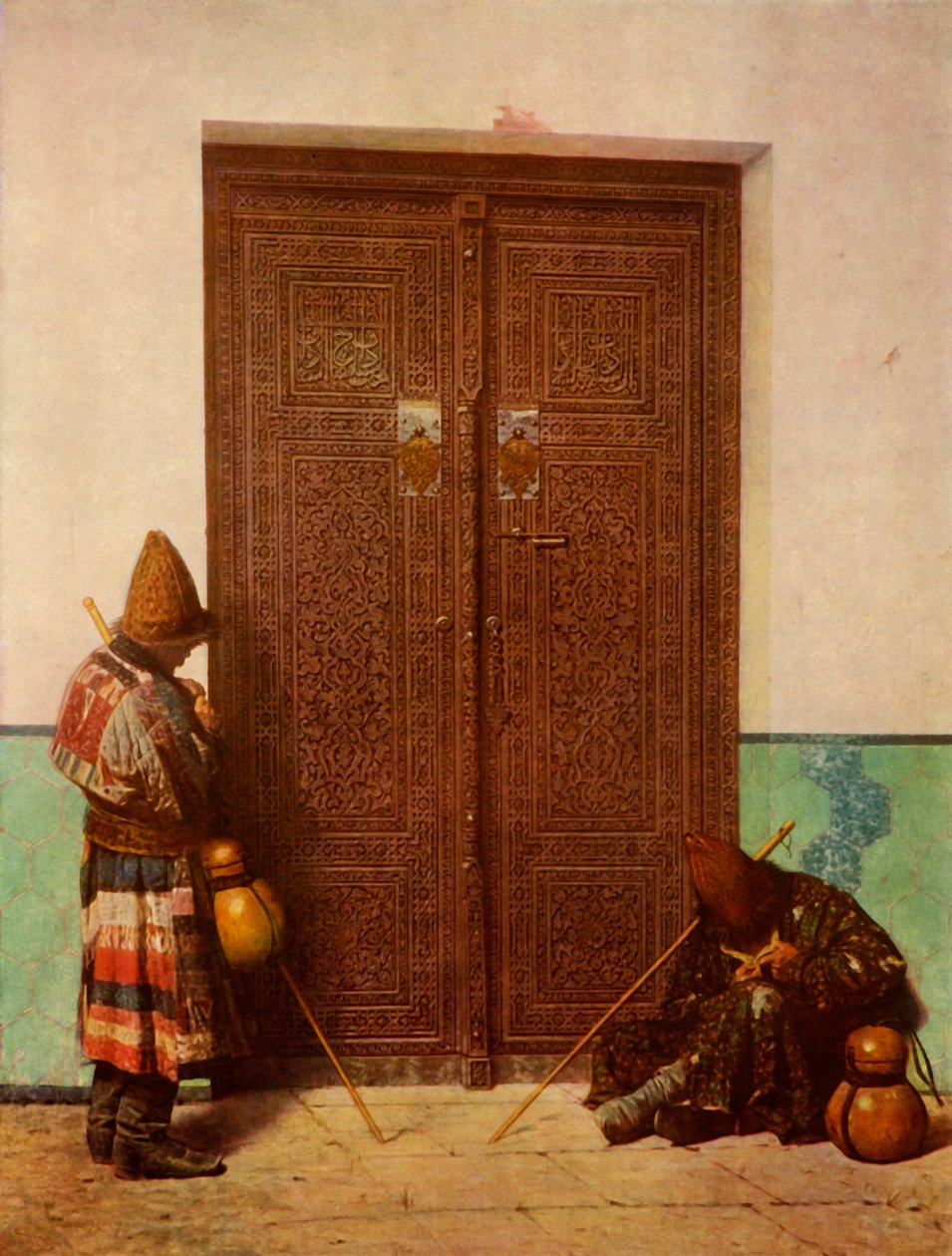
The doors have always been objects of wonder. The Russian painter Vassily Vereshchagin painted a famous picture of them which forms part of his Turkestan series, now in the Tretyakov Gallery in Moscow. At the Door of the Mosque is a slightly idealised version of the doors. It shows two dervishes waiting for the doors to open. Vereshchagin, who was an official war artist during the Russian campaign to capture Samarkand in the early 1870s, clearly took a great deal of trouble to ensure that he made a good job of copying the complex patterns carved into the wood.
However, a photograph of the doors, taken in 1871 for the Turkestan Albom, gives a more accurate guide to their condition. The Turkestan Albom contains over 1,200 rare photographs and was released in 1872 by order of the first Governor-General of Russian Turkestan, Konstantin Petrovich Von Kaufman. It was designed to acquaint Russian and western researchers with the Central Asian territories recently conquered by the Russians. At present, only three complete set of volumes and parts of the book are known. They are held by the National Library of Uzbekistan, the Russian State Library and the US Library of Congress.
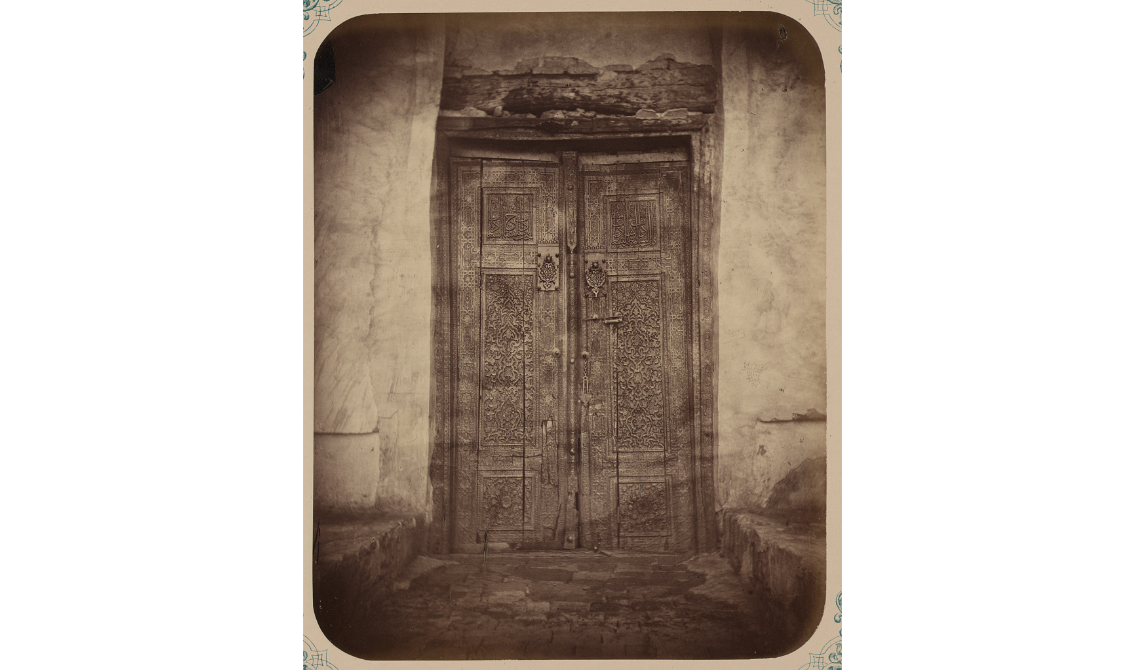
As can be seen, the doors in this photograph appear to be in poor shape. There is a step to left and right that does not appear in Vershchagin’s painting and the condition of the building is clearly not good. The area above the doors appears to be in a state of collapse.

Until comparatively recently the Yassawi Mausoleum remained in poor condition. That has since changed and an enormous amount of money has been spent improving the surroundings with parks and new monumental buildings. The great cauldron known as the Taykazan, for example, with a diameter of almost three metres, was removed from the Mausoleum in 1935 and taken to St Petersburg, along with two of the six superb bronze candlesticks from the same era. The Taykazan was returned, reluctantly, in 1989, following representations over many years by the Kazakhs. Sadly, the two remarkable candlesticks that once adorned the building remain in St Petersburg. Another, only partially complete, is in the collection of the Louvre, which received it as a bequest in 1916 from industrialist Georges Marteau.Who gave permission for these priceless objects to be removed? I for one believe they should be returned to their original location (along with many others treasures looted from Central Asia in the 19thC.
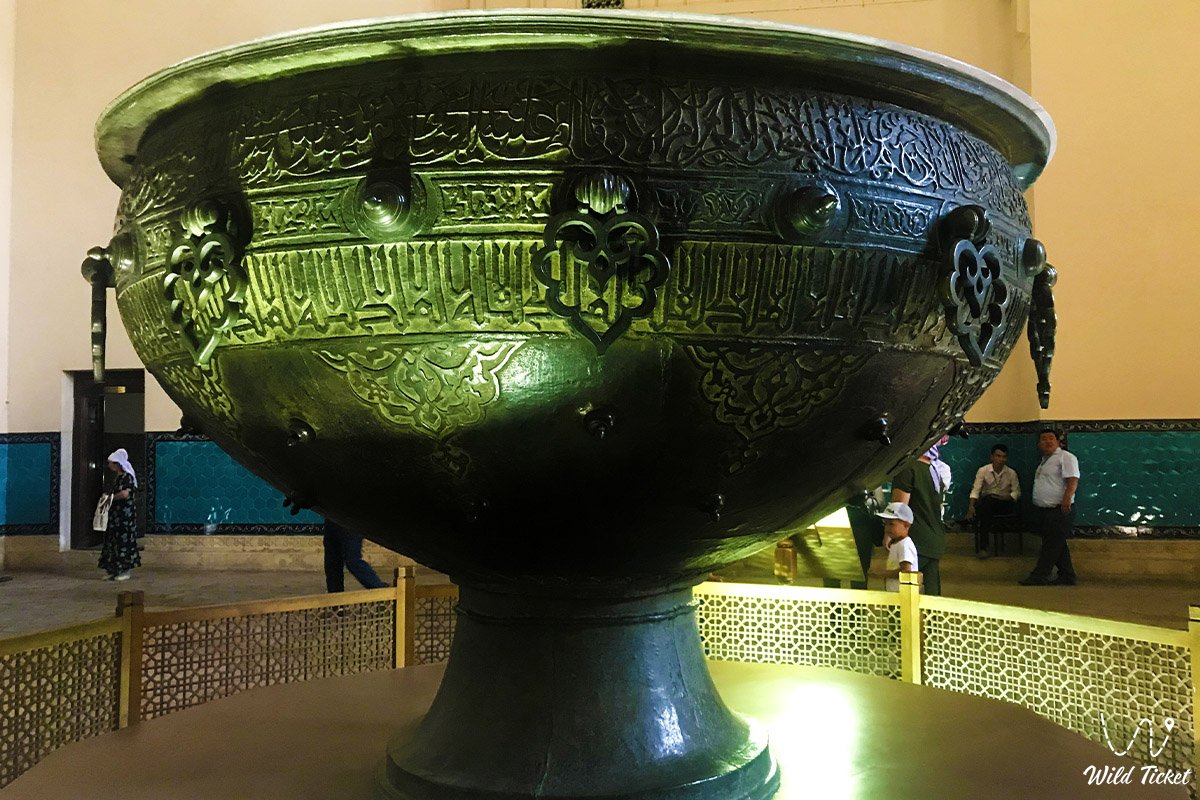
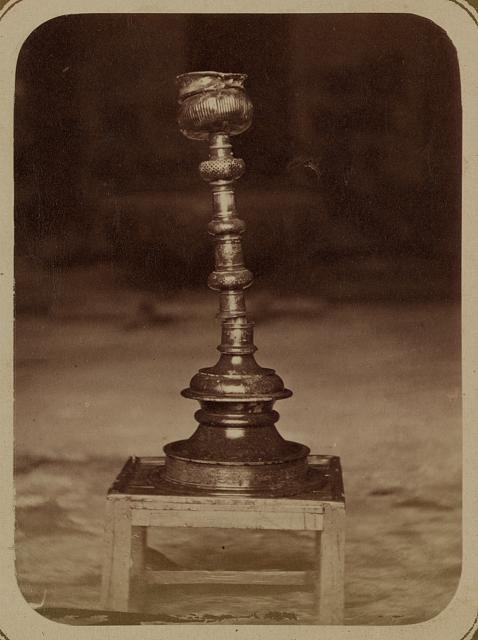
One of the six original candlesticks from the Mausoleum
Krim Altinbekov

Exploring The Northern Silk Road

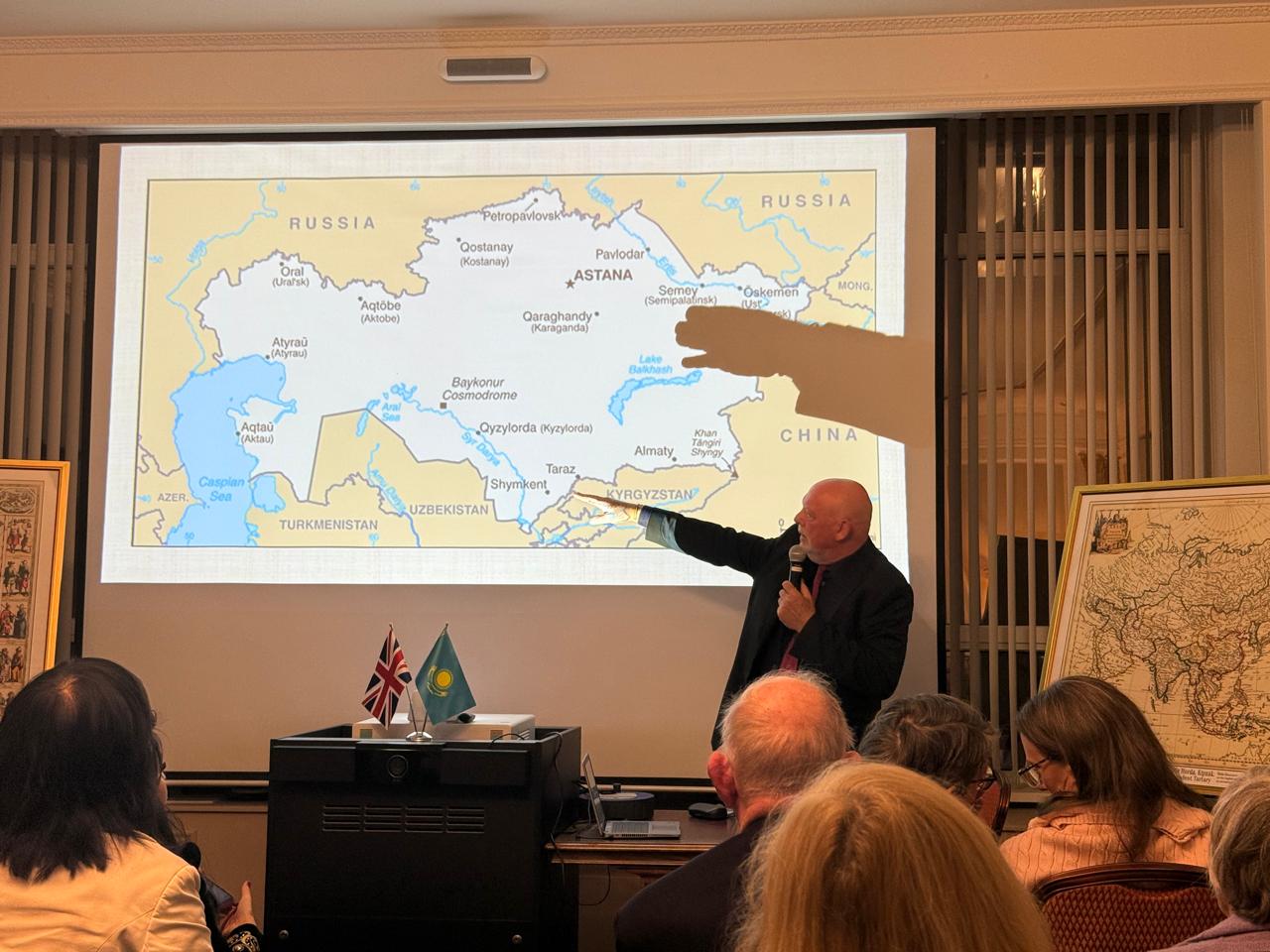
On Monday night I gave the Younghusband Lecture to the Adventure Circle of the Army and Navy Club in London. My subject was Kazakhstan: Exploring the Northern Silk Road, based largely on my trip earlier this year from Almaty to the remnants of the Aral Sea in the far west of the country.

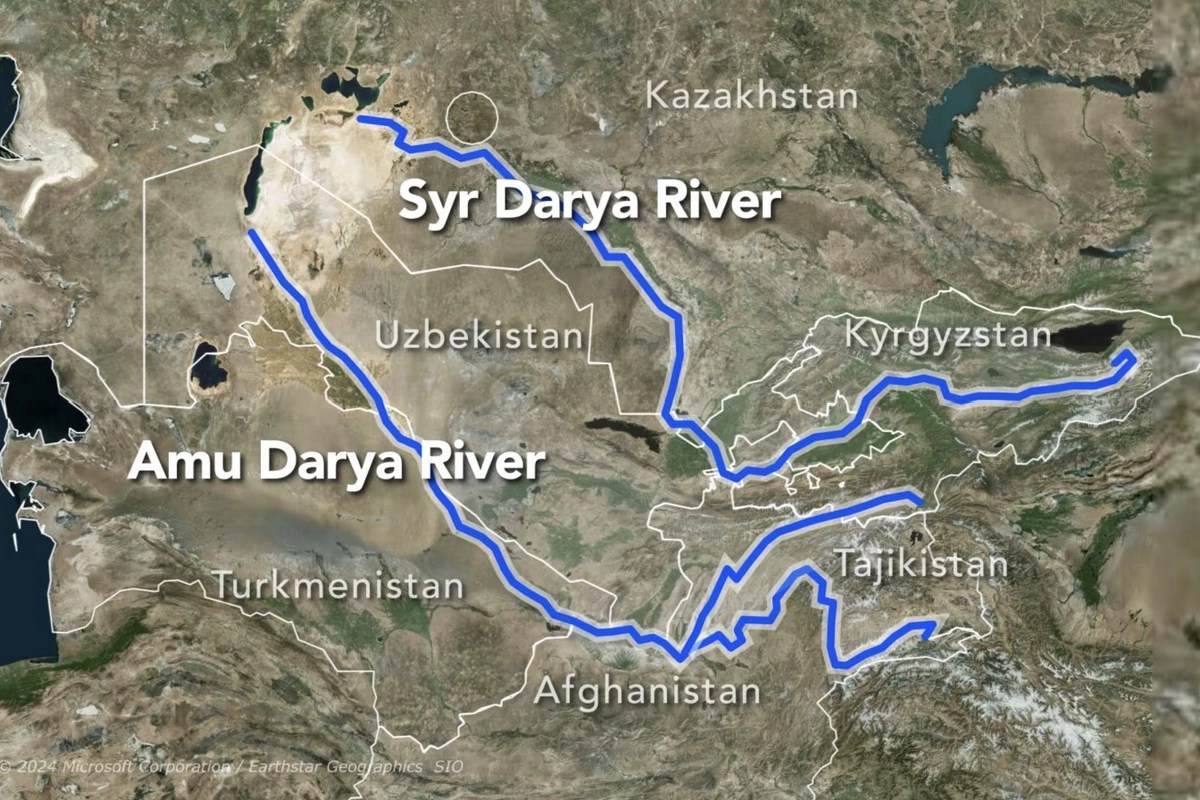
Having now spent 15 years or so exploring various parts of Kazakhstan, mostly in the east and south-east, I was finally struck by the importance of the route across the southern part of the country that is sometimes referred to as the Ferghana-Syr Darya Corridor. This east-west route follows the course of the great Syr Darya River as it meanders its way to the northern part of what remains of the Aral Sea. It is a route that has existed for thousands of years and once would have led caravans from the Pamir Mountains up past the Aral and on towards the Volga River and the former Golden Horde city of Kazan or further west, across the top of the Caspian Sea towards Krim (Crimea).

The Syr Darya is almost a mirror image of the more southerly Amu Darya River – known in antiquity as the Oxus – but is much less well known. When most people think of the Silk Road they tend to think of the cities of Samarkand, Bokhara and Khiva, all closely linked to the Amu Darya.

These two great Central Asian Rivers have always been important in the history of the region, providing water for agriculture and defining borders and spheres of influence. And yet while many people are familiar with the great cities associated with Timur and the Uzbek Khanate, very few know much about the northern route. It too has associations with Timur, particularly the city of Turkistan, but it also has its own rich history. Along this northern Silk Road can be found the remains of many great cities that flourished in the period before the discovery of the sea routes between China, India and Western Europe.

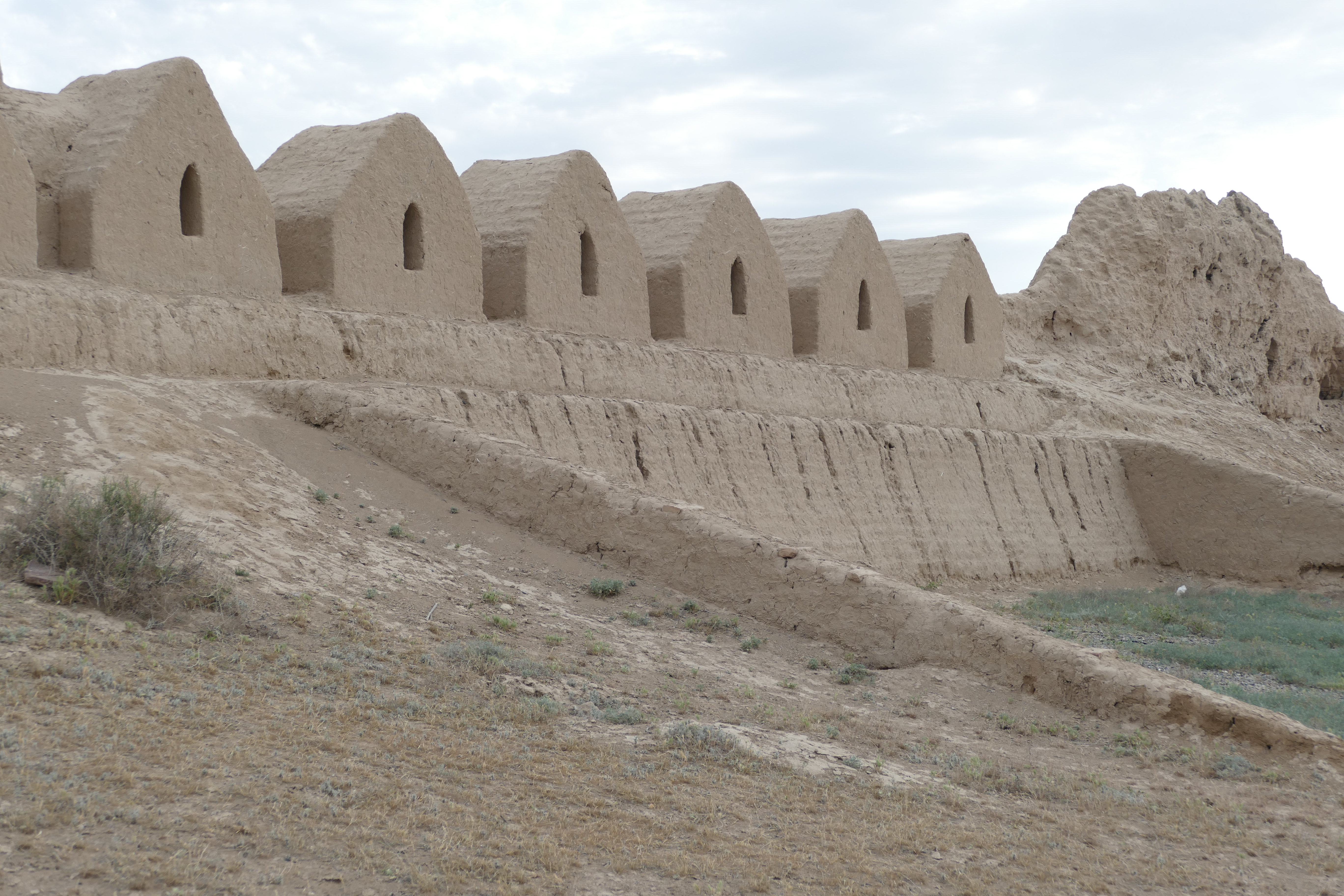
These cities include Otrar, Sauran, Kyshkala, Asanas, Syganak, Yassy and Zhankala, all now nominated by the Kazakhs for UNESCO World Heritage status. Along this route can also be found the magnificent ancient petroglyphs at Arpauzen and the cosmodrome at Baikonur.

The remains of Sauran
Otrar
Zhankala
Mausoleum of Khoja Ahmed Yasawi in Turkistan
Another view of the Mausoleum.

There are still many discoveries to be made along the Northern Silk Road. Friends in Kazakhstan tell me that they have come across the remains of ‘lost’ cities in the Kara Kum Desert that are not mentioned on any maps or history books. Adventure beckons!

Tengri in Cyanotype

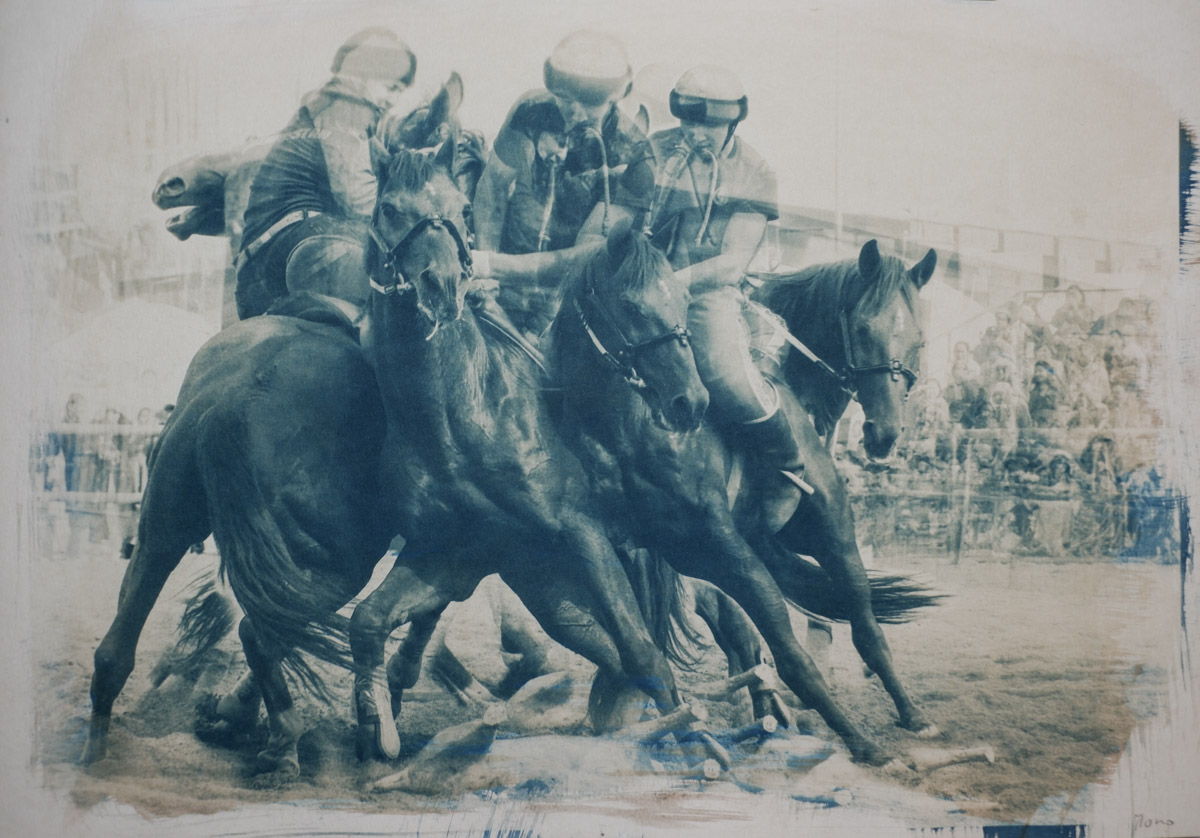
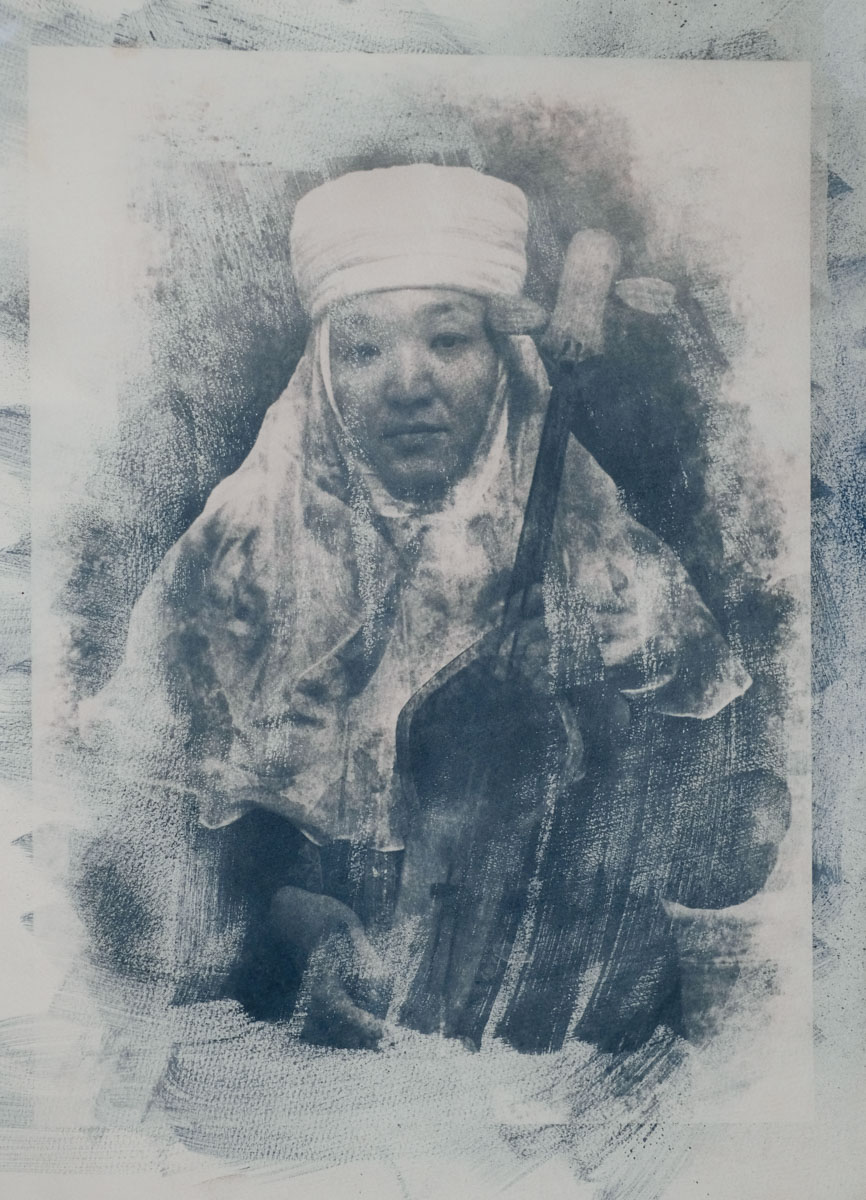
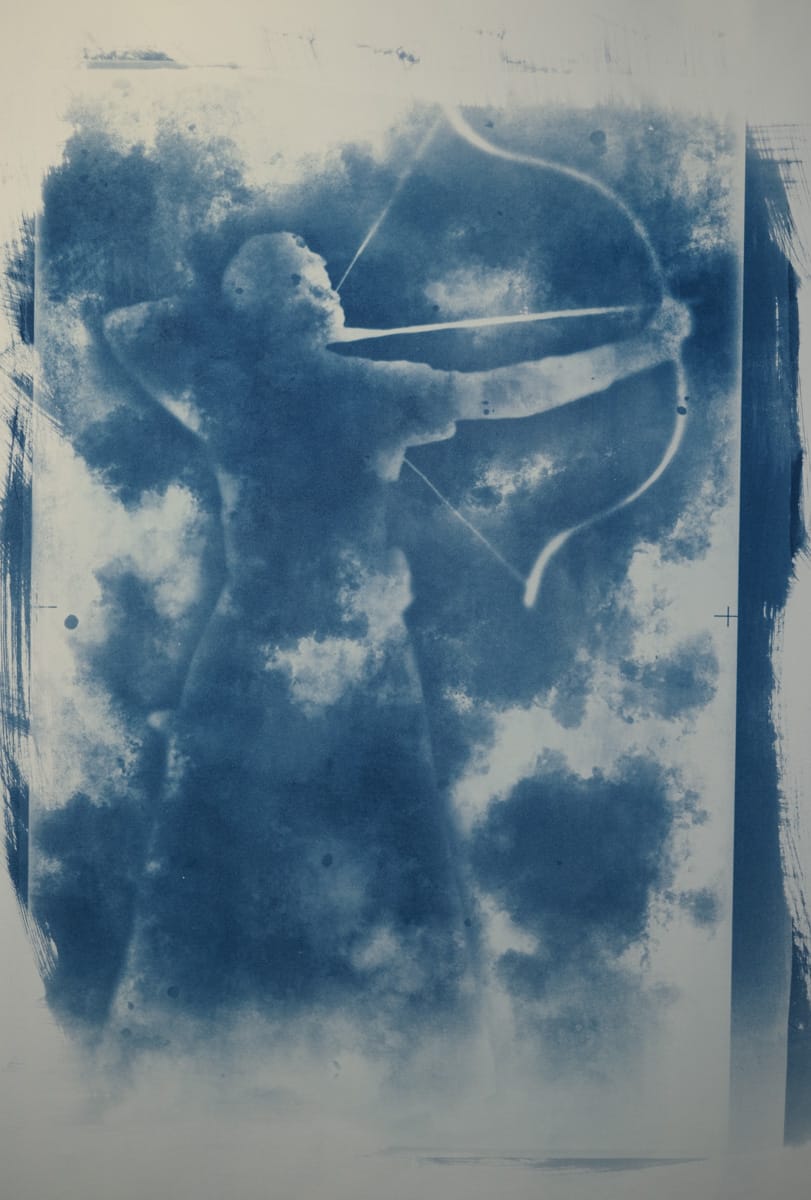
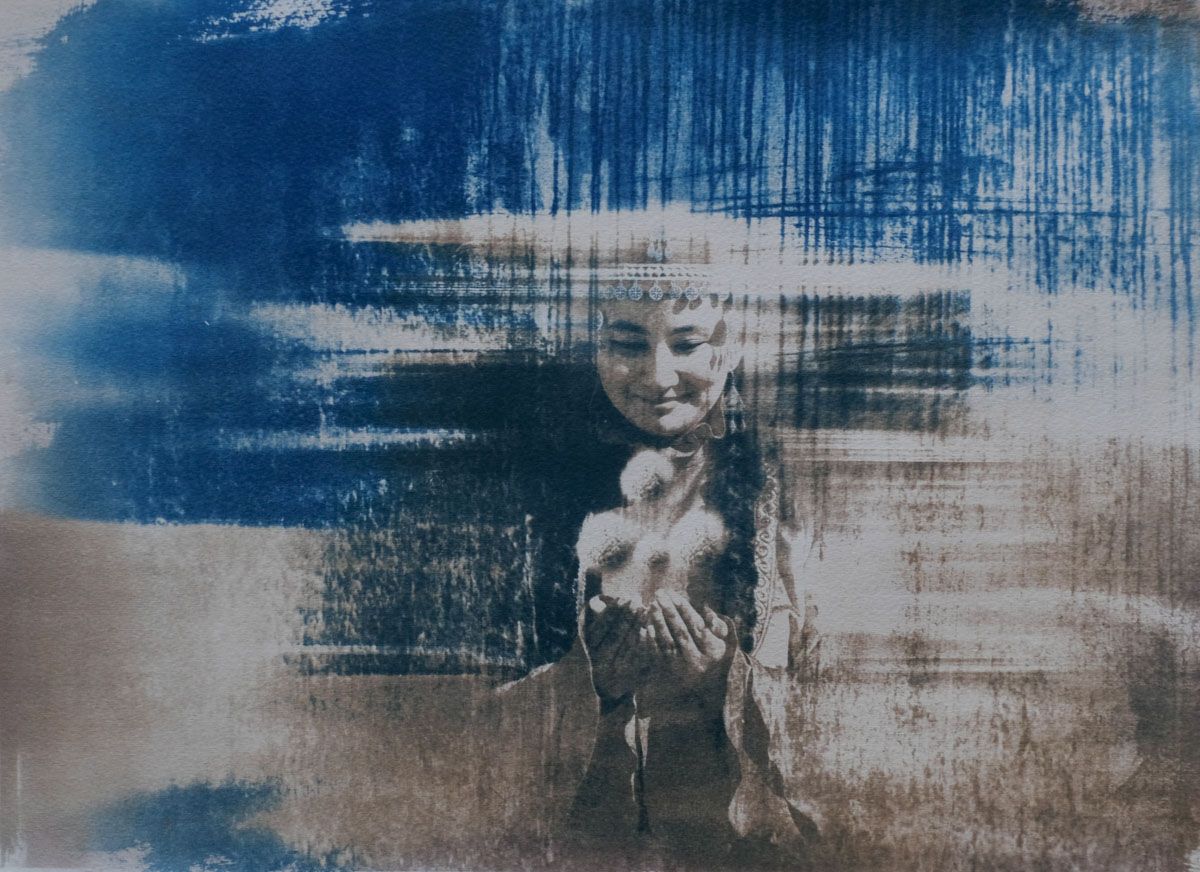
Dorota Bronikowska is a Polish artist who specialises in cyanotypes – the photographic process that produces a monochrome, blue-coloured print and is often used for art and reprography in the form of blueprints. I met her last September at the World Nomad Games in Astana, Kazakhstan, where she had travelled to take images that could later be processed into cyanotypes.

Dorota Bronikowska

I’m delighted to say that Dorota is now about to launch the results of her endeavours in a major new exhibition in Lublin, Poland. From the 7th – 21st June she will be exhibiting as part of the Second Eastern film Festival in the city. Her show of cyanotypes, entitled Kazakhstan – Tengri Kingdom, can be seen at the Dominican Monastery in the city*.

Explaining the show, Dorota says:

Tengri is heaven. For centuries, Tengri has led its children and their herds across the sea of ​​the steppe. So that they do not lose their way in space and time.
Today’s Kazakhstan is an ethnic mosaic. In addition to Kazakhs, Uzbeks, Tatars, Chechens, Koreans, Germans, Poles live here. In total, over 130 nationalities are registered.
Tengri lives in the Kazakh soul. Modern Kazakhs have one foot in modernity but still cultivate traditions from the times when Tengri was a god. The most striking example is the main axis of the capital of Kazakhstan – Astana. The main boulevard of this ultramodern city was led along a sacred road, and in the middle was erected a tower, referring to the shamanic tree of life.
I have been to Kazakhstan twice. I made my first trip by bike. Then I visited holy places, met fascinating people. I saw how life is under the wings of Tengri. During my second trip, I watched ethnic sportsmen and women compete at the World Nomad Games. The different sports eloquently reflect the character and life of the ancient nomads on the Great Steppe
.”

*Kazakhstan – Tengri Kingdom” will be on show at Lublin Monastery, entrance in Dominikanski Square, 20-112, Lublin from 7pm on 7 June – 21 June. Entrance Thurs-Sun, 1pm-5pm. Organised groups by appointment. Free admission. Created in cooperation with the Embassy of the Republic of Kazakhstan in the Republic of Poland, and Air Astana.

Here are a few more exmples of Dorota’s work. If you get a chance, visit the exhibition. More about the Festival here.