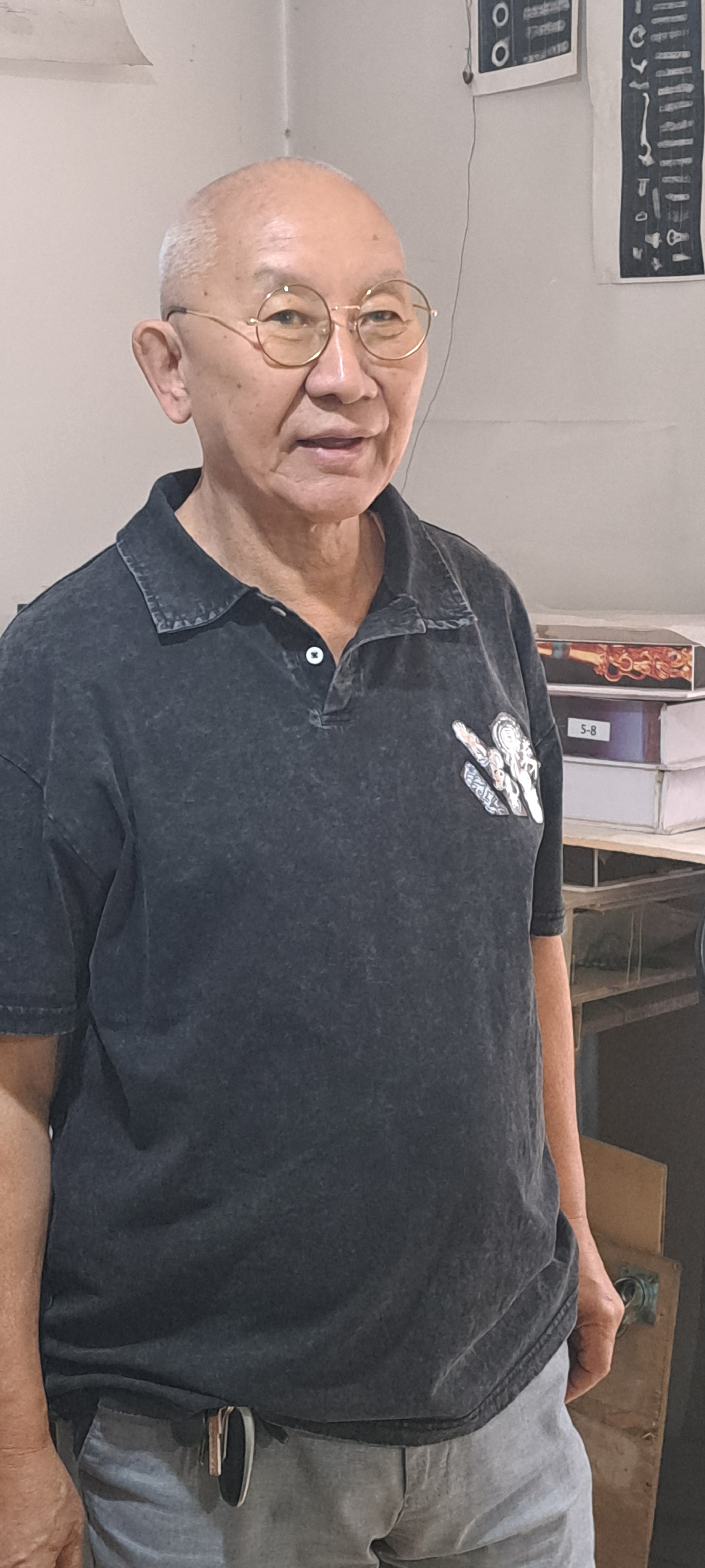
For several years Krim Altinbekov, perhaps Kazakhstan’s best known archaeological restorer, has been working to repair the 600-year-old doors to the Khoja Ahmed Yassawi Mausoleum in the city of Turkestan. The Mausoleum itself was built on the orders of Emir Timur – better known in the West as Tamerlane – at the end of the 14thC. It is rightly acknowledged to be one of the greatest historic buildings in Central Asia.
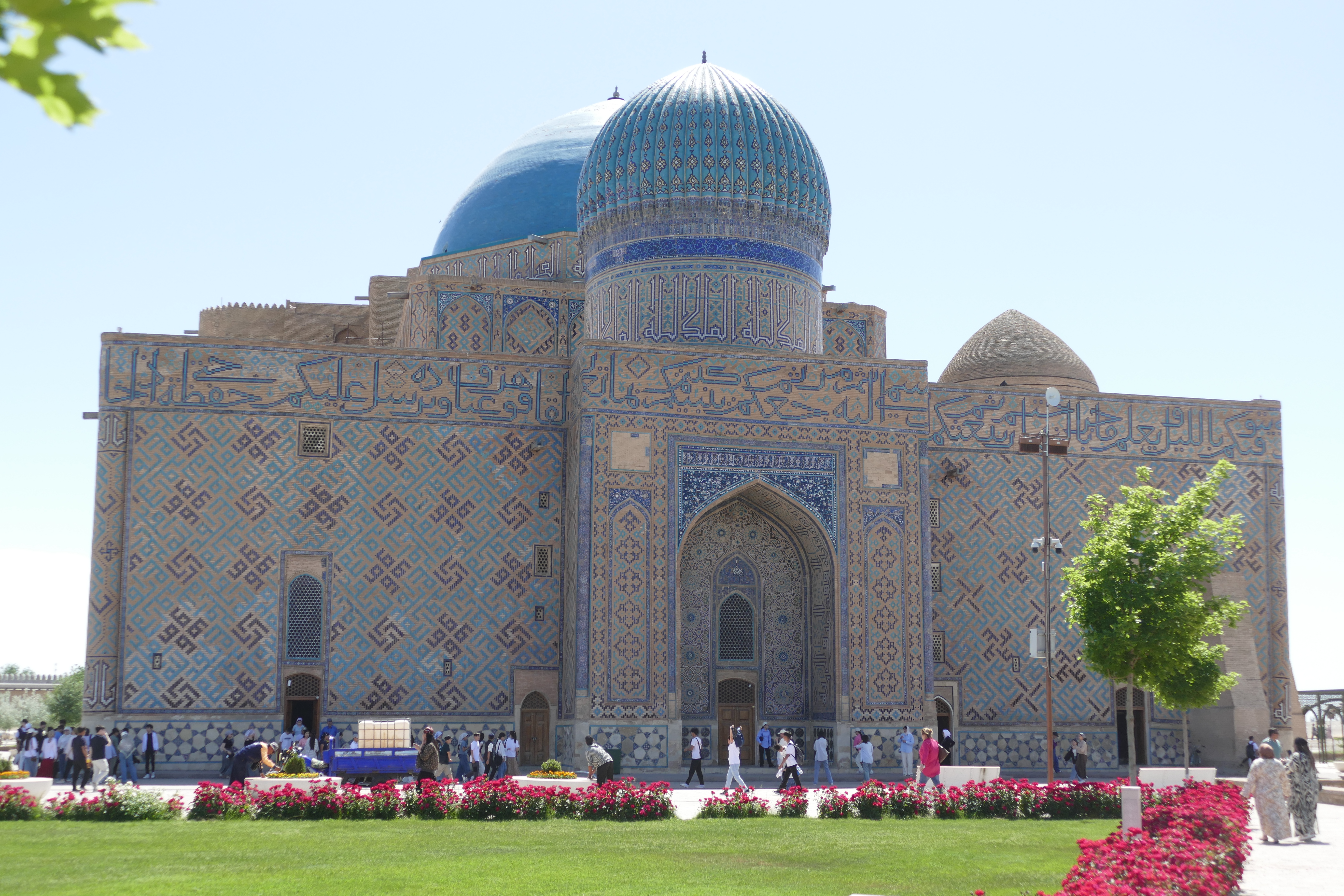
Having completed his restoration of the Mausoleum’s inner doors, he is now working on the main doors to this remarkable building. Made of walnut and each weighing half-a-tonne, the doors were probably made by Persian artisans in situ. Instead of hinges, the outer edges of the doors were slightly lengthened so that they could sit in a shallow hole and thus rotate open and closed. In May I visited Krim Altinbekov’s workshop in Almaty, where the two outer doors are presently undergoing the restoration work.
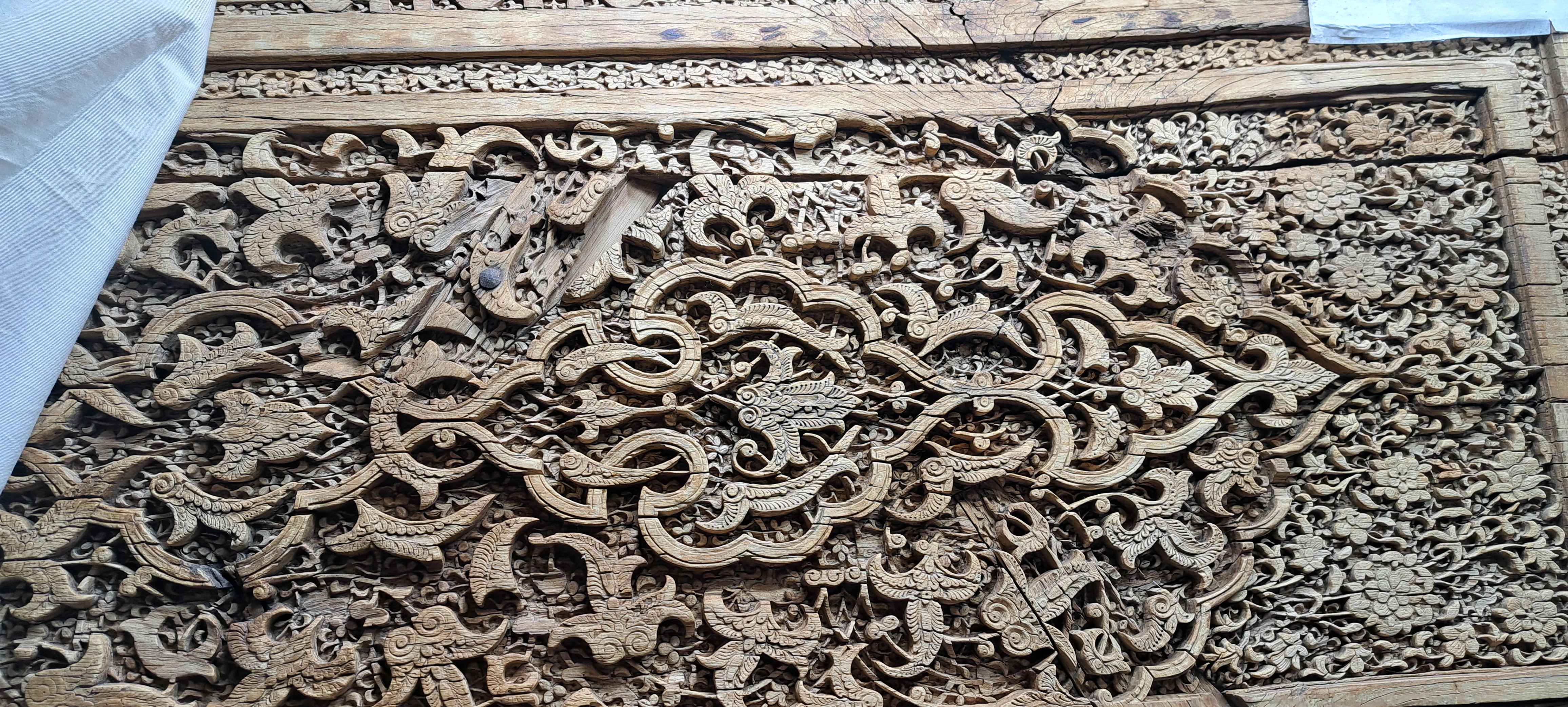
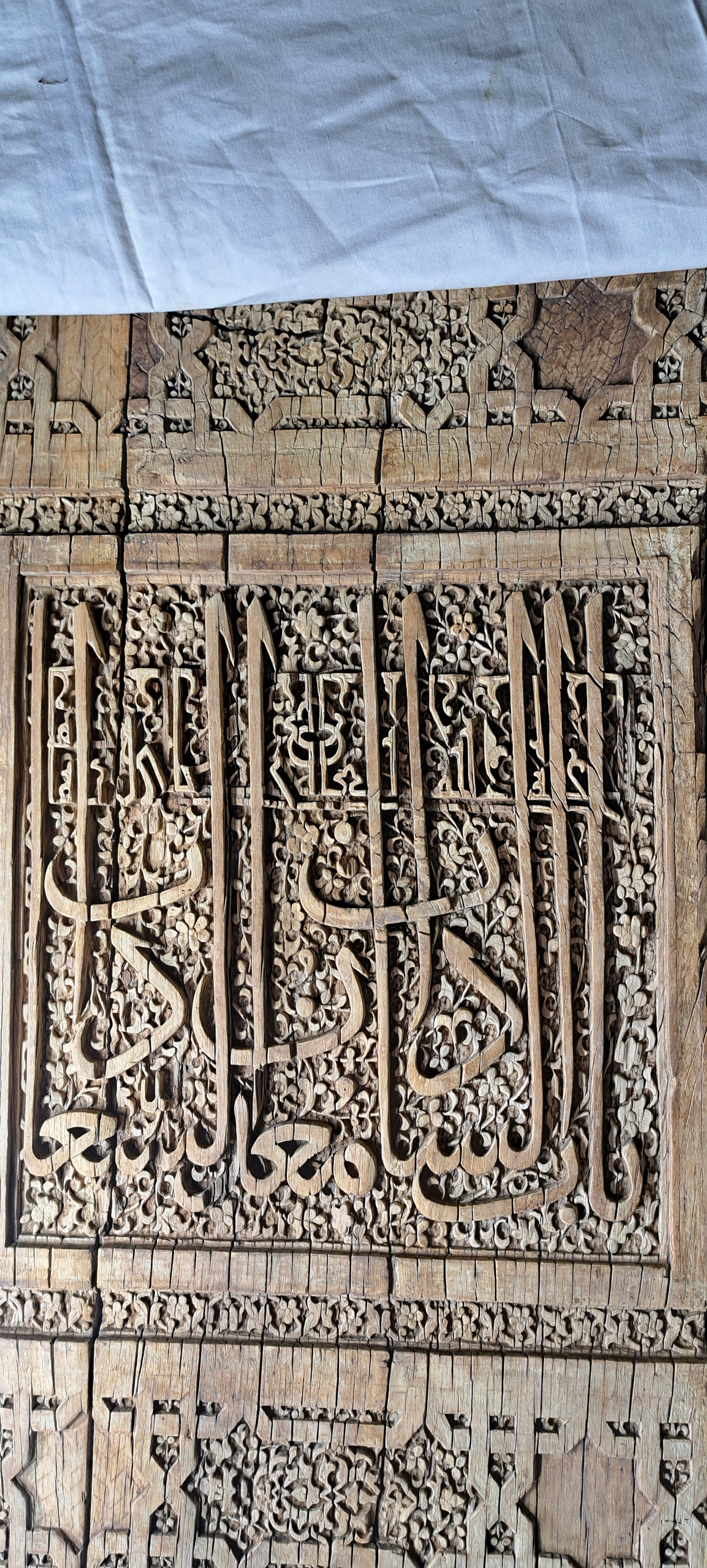
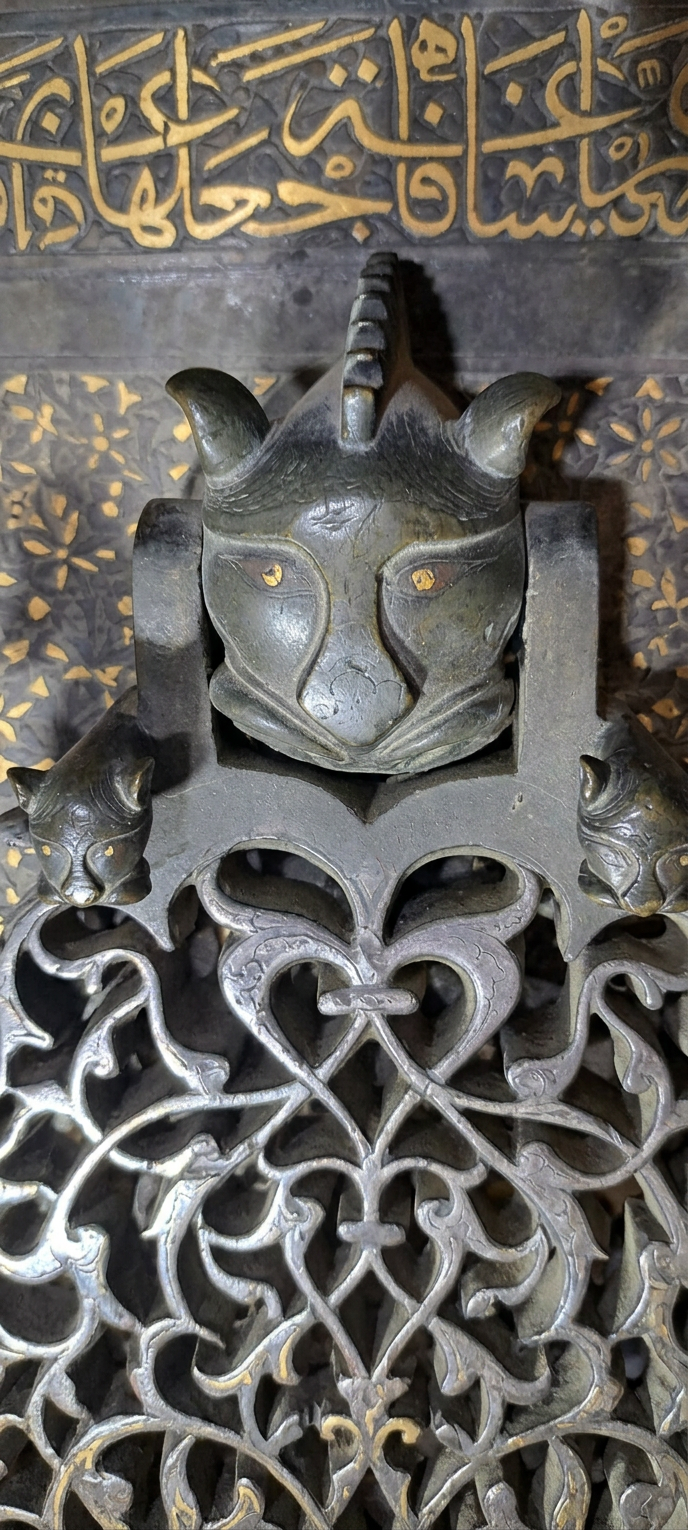
The work to restore the doors will likely take several years. Krim told me that one issue that had perplexed his team was the exact patterning that had been inlaid into the doors. Most of it had disappeared over the years. However, when he removed the two huge gilded bronze door knockers, he found that the original inlay pattern had survived beneath them – see pics below. The first shows the brass door knocker in the form of a leopard. Below that is the door as revealed beneath the knocker. You can clearly see the inlays, made up of various woods and other materials.
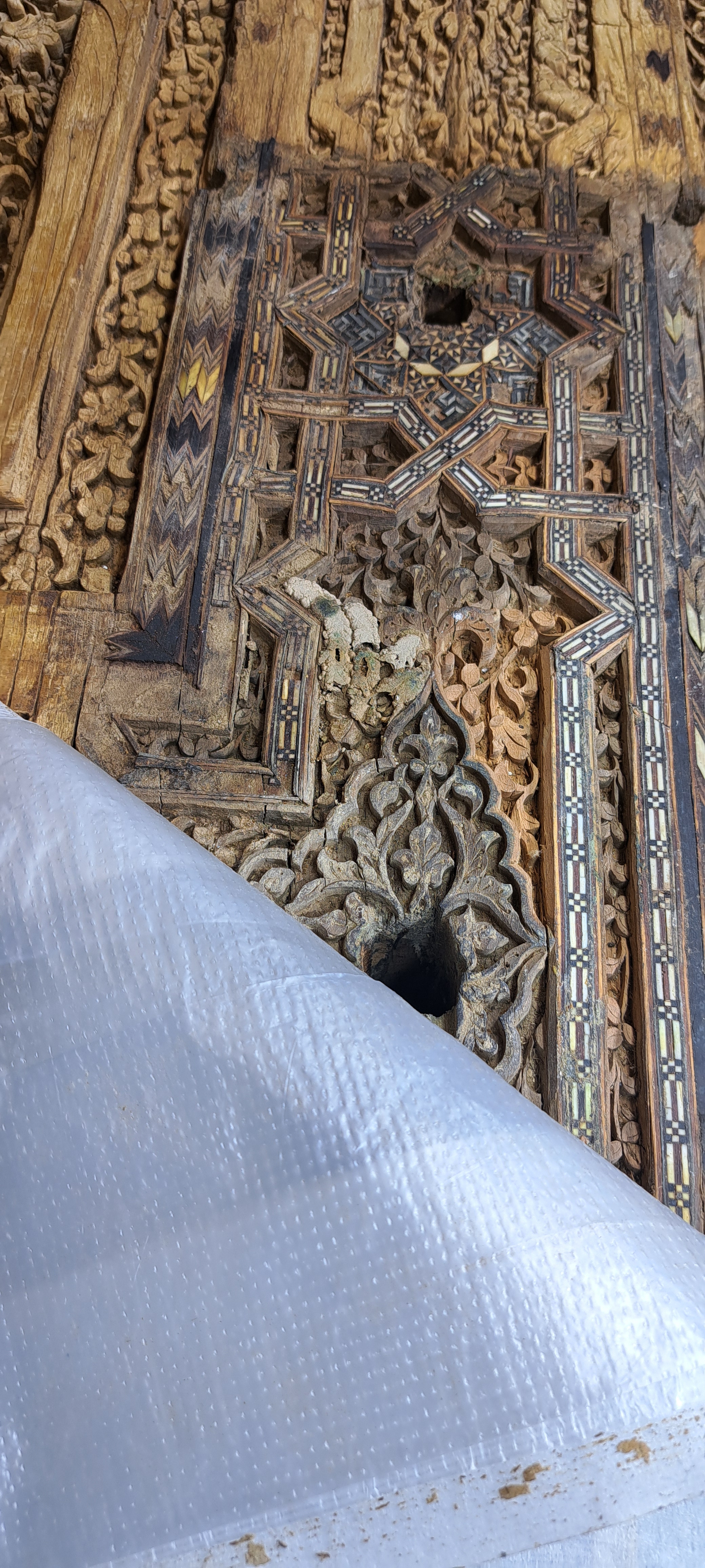
Krim says that the black wood is ebony from Africa, whereas the brown inlays are rosewood that originated in Madagascar. The white inlays are bone. There are also thin tin wires set into the wood. All show the enormous lengths to which the skilled artisans went to obtain the finest materials.
When finished the doors will be returned to Turkestan, but will not go back to the Mausoleum. Instead they will join the original inner doors in a special museum close to the Mausoleum where their superb workmanship can be examined in detail.
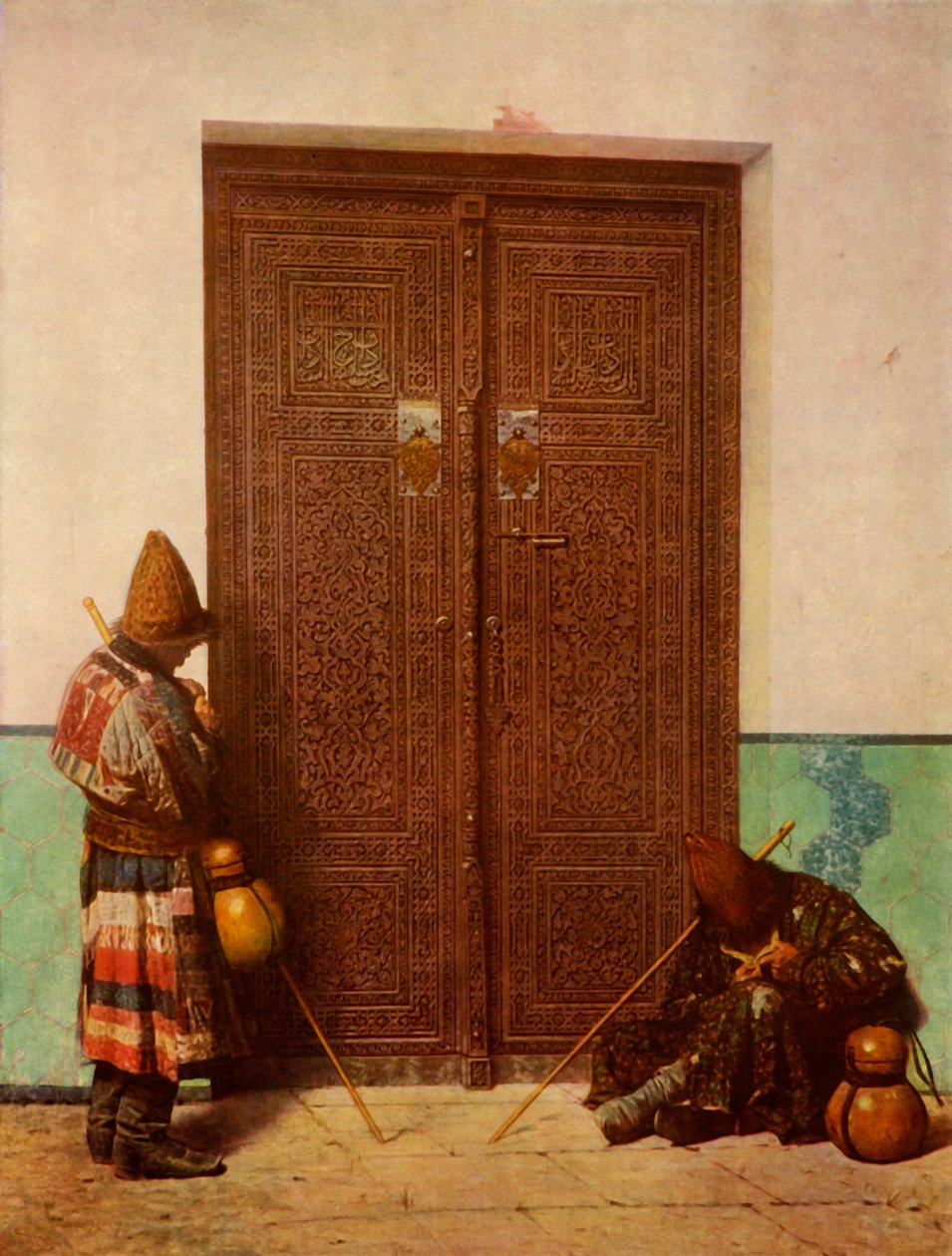
The doors have always been objects of wonder. The Russian painter Vassily Vereshchagin painted a famous picture of them which forms part of his Turkestan series, now in the Tretyakov Gallery in Moscow. At the Door of the Mosque is a slightly idealised version of the doors. It shows two dervishes waiting for the doors to open. Vereshchagin, who was an official war artist during the Russian campaign to capture Samarkand in the early 1870s, clearly took a great deal of trouble to ensure that he made a good job of copying the complex patterns carved into the wood.
However, a photograph of the doors, taken in 1871 for the Turkestan Albom, gives a more accurate guide to their condition. The Turkestan Albom contains over 1,200 rare photographs and was released in 1872 by order of the first Governor-General of Russian Turkestan, Konstantin Petrovich Von Kaufman. It was designed to acquaint Russian and western researchers with the Central Asian territories recently conquered by the Russians. At present, only three complete set of volumes and parts of the book are known. They are held by the National Library of Uzbekistan, the Russian State Library and the US Library of Congress.
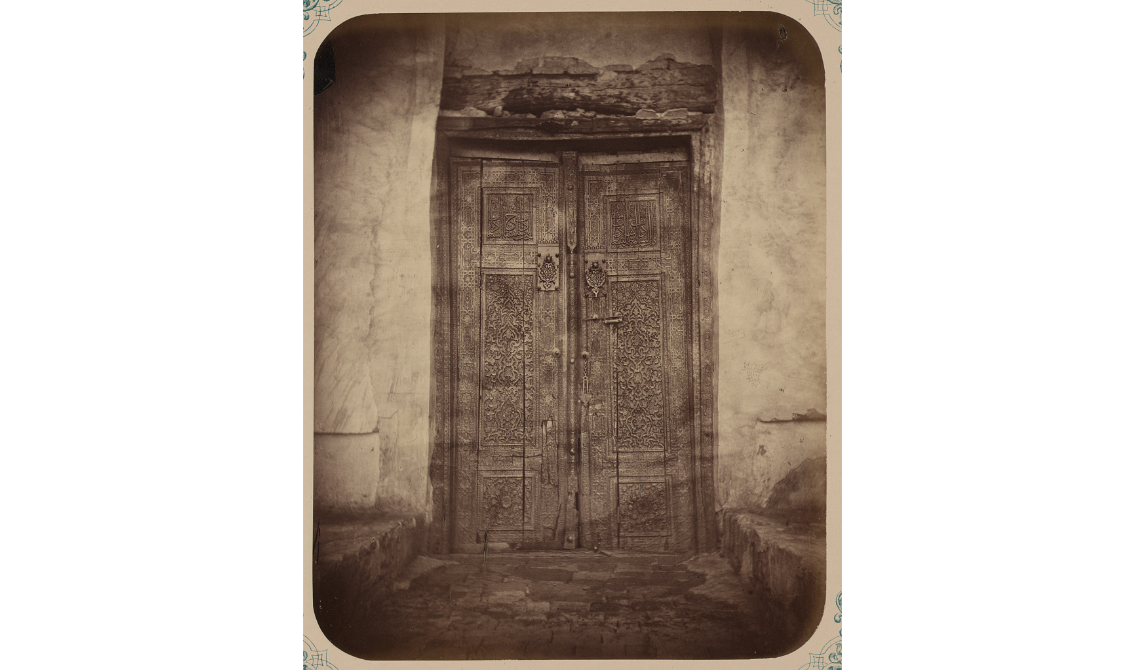
As can be seen, the doors in this photograph appear to be in poor shape. There is a step to left and right that does not appear in Vershchagin’s painting and the condition of the building is clearly not good. The area above the doors appears to be in a state of collapse.
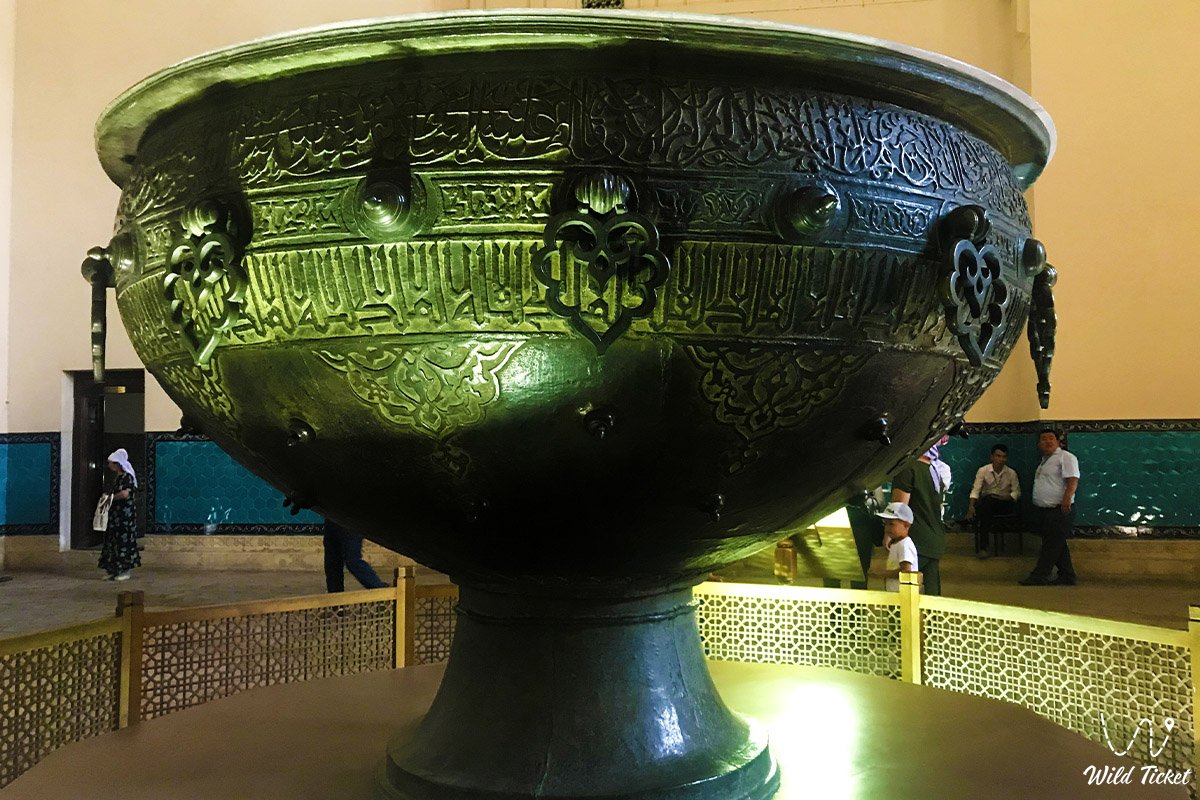
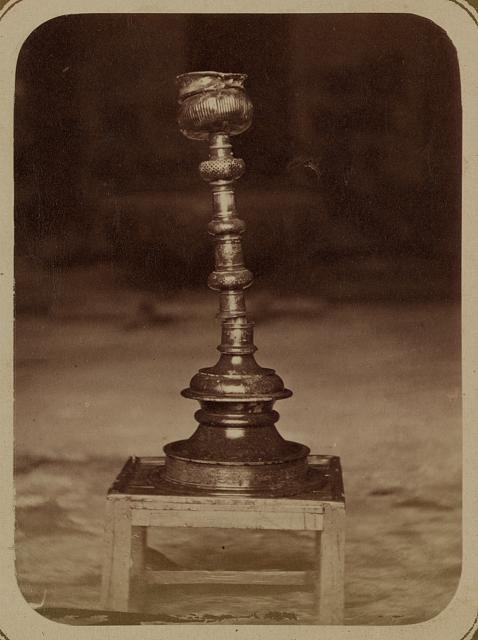
Until comparatively recently the Yassawi Mausoleum remained in poor condition. That has since changed and an enormous amount of money has been spent improving the surroundings with parks and new monumental buildings. The great cauldron known as the Taykazan, for example, with a diameter of almost three metres, was removed from the Mausoleum in 1935 and taken to St Petersburg, along with two of the six superb bronze candlesticks from the same era. The Taykazan was returned, reluctantly, in 1989, following representations over many years by the Kazakhs. Sadly, the two remarkable candlesticks that once adorned the building remain in St Petersburg. Another, only partially complete, is in the collection of the Louvre, which received it as a bequest in 1916 from industrialist Georges Marteau.Who gave permission for these priceless objects to be removed? I for one believe they should be returned to their original location (along with many others treasures looted from Central Asia in the 19thC.


What an interesting article. I, too, believe that many (most? all?) artifacts taken in the 19th century should be returned to their original sites. Restoration efforts like that shown in the article are wonderful.
LikeLike